Looking for a Floor Sanding Company in Clapton?
Floor Sanding in Clapton — At a Glance
- Price range: £25–£45 per sqm
- Typical duration: 1–2 days for an average room
- Free site visit: Yes — book online or call 020 8830 9782
- Customer rating: 4.5/5 (590+ reviews)
- Experience: 22 years, established 2004
Clapton's Victorian and Edwardian terraced properties contain original wooden floorboards that often sand beautifully when conditions are suitable. The residential history of the area and the generally substantial construction of these older buildings mean floorboards are typically solid underneath their worn surface. You'll find boards installed to period standards with widths and grain patterns that look excellent when properly restored. Ground floors frequently show accumulated staining from family life and kitchen wear spanning decades. Upper floors remain more protected, though carpets may have hidden damage from moisture issues or other problems. The challenge in Clapton is that some properties have experienced dampness from aging external walls or deferred maintenance on gutters and pointing. Sanding work here reveals the authentic character of these historic homes and often surprises owners with the quality hidden underneath. The work is worthwhile because Clapton's housing stock deserves care and restoration often proves more practical than replacement.
In Clapton, we provide dust-free floor sanding across the area's Victorian and Edwardian terraces, the Regency-era houses around Clapton Square, and the mansion blocks and newer riverside flats near the Lee Navigation. Clapton's housing stock is dominated by period terraces — many converted into flats over the years — so a lot of what we work on is original pine or oak flooring that's been covered up or neglected, alongside parquet in the larger converted houses and engineered wood in more recently finished properties.
Wood Floors We Sand & Restore
Different floors need different approaches. The construction of the floor, previous sanding, existing finish and condition of the timber all influence how it should be restored. Our wood floor sanding and restoration service covers everything from straightforward refinishing to floors requiring repairs before sanding.
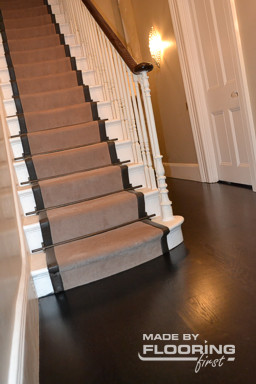
Floorboards
Floorboards can often be retained even when they initially look heavily worn. Before sanding, we check for loose boards, damaged sections, protruding fixings and gaps. Where individual boards are beyond repair, floorboard replacement can be incorporated into the restoration. Suitable gaps can also be treated using an appropriate wood floor gap-filling method. Where repairs are necessary, completing them before the final sanding stages allows the existing and repaired timber to be prepared and refinished together.
Parquet Flooring
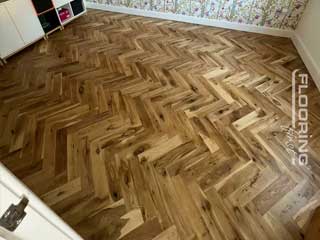
Scratched, dull or heavily worn parquet does not automatically need replacing. The blocks are checked for movement and damage before sanding begins. Loose parquet should normally be secured first, while damaged or missing blocks may require localised repairs. Our parquet floor repair and parquet floor sanding services can therefore be combined where the condition of the floor requires both.
Solid Wood Flooring
Solid wood generally provides good scope for professional sanding and refinishing. The sanding process removes worn coatings, scratches and surface discolouration, followed by finer preparation before staining or sealing. A floor that has already been sanded several times should still be assessed before more timber is removed.
Engineered Wood Flooring
Engineered flooring needs a more careful assessment because only its upper hardwood wear layer can be sanded. Not every engineered floor is suitable for another full restoration. The remaining wear layer, previous sanding and depth of damage need to be considered before work begins. Our engineered wood floor sanding and refinishing service includes this assessment before deciding how much material can safely be removed.
Repairing the Floor Before Sanding
Sanding improves the surface, but it cannot correct structural or localised damage underneath it. If there are loose parquet blocks, damaged floorboards or unstable sections, these should normally be dealt with before the main sanding and finishing stages. Local repairs can often make it possible to retain the majority of an existing wooden floor rather than replacing everything because of damage in a few areas. Where replacement timber is introduced, we can also consider how it will blend with the surrounding floor once the complete surface has been sanded and refinished.
Does the Floor Really Need Full Sanding?
Sometimes the answer is no. If the timber itself remains in good condition and the main problem is a tired or lightly worn protective coating, floor buffing and refinishing may be a better option than sanding back to bare wood. Depending on the existing finish, this may involve buffing and recoating or re-oiling. Using a lighter treatment where appropriate means less timber is removed. This can be particularly important with engineered flooring, where preserving the hardwood wear layer can extend the floor's future restoration potential.
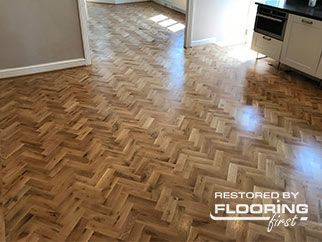
Gap Filling for Floorboards & Parquet
Not every gap should automatically be filled. The appropriate treatment depends on the size of the gaps, floor construction and natural movement of the timber. Smaller suitable gaps may be treated with a resin-based filling method, while wider floorboard gaps can require timber slivers. The floor needs to be assessed first because using the wrong method can result in filler cracking or becoming loose as the timber moves. Gap filling can be incorporated into the sanding process where it is suitable for the floor.
Changing the Colour of Your Floor
Sanding allows you to change the colour of the timber before it is sealed. Our wood floor staining service can be incorporated after the old finish has been removed and the timber properly prepared. Stain samples can be prepared on the actual sanded floor before the final colour is selected. This is useful because the same stain can produce noticeably different results depending on the wood species and existing timber. Where repairs introduce replacement boards or blocks, wood floor colour matching can also help reduce the visual difference between old and new timber.
Choosing a Finish After Sanding
Once the timber has been prepared, it needs a protective finish suitable for the floor and the way the space is used. FlooringFirst works with professional systems from Bona, Junckers, Osmo and Loba, including lacquers, oils and hardwax oils. The right choice depends on factors such as:
- expected foot traffic;
- timber and floor construction;
- required appearance and sheen;
- cleaning and maintenance preferences;
- residential or commercial use.
For example, professional Bona, Junckers or Loba lacquer systems provide options where a sealed surface is preferred, while Osmo hardwax oil can be considered where the characteristics and appearance of an oiled finish are wanted. There isn't one finish that is automatically best for every wooden floor.
How Much Does Floor Sanding Cost in Clapton?
FlooringFirst's current service price guide lists sanding, buffing and varnishing from £25 per m². Sanding, buffing and oiling also starts from £25 per m². Additional work may be required for repairs, gap filling, staining, stairs or furniture moving, so the final quotation depends on the condition of the floor and the work involved. This is why we inspect the floor before confirming the price rather than applying the same fixed rate to every project. Call 020 8830 9782 to arrange a free floor sanding survey in Clapton.
Residential & Commercial Floor Sanding in Clapton
FlooringFirst restores wooden floors in homes and commercial premises in Clapton. Residential work can range from a single room to larger projects involving floorboards, parquet, engineered wood, repairs and wooden stairs. Commercial projects can require additional planning around access, floor area, foot traffic and the time available before the space returns to use. These factors can also influence the finishing system selected for the floor. Our commercial floor sanding service covers shops, offices, hospitality venues and other business premises.
Floor Sanding in Clapton & Nearby Areas
Clapton forms part of FlooringFirst's wider East London floor sanding and restoration coverage. We also provide floor restoration in nearby Hackney, Homerton, Stoke Newington and Dalston. If your existing floor is not suitable for restoration or you're planning a completely new floor, FlooringFirst also provides wood floor fitting in Clapton.
Get a Floor Sanding Quote in Clapton
If your floorboards, parquet, solid wood or engineered flooring is worn, scratched, damaged or losing its protective finish, we'll assess whether it needs full sanding, repairs or a lighter refinishing treatment. Arrange a free site visit in Clapton, E5 — call FlooringFirst on 020 8830 9782.
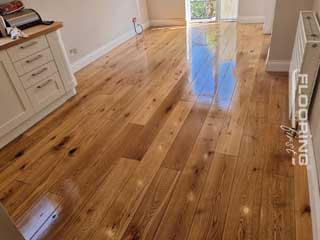
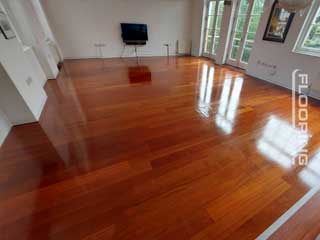
Featured Project in Clapton: Floor Sanding & Stair Restoration in Clapton, East London
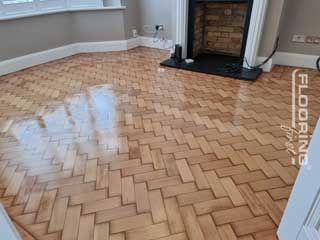
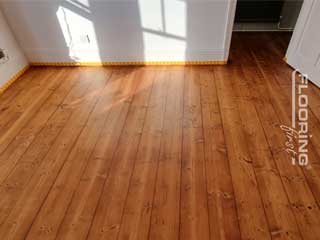
A complete floor sanding and restoration at a Victorian property in Clapton, E5. The project covered multiple rooms of pine floorboards, sanded, buffed and lacquered to a durable finish, along with full stair sanding and sealing.
The transformation across the property was marked. Every floorboard was sanded back to bare timber, then buffed and finished with lacquer to a consistent, hard-wearing sheen. Loose boards had been refitted and secured before sanding began, so the finished surface is solid and quiet underfoot with no movement or flex.
Wider gaps were packed with fitted timber slivers prior to lacquering, removing the draughts and giving the floor a far cleaner appearance between boards. Where replacement floorboard sections were needed, the new timber was blended into the surrounding boards and finished to match. The fireplace hearth was removed cleanly, with the surrounding boards left intact and flush.
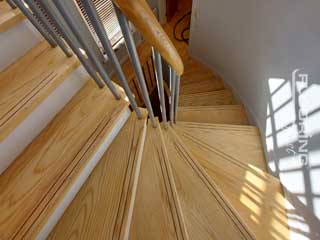
The staircase was sanded and sealed to sit alongside the restored floors below. Treads are smooth, sealed against moisture and everyday wear, and finished in keeping with the rest of the property. Taken together, it is a thorough restoration of a Victorian floor that was worth saving.
Floor Care Tips and Advice:
Find Our More on Sanding in Clapton
Local Project: Floor Sanding & Stair Restoration in Clapton, East London in Clapton — 1 January 2024
At the survey visit to 182 Rushmore Road, the floors were showing their age. Across the main living areas, the Victorian pine floorboards had lost their finish entirely in heavy-traffic zones, leaving the timber dry, scuffed and uneven underfoot. Several boards had worked loose over time and were creaking noticeably, requiring refitting before any sanding work could begin.
Gaps between boards were a recurring problem throughout the property. Some of the wider gaps were allowing draughts through from below the floor, and the overall look was patchy and tired. The fireplace hearth area needed to be removed before treatment could continue. The staircase was in a similar state — treads had worn through their original finish and were showing bare, splintered timber along the nosings.
The boards themselves were worth restoring. The property had good original timber throughout, with only a limited section requiring new floorboard material to bring the surface back to a level consistent with the rest.
The transformation across the property was marked. Every floorboard was sanded back to bare timber, then buffed and finished with lacquer to a consistent, hard-wearing sheen. Loose boards had been refitted and secured before sanding began, so the finished surface is solid and quiet underfoot with no movement or flex.
Wider gaps were packed with fitted timber slivers prior to lacquering, removing the draughts and giving the floor a far cleaner appearance between boards. Where replacement floorboard sections were needed, the new timber was blended into the surrounding boards and finished to match. The fireplace hearth was removed cleanly, with the surrounding boards left intact and flush.
The staircase was sanded and sealed to sit alongside the restored floors below. Treads are smooth, sealed against moisture and everyday wear, and finished in keeping with the rest of the property. Taken together, it is a thorough restoration of a Victorian floor that was worth saving.
Local Project: Floorboards Sanding & Restoration in Clapton, E5 in Clapton — 1 September 2019
The floor showed typical signs of wear before we started work: surface scratches, dull patches, and general finish deterioration. A thorough assessment was carried out to plan the work and choose the right finish for the space.
After sanding and finishing, the floor was restored to a high standard. The wood grain was brought back to life and the new finish provides lasting protection while keeping the character of the original boards.
Questions About Floor Sanding in Clapton
Can old floorboards be restored rather than replaced?
Often, yes. Surface wear alone isn't a reason to replace an existing wooden floor. We first assess the condition of the boards and identify any sections that need securing, repairing or replacing. If the majority of the timber remains serviceable, local repairs followed by sanding and refinishing may allow the existing floor to be retained.
Can you repair loose and squeaking floorboards before sanding?
Yes. Loose boards should be investigated before the final sanding stages. Where appropriate, boards can be secured or locally repaired before the complete floor is sanded and refinished. The cause of movement should be assessed rather than assuming sanding itself will solve the problem.
Can wide gaps between floorboards be filled?
Potentially, yes. Small and large gaps may require different methods. Wider gaps can sometimes be filled using fitted timber slivers, while other suitable gaps may be treated using a resin-based method. We assess the floor before recommending gap filling because timber naturally moves and not every gap should be treated in the same way.
Can you sand wooden stairs at the same time as the floors?
Yes. Wooden stairs can be incorporated into the same restoration project. Stair treads, risers and edges require different sanding techniques from open floor areas, but the stairs and surrounding flooring can be refinished as part of the same programme of work.
Can engineered wood flooring in Clapton be sanded?
Some engineered floors can be sanded, but the remaining hardwood wear layer needs to be checked first. Previous sanding and the depth of the existing damage also matter. If there isn't sufficient timber for another safe full sand, we can assess whether a lighter refinishing treatment is possible.
Can I change the colour of my floor when it is sanded?
Yes. Once the existing coating has been removed, the timber can be stained before the new protective finish is applied. Where appropriate, we can prepare colour samples directly on the sanded floor so you can see how different stains react with the actual timber.
Which finish should I choose after sanding?
The choice depends on how you want the floor to look, how heavily it will be used and how you prefer to maintain it. FlooringFirst works with Bona, Junckers, Osmo and Loba professional finishing systems and can recommend suitable lacquer, oil or hardwax-oil options after assessing the floor.
Do you provide free site visits in Clapton, E5?
Yes. Free site visits are available in Clapton, E5. We'll inspect the floor, identify any repairs that may be required and discuss suitable sanding and finishing options before preparing a written quotation. Call FlooringFirst on 020 8830 9782 to arrange your visit.