Light Floor Sanding
Floor Sanding & Restoration in London — At a Glance
- Price range: £25–£45 per sqm
- Typical duration: 1–2 days for an average room
- Free site visit: Yes — book online or call 020 8830 9782
- Customer rating: 4.5/5 (590+ reviews)
- Experience: 22 years, established 2004
If your wooden floor has lost its sheen, picked up a few surface scratches, or looks dull after years of use, it may not need a full restoration. Light floor sanding is a targeted treatment that removes the worn finish from the surface of your boards, leaving the timber itself untouched. It is faster, less invasive, and cheaper than a full sand-and-refinish, and it can transform the look of a room in a single day.
FlooringFirst! has been sanding floors across London for over 25 years. We carry out light sanding work on solid wood, engineered boards, and parquet, using professional dust-extraction equipment so your home stays clean throughout the job.
Not sure if your floor needs a light sand or a full restoration? Call us on 020 8830 9782 or book a free site visit and we will assess it for you.
What Is Light Floor Sanding?
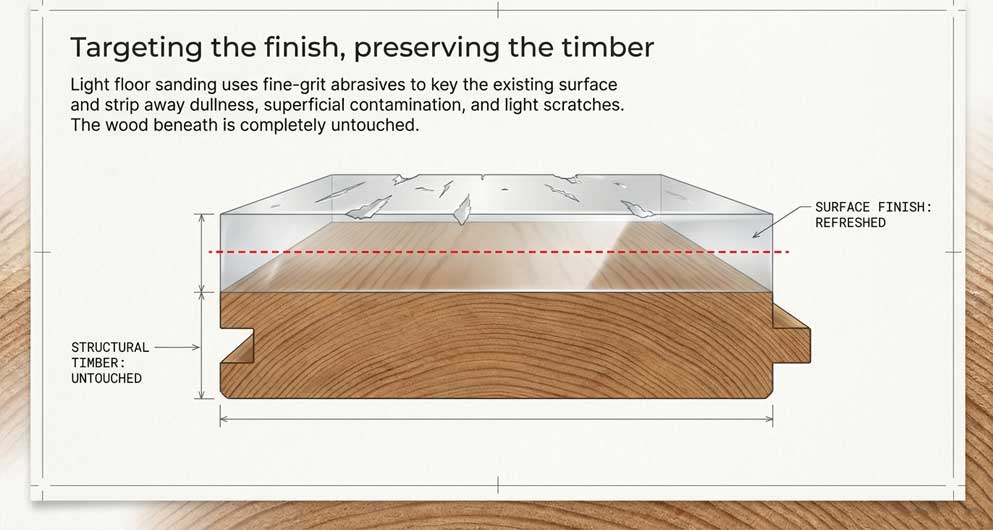
Light floor sanding, sometimes called screening or scuff sanding, treats only the very top of the finish on your floor. A fine-grit abrasive is passed over the boards to key the existing surface, remove light scratches, and strip away any dullness or superficial contamination. The wood beneath is not touched at all.
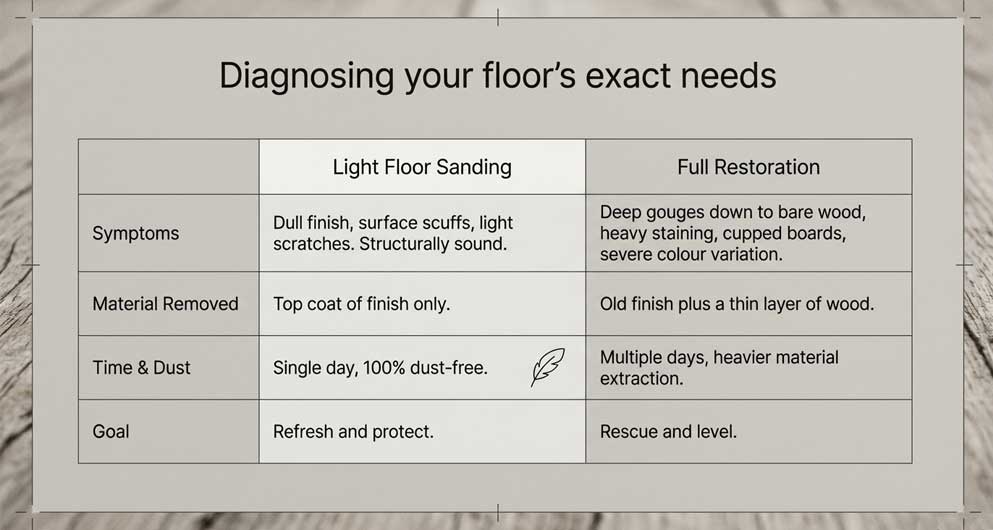
This is different from a full floor sand, where coarser machines remove multiple layers of old finish and a thin layer of wood itself, levelling out deep scratches, staining, or uneven boards. Full sanding is the right call for badly worn or damaged floors. Light sanding suits floors that are fundamentally in good shape but look tired on the surface.
After light sanding, the floor is cleaned down and a fresh coat of lacquer, oil, or hardwax-oil is applied. The result is a floor that looks and feels like it has just been finished.
When Is Light Sanding the Right Choice?
Light sanding works well when:
- The boards are structurally sound and level, with no deep ridges or cupping
- The floor has surface scratches and scuffs but no gouges down to bare wood
- The finish is dull, faded, or starting to flake, but there is still a reasonable layer present
- You want to apply a fresh coat of finish between full restorations, typically every 3 to 5 years
- The boards are thin and cannot sustain the material loss of a full sand
- You are preparing the floor for a change of finish, for example switching from lacquer to oil
If the boards have deep scratches, heavy staining, significant colour variation, or structural movement, a full sand will give a better result. When we visit for the initial assessment, we will tell you plainly which service is appropriate and why.
Light Sanding Prices in London
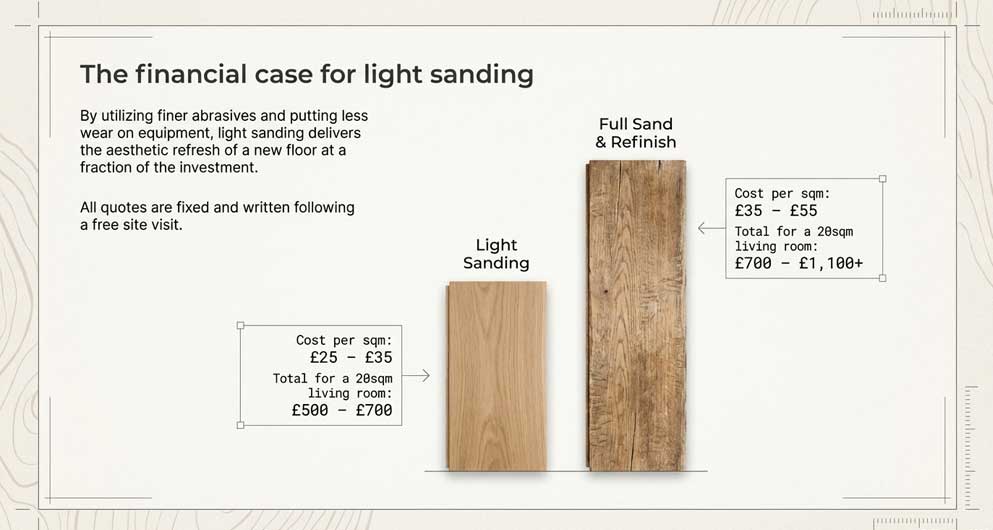
Light floor sanding costs less than a full restoration because it uses finer abrasives, takes less time, and puts far less wear on the equipment. As a guide, prices for light sanding and a single coat of finish in London typically run from £25 to £35 per square metre, depending on the floor condition, room layout, and finish type chosen.
A full floor sand and refinish in London starts from around £35 to £55 per square metre, so the saving on a light sand can be substantial, particularly on larger rooms. A typical London living room of 20 square metres would cost roughly £500 to £700 for a light sand with finish, compared to £700 to £1,100 or more for a full strip-back and refinish.
We provide a fixed written quote after the free site visit. There are no hidden charges.
Our Light Sanding Process
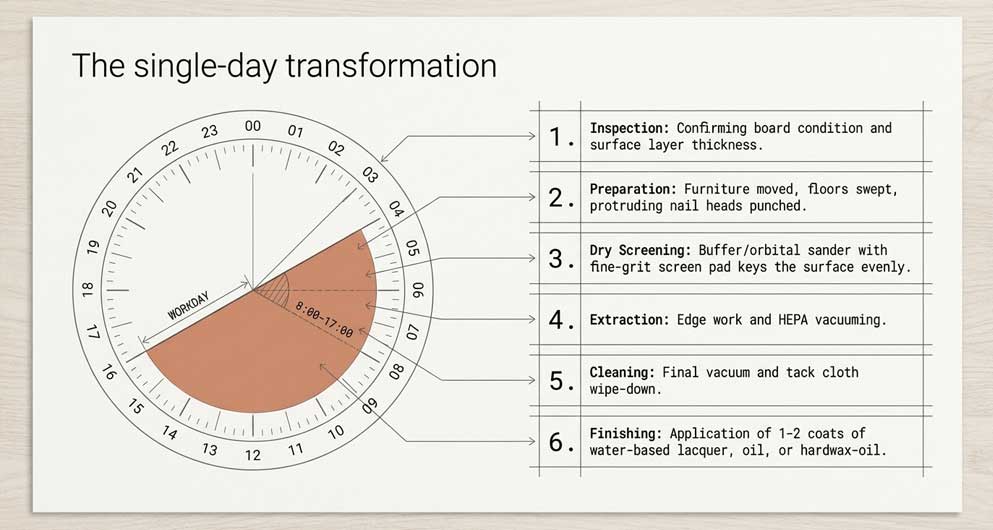
We follow a consistent process on every job to make sure the result is clean and durable:
- Floor inspection. We check the board condition, existing finish type, and thickness of the surface layer to confirm light sanding is suitable.
- Preparation. Furniture is moved where required, the floor is swept clean, and any protruding nail heads are punched down to avoid tearing the abrasive.
- Dry screening. We use a buffer or orbital sander fitted with a fine-grit screen pad to key the entire floor surface evenly. This opens up the old finish without cutting into the wood.
- Dust extraction. Our machines are fitted with professional HEPA-filtered dust bags. Edge work is done with a detail sander and vacuum attachment. The room remains clean throughout.
- Cleaning. The floor is vacuumed and wiped down with a tack cloth to remove all fine dust before finishing.
- Application of finish. One or two coats of your chosen finish are applied: water-based lacquer, oil, or hardwax-oil. We allow proper drying time between coats and advise you on curing time before the floor is back in full use.
Most rooms are completed in a single day, with light foot traffic possible the same evening and full use within 24 to 48 hours, depending on the finish used.
Suitable Floor Types
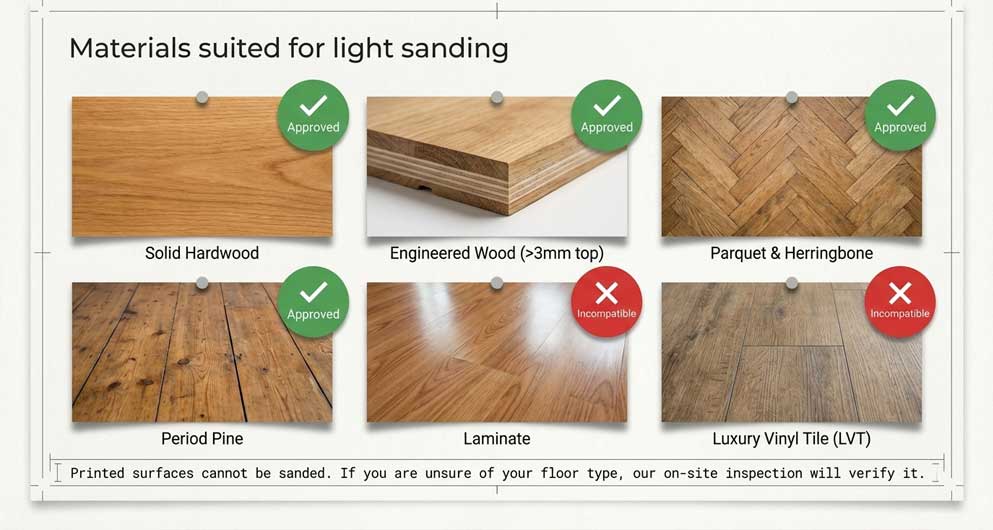
We carry out light sanding on:
- Solid oak, ash, pine, and other hardwood strip floors
- Engineered wood floors with a real timber top layer of at least 3mm
- Parquet blocks and herringbone panels
- Pine floorboards in period properties
We do not light-sand laminate or luxury vinyl tile (LVT), as these products have printed surfaces that cannot be sanded. If you are unsure about your floor type, we can identify it during the site visit.
Why Choose FlooringFirst!
We are a London-based flooring company with experienced sanding teams covering all postcodes in Greater London. Our equipment is maintained to a professional standard, and every job includes a written quote, clear communication, and a tidy finish. We have completed work in private homes, offices, restaurants, schools, and listed buildings, so whatever your situation, we have dealt with something similar before.
Call us on 020 8830 9782, email cs@flooringfirst.co.uk, or book a free site visit online.
Frequently Asked Questions About Light Floor Sanding
What is the difference between light sanding and full floor sanding?
Light sanding removes only the top coat of finish using fine-grit abrasives, without touching the wood itself. Full floor sanding uses coarser machines to strip back old finish and a layer of the wood, evening out deep scratches and structural imperfections. Light sanding is faster, cheaper, and suitable for floors in reasonable condition. Full sanding is needed when the boards are heavily worn, deeply scratched, or have been stained or colour-treated and you want a clean start.
How much does light floor sanding cost in London?
Light sanding with a fresh coat of finish typically costs between £25 and £35 per square metre in London. A standard living room of around 20 square metres would usually come to £500 to £700. The exact price depends on the floor condition, the finish you choose, and access to the property. We provide a fixed written quote after the free site visit with no obligation.
How long does light floor sanding take?
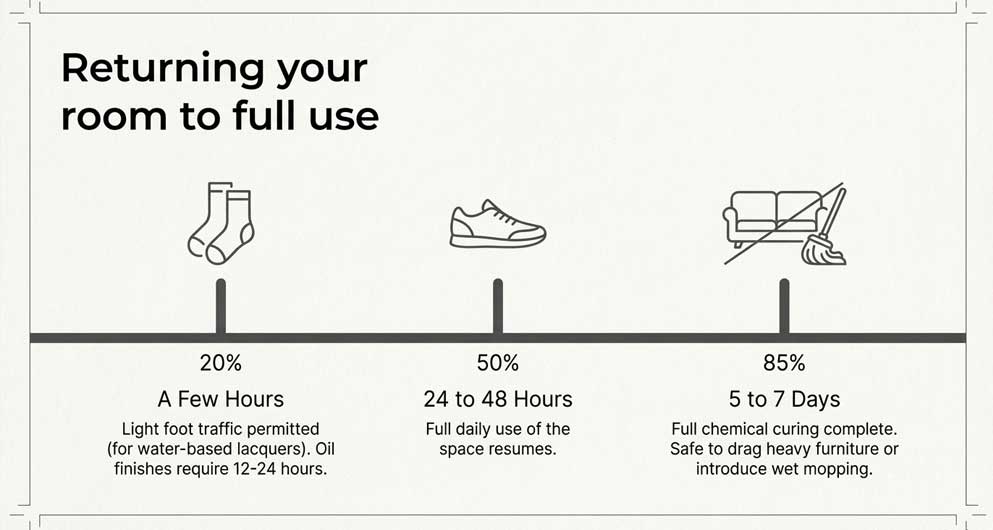
Most rooms can be screened and refinished in a single day. The sanding itself is fast because only the surface is being treated. Drying time for the finish varies: water-based lacquers allow light foot traffic within a few hours, while oil finishes may need 12 to 24 hours before walking on them. Full curing usually takes 5 to 7 days, during which you should avoid dragging furniture or wet mopping.
Is light floor sanding dusty?
Much less so than full sanding. Because only the finish layer is being keyed rather than the wood itself, far less material is removed and the process is significantly cleaner. We also use professional dust-extraction equipment fitted with HEPA filters, which captures the vast majority of fine particles at source. Your home will not be coated in sawdust when we are done.
How often should I have my floors lightly sanded?
For a floor in regular domestic use, a light sand and recoat every 3 to 5 years keeps the surface looking well-maintained and prevents the finish from wearing through to bare wood. High-traffic areas such as hallways and kitchens may need attention more frequently. Catching the floor before the finish has worn through completely means the job stays simple and affordable.
Can I change the colour of my floor with a light sand?
A light sand on its own will not change the colour of the floor, as it does not remove wood. However, after screening, we can apply a stain or a tinted hardwax-oil to shift the colour before the final topcoat goes on. This gives you some flexibility without the cost and disruption of a full strip-back. We can show you colour samples during the site visit.