Floor Sanding Timeline: How Long Does Floor Sanding Take?
Floor Sanding & Restoration in London — At a Glance
- Price range: £25–£45 per sqm
- Typical duration: 1–2 days for an average room
- Free site visit: Yes — book online or call 020 8830 9782
- Customer rating: 4.5/5 (590+ reviews)
- Experience: 22 years, established 2004
When we send a customer a quotation, the first follow-up question almost never has anything to do with money. It's "how long will the work take?" People want to know when they can use the room again, when the kids can run around on the floor, and when life goes back to normal.
The honest answer is that the sanding itself is usually the quick part. What takes a bit more patience is everything that happens after — the repairs, the finishing, the drying, and the curing. Once you understand how those stages fit together, the whole project stops feeling like a mystery.
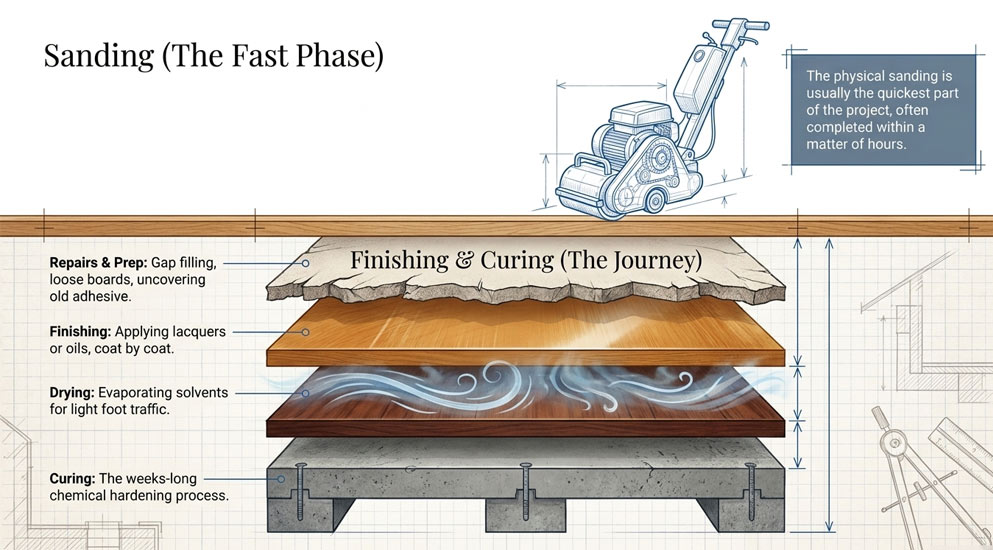
Several things affect how long your particular job will take: the size of the room, the condition of the floor underneath the old finish, how much repair work is needed, which finish you choose, how well the room ventilates, and how many rooms are being done at once. Our 100% dust-free floor restoration process also plays a part, since it keeps the work area cleaner and avoids extra clean-up time. Two identical-sized rooms can have completely different timelines depending on what we find once the old finish comes off.
How long does floor sanding take? Most residential rooms are fully sanded and finished within one to three days, depending on size and condition. Drying time before light use is typically a few hours to a day, but full curing — when a finish reaches its maximum hardness — can take one to three weeks depending on the product used.
What Determines How Long Floor Sanding Takes?
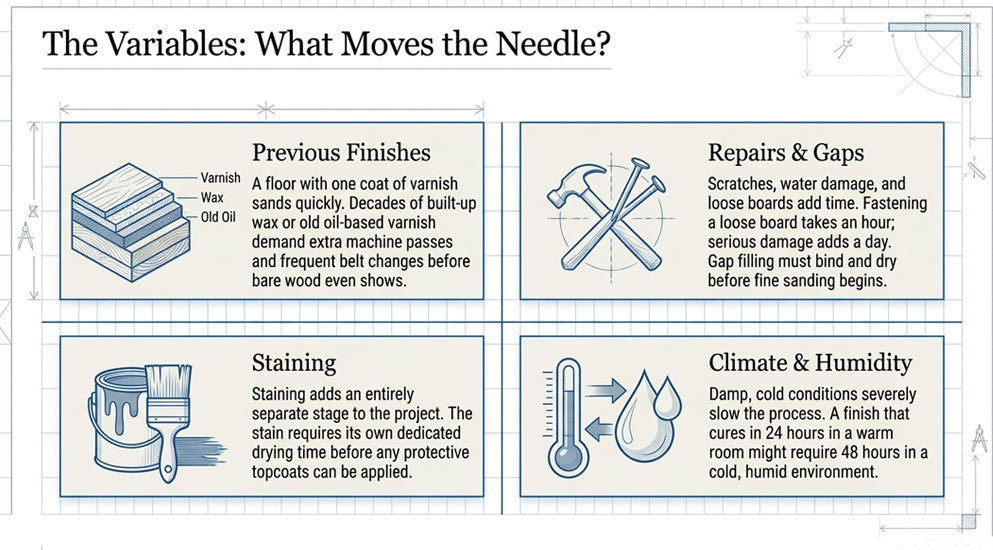
No two floors sand at the same speed, even when they look similar on the surface. Here's what actually moves the needle on a project timeline.
- Room size and number of rooms. More square metres means more passes — but not always proportionally; a hallway takes longer per square metre than an open-plan room due to all the stopping and starting.
- Existing floor condition and previous finishes. A floor with one coat of varnish sands quickly. Decades of built-up wax, old oil-based varnish, or several layers of old finish need extra passes and more belt changes before bare wood even shows.
- Repairs and gap filling. Scratches, loose boards, and water damage all add time — a loose board might cost an hour, serious damage could add a day. Standard gap filling between floorboards needs to bind and partially dry before fine sanding can begin.
- Staining and number of finish coats. Staining adds its own stage and drying time. Each additional coat needs to dry before the next goes on.
- Weather and humidity. Damp, cold conditions slow drying noticeably — a finish that cures in 24 hours in a warm room might need closer to 48 in a cold, humid one. Hidden issues like loose boards or old finish under carpet also tend to surface only once sanding starts, which is why experienced contractors build some flexibility into the schedule.
Typical Floor Sanding Timeline From Start to Finish
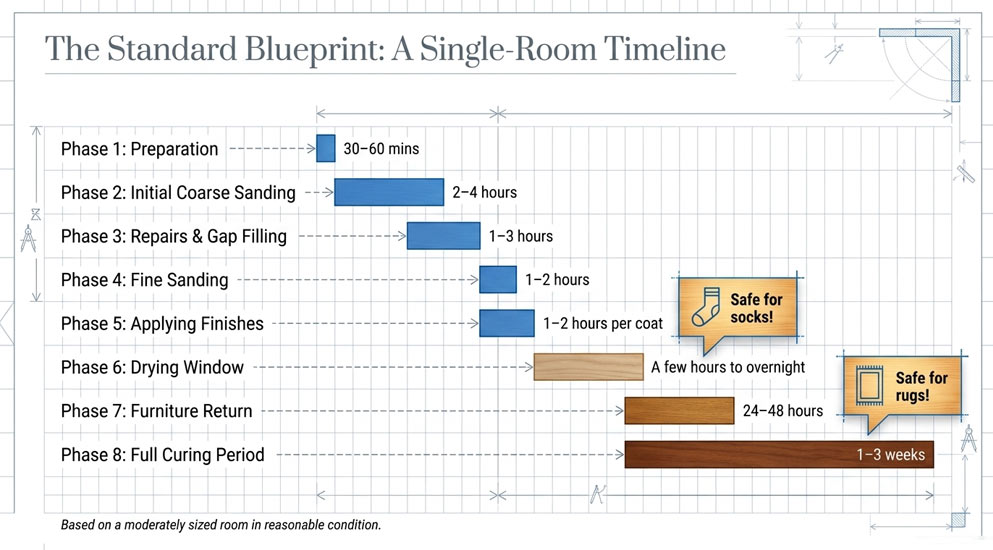
Here's roughly how a standard single-room project breaks down. These figures assume a moderately sized room in reasonable condition — your contractor will adjust based on what they find.
It's worth separating two terms that get used interchangeably but mean different things. Drying is when the finish is no longer wet to the touch and can handle light foot traffic. Curing is when the finish has reached its full hardness and chemical resistance — this takes considerably longer, and it's the stage that matters most for furniture and rugs.
How Long Does It Take, By Room and By Flooring Type
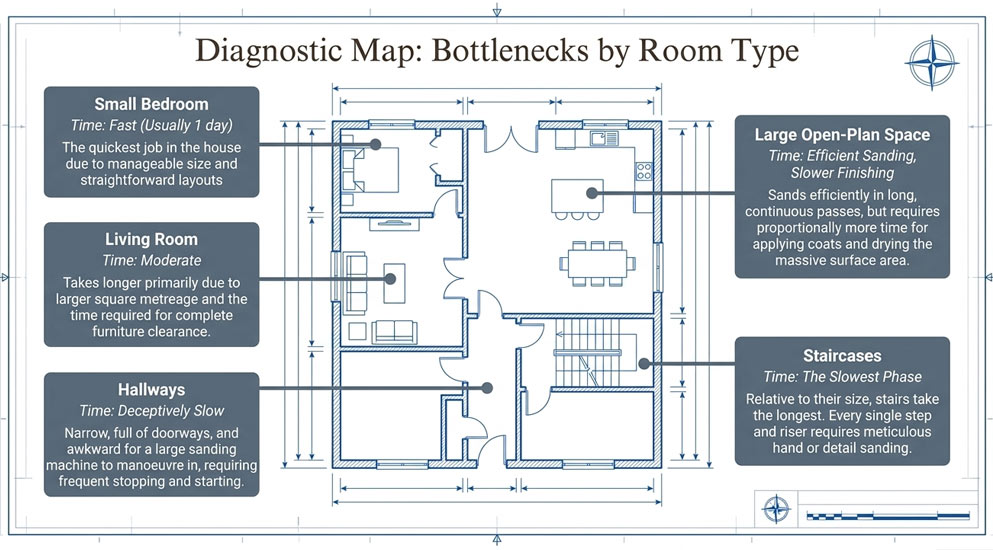
Room size is one factor, but the material and layout matter just as much. As a guide, pine parquet sanding and sealing (up to 40 sqm) typically takes around 2 days with varnish or 3 days with hard wax oil. Old, uneven floorboards (20 sqm), including gap filling, usually take around 1 day with varnish or 2 with hard wax oil. Engineered wood floors generally sand a little faster than solid hardwood, since the veneer layer limits how many passes are safe, but the finishing time is much the same. Parquet floor restoration in particular can throw up surprises once old adhesive or damaged blocks are uncovered, so these figures are a starting point rather than a guarantee.
By room, a small bedroom is usually the quickest job in the house, often done within a day. Living rooms take longer simply due to size and furniture clearance. Hallways are deceptively slow — narrow, full of doorways, and awkward for a sanding machine to manoeuvre in. Staircases are the slowest part of almost any whole-house project relative to their size, since every step and riser needs hand or detail sanding; a full staircase sanding job can take as long as a mid-sized room, more if treads need trowel filling first. Large open-plan spaces sand efficiently in long continuous passes but need proportionally more time for finishing, simply because there's more area to coat and dry.
How Long Before You Can Walk on Newly Sanded Floors?
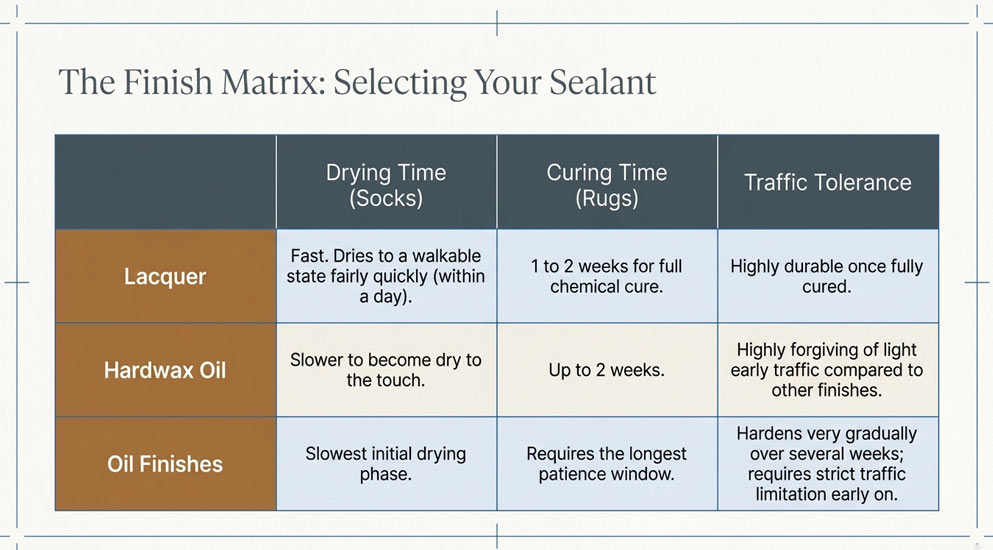
This depends heavily on the finish, so treat these as general guidance. Once a finish is dry to the touch — often a few hours after the final coat — light traffic in socks is usually fine; avoid bare feet a bit longer, since skin oils can mark a fresh finish. Hold off on shoes, especially heels or stiff soles, for a day or two, and keep children and pets off the floor entirely until your contractor confirms it's safe.
The finish itself changes the timing: lacquer dries to a walkable state fairly quickly but can still take one to two weeks to fully cure, hardwax oil is slower to dry to the touch but tends to be more forgiving of light traffic early on, oil finishes generally need the longest patience window, as they continue hardening gradually over several weeks.
When Can Furniture and Rugs Go Back?
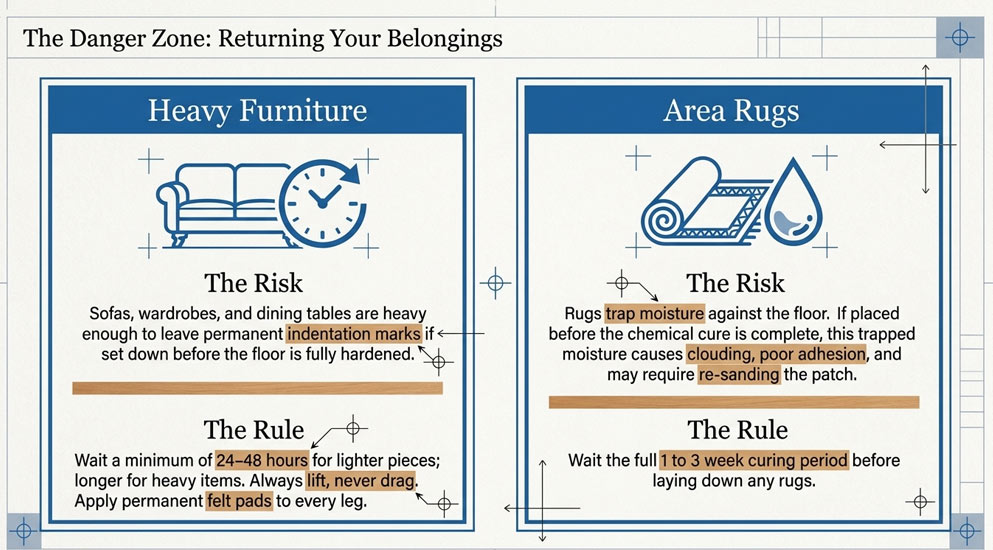
Bringing furniture back too soon is one of the most common ways a brand-new finish gets damaged. Sofas, beds, wardrobes, and dining tables are heavy enough to leave permanent indentation marks if set down before the finish has properly hardened — generally 24–48 hours for lighter pieces, longer for heavy furniture and appliances. Use felt pads on every leg permanently, lift rather than drag, and when in doubt wait a few extra days rather than risk redoing a section.
Rugs carry a similar but less obvious risk: they trap moisture against the floor, and if the finish underneath hasn't fully cured, that moisture can cause clouding or poor adhesion. Finishes keep curing gradually for one to three weeks after they feel dry, so putting a rug down too early can mean re-sanding the affected patch later.
Can You Stay in the House During Floor Sanding?
In most cases, yes. If only one room is being sanded, staying at home is rarely an issue — you simply avoid that room and use the rest of the house normally. Whole-house projects are more disruptive, particularly around kitchen and bathroom access, and families with young children or anyone working from home may want to plan around the noisiest days. Dust extraction keeps airborne particles to a minimum, but it doesn't eliminate noise. For larger, multi-room jobs, some homeowners choose to spend a night or two elsewhere — not because it's essential, but because it makes the process more comfortable.
Tips for Keeping Your Project on Schedule
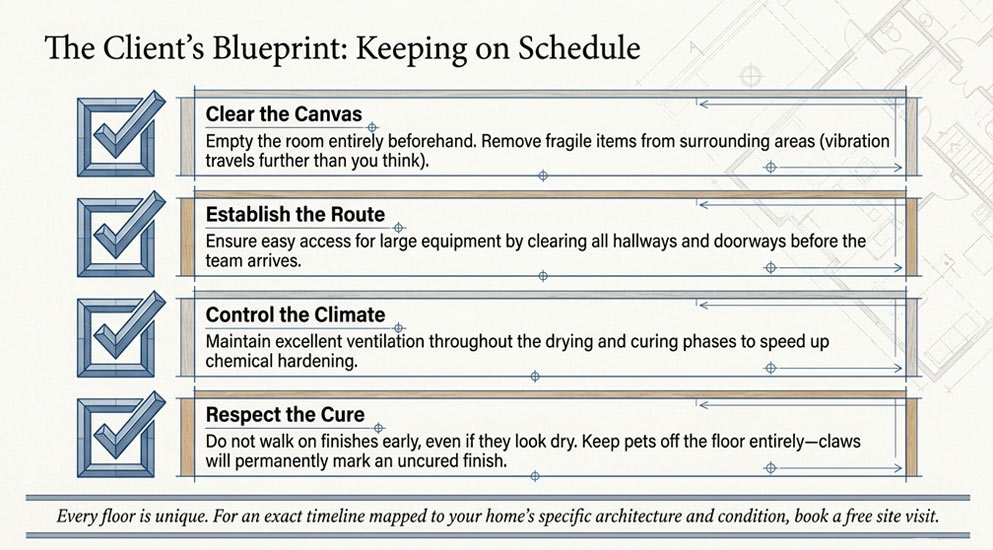
- Empty the room beforehand and remove fragile items from surrounding areas, since vibration travels further than expected.
- Ensure easy access for equipment by clearing hallways and doorways before the team arrives.
- Maintain good ventilation throughout drying and curing.
- Avoid walking on finishes too early, even if they look dry, and follow aftercare advice on cleaning products and furniture placement once the floor is back in use. Our tips on preventing gaps from reappearing are a good starting point for long-term care.
Frequently Asked Questions
How long does floor sanding take for one room? Most single rooms are fully sanded and finished within one to three days, depending on size, condition, and the number of finish coats applied.
Can I sleep in the room after sanding? Once the final coat has dried — usually within a day — most finishes are safe for light use like walking through in socks. Check with your contractor before resuming full normal use, including sleeping in the room if furniture needs to go back first.
How long before I can move furniture back? Generally 24–48 hours after the final coat, though heavier pieces and full curing benefit from waiting longer.
How long does lacquer take to cure? Lacquer typically dries to a walkable state within a day but can take one to two weeks to fully cure.
Does staining increase the timeline? Yes. Staining adds an extra stage and its own drying time before the protective finish can be applied on top.
Can weather affect drying times? Yes — cold, damp, or humid conditions slow drying and curing noticeably compared to a warm, well-ventilated room.
Can pets walk on newly finished floors? Not until the finish has fully cured. Pet claws can mark a finish that still feels dry but hasn't hardened completely.
Conclusion
The sanding itself is usually the fastest part of the whole process — most rooms are physically sanded within a matter of hours. What takes planning is everything around it: repairs, gap filling, finishing, drying, and the longer curing period that follows. Once you understand how these stages stack up, it's much easier to plan around the project rather than be caught off guard by it. Every floor is different, and timelines like the ones above are only ever a starting point. If you'd like an accurate schedule for your specific floor, a free site visit is the best way to get one.