Wood Floor Polishing
Wood floor polishing is a maintenance service that refreshes the surface finish of your floor without touching the wood underneath. Done at the right time, it keeps floors looking their best and extends the life of the finish between full sand and seal jobs. Done at the wrong time, or with the wrong products, it creates more problems than it solves. Bring your wooden floors back to life with a professional polish. Call 020 8830 9782 or book your free site visit today and let our experts restore their natural shine.
Polishing vs Full Sanding: Know the Difference
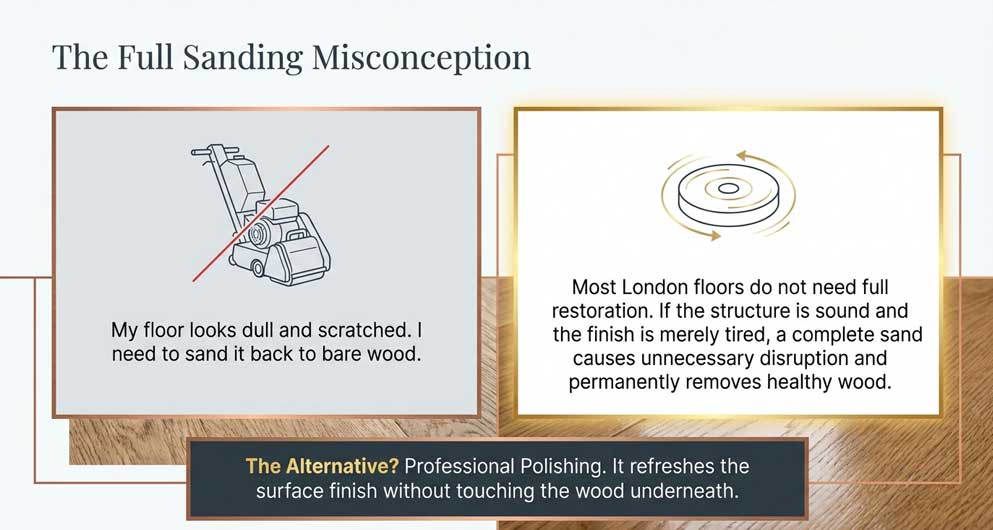
The key difference is whether wood gets removed. Full sanding cuts through the finish into the wood surface, levelling scratches, dents, and stains before the floor is sealed. It is thorough and delivers a complete restoration, but it takes a day or more, causes significant disruption, and removes a small amount of wood from the floor.
Polishing does none of that. The process buffs the surface to remove surface contamination and light scuffs, then applies a fresh coat of compatible finish on top of what is already there. No wood is removed. It is quicker, cheaper, and far less disruptive. For a floor that is structurally sound and where the finish is just tired rather than failed, polishing is exactly what is needed.
The catch is that polishing only works when the existing finish is still intact. If the seal has worn through, topcoating over bare wood or damaged finish produces an uneven, patchy result. In those cases, a full sand is the right route, not a shortcut.
Oiled Floors vs Lacquered Floors: Different Products, Different Process
This is where a lot of DIY attempts go wrong. The maintenance approach for oiled and lacquered floors is not interchangeable.
Oiled Floors
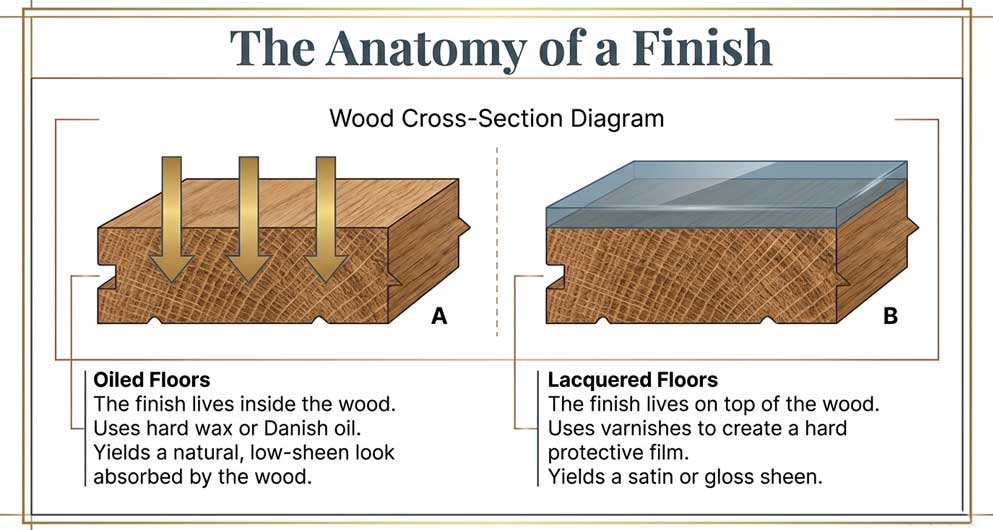
Oiled floors use a hard wax oil or Danish oil that penetrates into the wood rather than forming a surface film. The finish lives inside the wood, not on top of it. Maintenance involves cleaning the floor thoroughly, buffing with a suitable pad to open up the grain slightly, and then applying a compatible maintenance oil or hard wax oil that soaks in and replenishes the finish. The result is a natural, low-sheen look that the wood absorbs rather than reflects off.
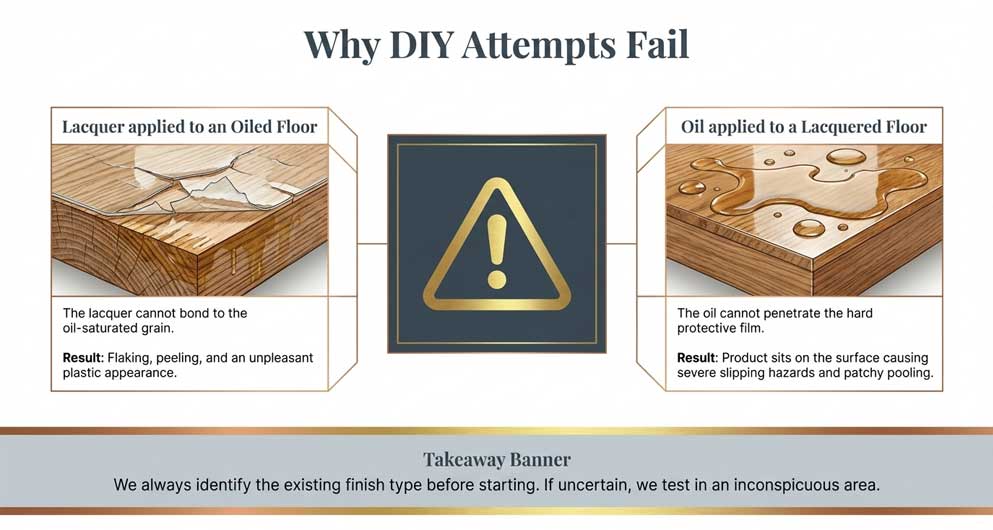
Using a lacquer or wax polish on an oiled floor will not bond correctly and can cause flaking or an unpleasant plastic appearance. Equally, applying oil to a lacquered floor will not penetrate and will just sit on the surface, causing slipping and an uneven finish.
Lacquered Floors
Lacquered or varnished floors have a hard protective film sitting on top of the wood. Maintenance polishing involves cleaning, a light buff to key the surface, and application of a compatible topcoat lacquer in one or two thin coats. This builds back up the protective layer and restores gloss or satin sheen depending on the product used.
We always identify the existing finish type before starting. If there is any uncertainty, we test in an inconspicuous area first. Give your floors the finish they deserve. Contact us on 020 8830 9782 or arrange a free site visit and discover the difference professional polishing can make.
When Is Polishing Appropriate?
Polishing is the right option when:
- The floor looks dull and has lost its sheen but the finish is still largely intact
- There are light surface scratches from normal use but no deep cuts into the wood
- The floor has not been sanded in a long time but is not structurally damaged
- You want to maintain oiled floors as part of an annual care programme
- You need a quick refresh ahead of a sale, rental, or event
Polishing is not suitable when:
- The finish has worn through in heavy traffic areas, leaving bare or grey wood
- There is deep scratching, gouging, or staining in the wood itself
- The floor has been polished multiple times with incompatible products and the finish is lifting or flaking
- Boards are cupping, moving, or there is structural damage
If you are not sure which applies to your floor, book a free site visit and we will tell you straight.
Wood Floor Polishing Prices in London
Prices vary depending on the type of finish and what the floor needs. As a guide:
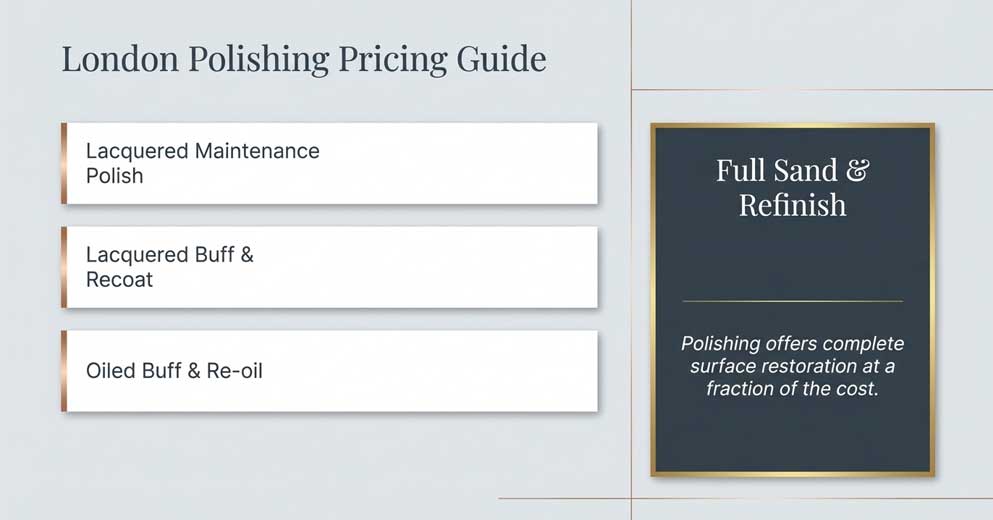
- Cleaning and maintenance polish for lacquered floors: from £9 per sqm
- Buff and recoat for lacquered floors: from £25 per sqm
- Buff and re-oil for oiled or hard wax oil floors: from £25 per sqm
- Typical living room (20 sqm): roughly £150 to £350 depending on service
- Hallway and stairs pricing on application
A full sand and refinish, for comparison, starts from around £35 per sqm. If polishing is suitable, it will save you significant money. We do not recommend polishing when sanding is what is actually needed.
*all prices quoted exclude VAT
How Frequently Should You Polish Wood Floors?
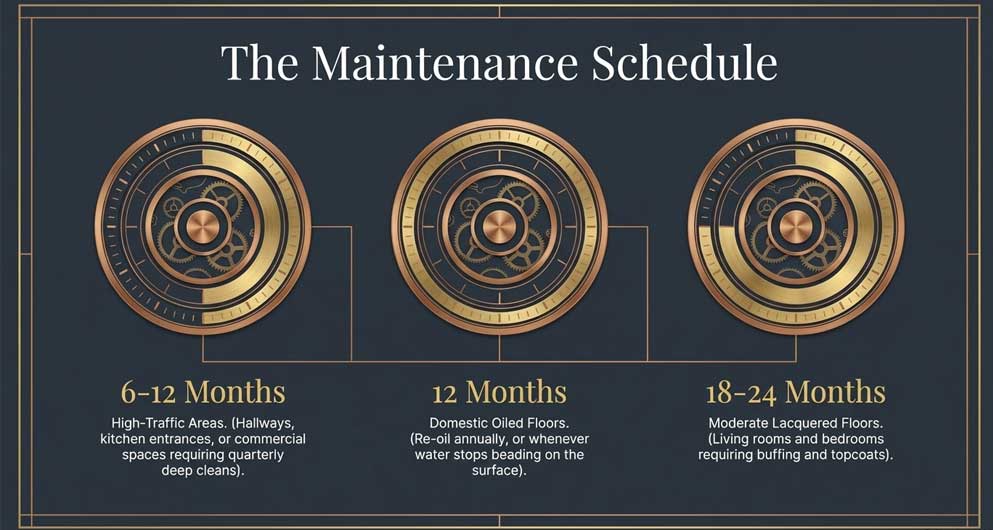
There is no single answer because it depends on foot traffic, floor type, and how well the floor is maintained day to day. As a working guide:
- Oiled floors in normal domestic use: re-oil every 12 months, or when water stops beading on the surface
- Lacquered floors in moderate traffic: buff and topcoat every 18 to 24 months
- High-traffic areas (hallways, kitchen entrances): may need attention every 6 to 12 months
- Commercial floors: maintenance schedule depends on footfall; quarterly deep cleans are common
Getting polishing right on schedule means less chance of needing a full sand. Most London floors that end up needing a complete restoration could have been maintained at a fraction of the cost with timely polishing.
Our Polishing Process
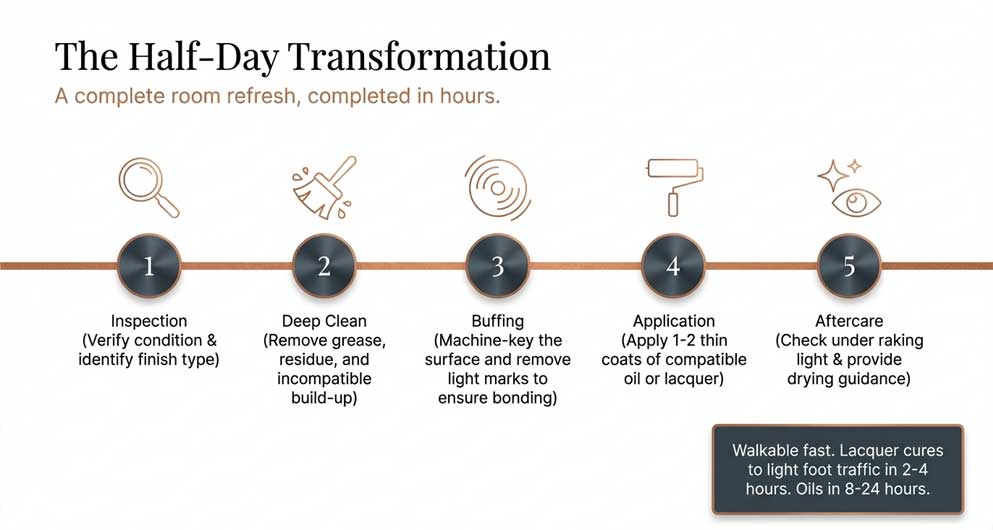
Here is what we do on a standard wood floor polishing visit:
- Inspection: We check the floor condition, identify the finish type (oil, lacquer, wax), and confirm that polishing is appropriate.
- Deep clean: The floor is cleaned with a suitable wood floor cleaner to remove grease, residue, and any incompatible polish build-up.
- Buffing: A buffing machine with an appropriate pad keys the surface and removes light surface marks. This also helps the new finish coat bond properly.
- Application: We apply the compatible finish product, whether oil, hard wax oil, or lacquer topcoat, in one or two thin coats with correct drying time between.
- Final check: We inspect the finished surface under raking light to make sure coverage and sheen are even.
- Aftercare advice: We leave you with guidance on drying times, cleaning products to use, and how long before the floor is back to full use.
We work across all London boroughs, covering residential and commercial properties. Call us on 020 8830 9782 or use the quote form to book a free site visit.
Frequently Asked Questions
What is the difference between wood floor polishing and full sanding?
Polishing refreshes the surface finish without removing any wood. It is suitable for floors where the finish is dull or lightly worn but the wood itself is in good condition. Full sanding removes the top layer of wood and is needed when there are deep scratches, gouges, heavy staining, or when the finish has broken down completely. Polishing is significantly quicker and less disruptive than a full sand.
How much does wood floor polishing cost in London?
Maintenance polishing for lacquered floors typically starts from around £7 per sqm. Re-oiling or buffing and recoating oiled floors generally costs between £12 and £20 per sqm depending on floor size and condition. A typical living room of 20 sqm would cost roughly £150 to £350 depending on the service required. Call us for a free site survey and written quote.
How often should wood floors be polished?
For most London homes with moderate foot traffic, a maintenance polish every 12 to 18 months keeps the floor looking good between full restorations. High-traffic areas like hallways may benefit from polishing every 6 to 12 months. Oiled floors need re-oiling more frequently than lacquered floors.
Can oiled and lacquered floors both be polished?
Yes, but the process is quite different. Oiled floors need a compatible hard wax oil or maintenance oil applied after buffing to replenish the finish that sits within the wood surface. Lacquered floors require a compatible lacquer or topcoat applied on top of the existing seal. Mixing products or using the wrong polish on an oiled floor can cause peeling, whitening, or an uneven result. We always identify the existing finish before starting work.
Will polishing remove scratches from my wood floor?
Polishing can reduce the appearance of light surface scratches by filling in the finish layer and restoring sheen. It will not remove deep scratches that have cut through the finish into the wood. Those require spot repairs or a full sand and refinish.
How long does wood floor polishing take and when can I use the floor?
A standard room can usually be cleaned, buffed, and recoated in half a day. Drying and curing times vary: a maintenance lacquer coat is typically walkable in 2 to 4 hours and fully cured within 48 hours. An oil coat may need 8 to 24 hours before light foot traffic. We advise on exact drying times on the day based on the products used and conditions.