Engineered Wood Floor Sanding
Floor Sanding & Restoration in London — At a Glance
- Price range: £25–£45 per sqm
- Typical duration: 1–2 days for an average room
- Free site visit: Yes — book online or call 020 8830 9782
- Customer rating: 4.5/5 (590+ reviews)
- Experience: 22 years, established 2004
Engineered wood floors can be sanded and refinished to look as good as they did when first laid. The key is knowing whether your specific floor has enough wear layer left to sand safely. We inspect every floor before we touch it, and we will always tell you straight if sanding is not viable.
FlooringFirst has been sanding and finishing floors across London for over 20 years. We carry out all work with dust-controlled equipment, so the disruption to your home is kept to a minimum. Restore your engineered wood floors with expert sanding and refinishing. Call us on 020 8830 9782 or book your free site visit today.
Can Engineered Wood Floors Be Sanded?
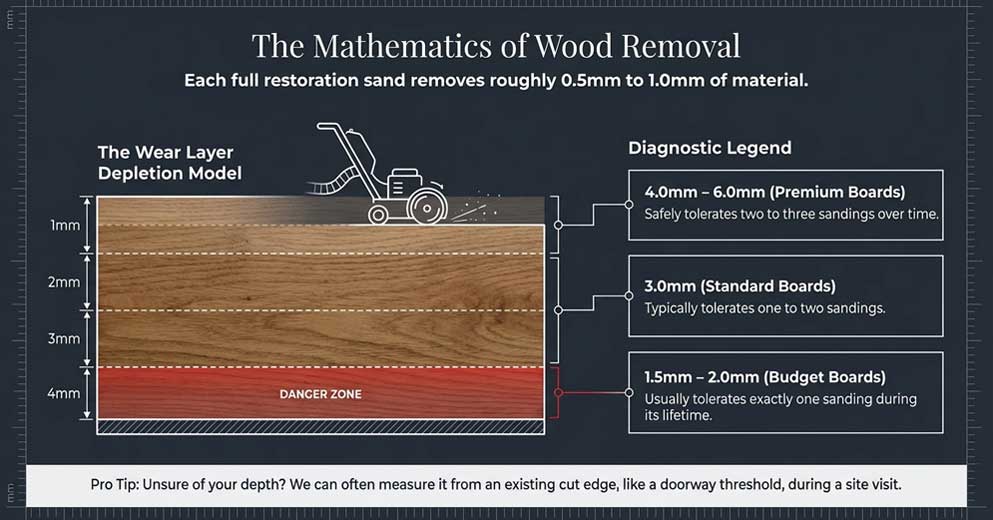
Yes, most engineered floors can be sanded at least once. The wear layer is the thin slice of real wood bonded to the plywood core beneath. It is this layer that gets sanded. Unlike solid hardwood, which can be sanded many times over decades, engineered floors have a fixed amount of material available before you risk hitting the core.
Budget engineered boards often have a wear layer of just 1.5 to 2mm. Premium boards can have 4mm, 5mm or even 6mm. Each full sand removes roughly 0.5 to 1mm of material, so the number of times a floor can be sanded is directly tied to how thick that wear layer is.
As a rough guide:
- 2mm wear layer - usually one sanding during the floor's lifetime
- 3mm wear layer - typically one to two sandings
- 4mm or more wear layer - two to three sandings possible over time
If you do not know the wear layer thickness of your floor, we can assess it during the free site visit. Sometimes it is possible to check the manufacturer's specifications or measure from an existing cut edge such as a doorway threshold.
Engineered vs Solid Floor Sanding: What Is Different?
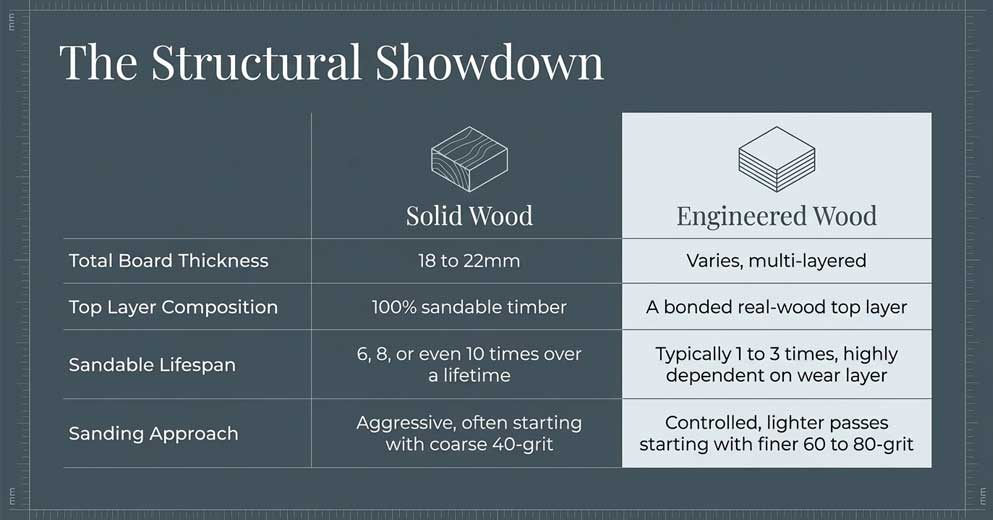
Solid wood boards are typically 18 to 22mm thick, almost all of it sandable timber. That depth means solid floors can be refinished six, eight, even ten times over their life.
Engineered boards are constructed differently. The real-wood top layer is bonded to layers of plywood or HDF for stability. That construction is excellent for underfloor heating and for rooms where moisture levels vary, but it means there is far less room for error when sanding.
The practical differences in how we work:
- We start with finer grits than we would use on solid wood, typically 60 to 80 grit rather than 40
- We use lighter, controlled passes to avoid removing too much material in one go
- Edging is done carefully, as corners and edges are where most accidental over-sanding happens
- We take more time on the initial assessment to gauge remaining wear layer depth
Bring tired engineered floors back to life with professional sanding. Speak to our team on 020 8830 9782 or arrange a free consultation now.
When to Sand and When to Replace
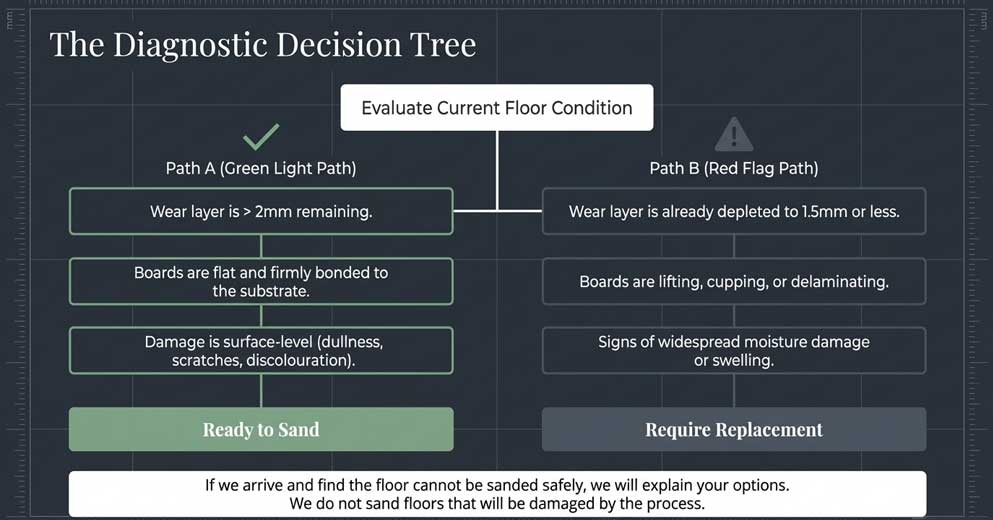
Sanding is the right choice when:
- The wear layer has at least 2mm remaining
- The surface is dull, scratched or discoloured but structurally intact
- Boards are flat and well-bonded to the substrate
- There is no significant swelling, cupping or lifting
Replacement is usually the better option when:
- The wear layer has already been sanded down to 1.5mm or less
- Boards are lifting, delaminating or show signs of moisture damage
- Structural damage is widespread rather than isolated
- The floor was a budget installation with a very thin veneer from the outset
If we arrive and find the floor cannot be sanded safely, we will tell you and explain the options. We do not sand floors that we believe will be damaged by the process.
Our Engineered Floor Sanding Process
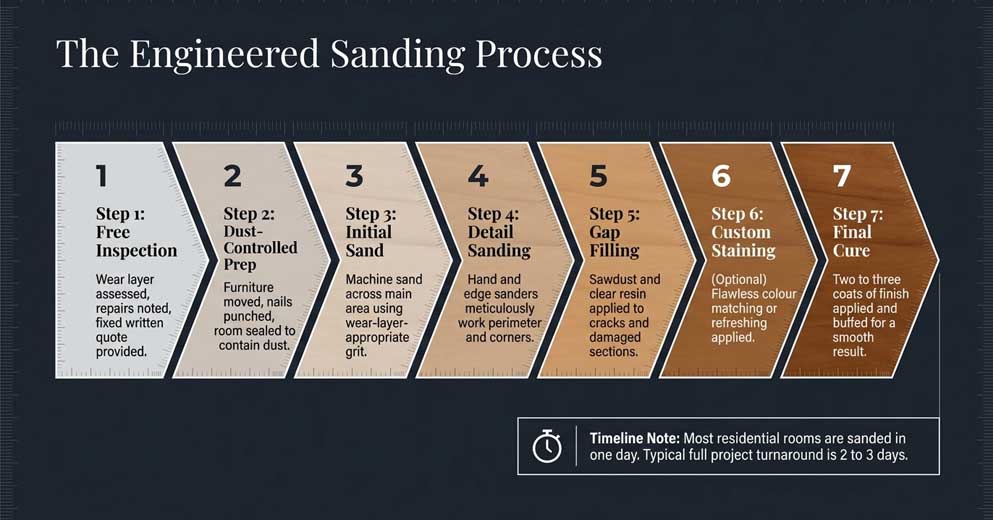
- Free site visit and inspection - We assess the wear layer, check board condition, note any repairs needed, and give you a fixed written quote.
- Preparation - Furniture moved, nails punched below the surface, loose boards secured, and the room sealed to contain dust.
- Initial sand - Machine sand across the main floor area using appropriate grit sequence for the wear layer depth.
- Edge and detail sand - Hand and edge sanders work the perimeter and awkward corners.
- Repairs and gap filling - Any cracks, gaps or damaged sections addressed before finishing.
- Staining (optional) - If you want to change or refresh the colour, stain is applied at this stage.
- Finishing - Two to three coats of your chosen finish, buffed between coats for a smooth, even result.
Finish Options for Engineered Floors
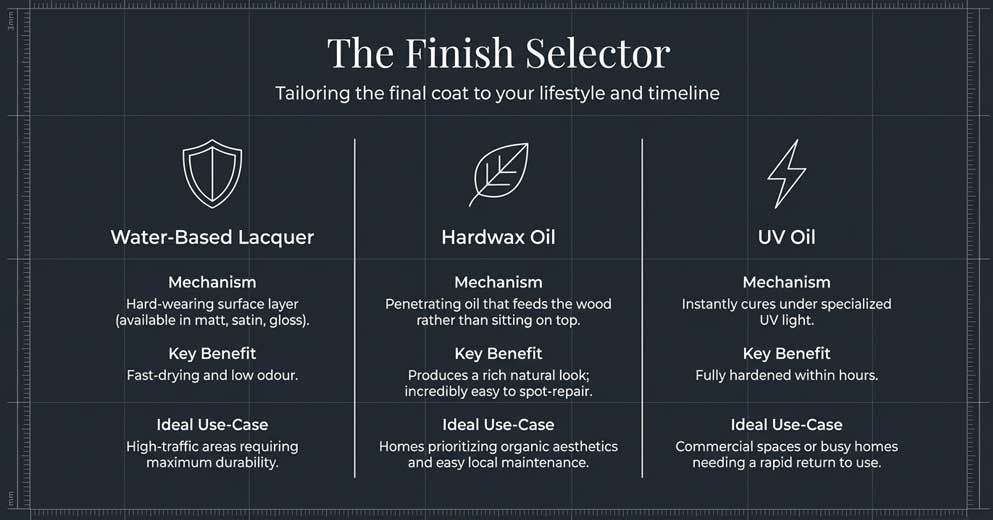
After sanding, the finish you choose affects both the look and how long it will last. We offer:
- Water-based lacquer - Hard-wearing, low odour, available in matt, satin or gloss. Dries quickly and suits high-traffic areas.
- Hardwax oil - Penetrating oil that feeds into the wood rather than sitting on top. Produces a natural look and is easy to spot-repair.
- UV oil - For floors that need rapid return to use. Cures under UV light and is fully hardened within hours.
We will recommend the most suitable finish based on the traffic levels in the room and the species of wood in your floor.
Engineered Floor Sanding Prices in London
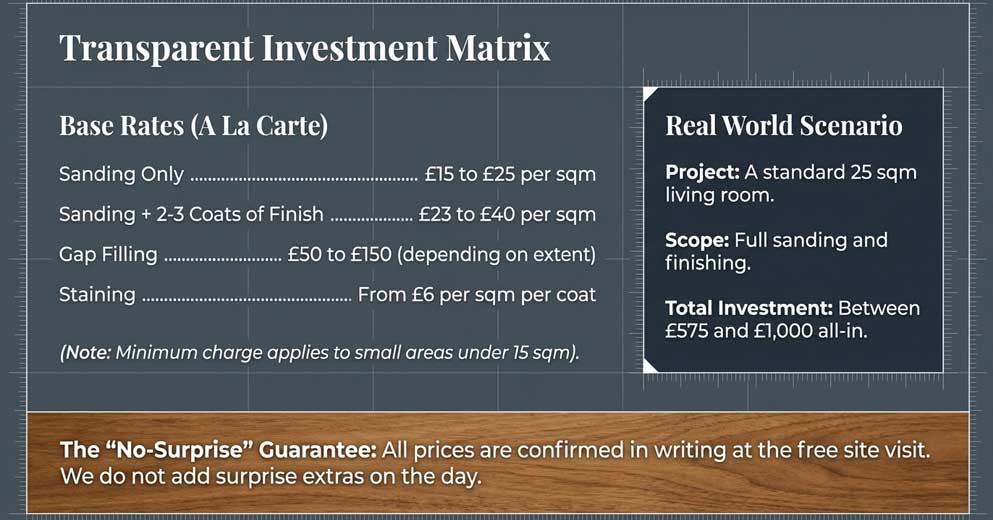
Prices depend on room size, floor condition and finish type. As a general guide:
- Sanding only - from £15 to £25 per sqm
- Sanding plus two to three coats of finish - from £23 to £40 per sqm
- Gap filling - typically £50 to £150 depending on extent
- Staining - from £6 per sqm per coat
- Minimum charge - applies to small areas under 15 sqm
All prices are confirmed at the free site visit. We do not add surprise extras on the day.
Areas We Cover
We sand engineered floors across all London boroughs, including North London, South London, East London, West London and Central London. We also cover parts of Greater London and the Home Counties.
Get a smooth, flawless finish for your engineered flooring. Call 020 8830 9782 or book your free site visit and let our experts take care of the rest.
Frequently Asked Questions
Can engineered wood floors be sanded?
Yes, in most cases. Whether sanding is safe depends on the thickness of the top wear layer. We inspect every floor before starting to confirm there is enough material to sand without breaking through to the plywood core.
How many times can an engineered floor be sanded?
It depends on the wear layer thickness. A 2mm layer may only tolerate one sanding. A 4mm layer can typically be sanded twice. A 6mm layer can usually be sanded three times over the floor's lifetime. Each full sand removes roughly 0.5 to 1mm of material.
How is sanding engineered floors different from sanding solid wood?
Solid wood has a much thicker top layer, so it tolerates more aggressive sanding and can be refinished many more times. Engineered floors have a thinner real-wood veneer over a plywood base, so the process requires lighter passes, finer grits, and greater care to avoid sanding through the wear layer.
When should I sand rather than replace the floor?
Sanding makes sense when the wear layer still has sufficient depth, the boards are structurally sound, and the damage is surface-level. If boards are lifting, swollen, or the wear layer has already been sanded down to 1.5mm or less, replacement is usually the better option.
How much does engineered floor sanding cost in London?
Sanding labour typically costs from £15 to £25 per sqm. Adding two to three coats of finish brings the total to around £23 to £40 per sqm. A 25 sqm room would typically cost between £575 and £1,000 all in. We provide fixed quotes after a free site visit.
How long does engineered floor sanding take?
Most residential rooms can be sanded in one day. Finishing requires additional drying time between coats. A typical project takes two to three days from start to finish.