School Floor Sanding & Restoration
Floor Sanding & Restoration in London — At a Glance
- Price range: £25–£45 per sqm
- Typical duration: 1–2 days for an average room
- Free site visit: Yes — book online or call 020 8830 9782
- Customer rating: 4.5/5 (590+ reviews)
- Experience: 22 years, established 2004
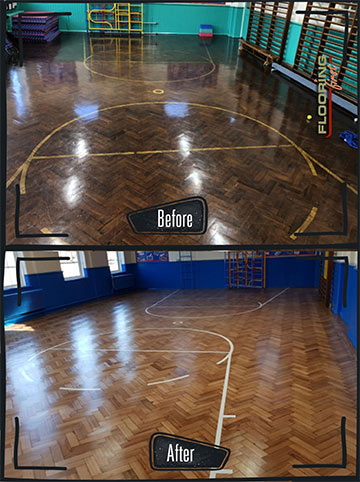
School wooden floors are exposed to constant daily wear from assemblies, sports activities, furniture movement, and hundreds of pupils walking across them every day. This heavy use gradually wears down protective finishes, leading to visible scratches, scuffs, and dull surfaces that not only affect appearance but also reduce safety. Professional school floor sanding is essential to restore the surface, improve slip resistance, and extend the lifespan of valuable assembly hall and sports hall flooring in London schools.
Over time, untreated wear can lead to more serious damage within the wood, making restoration more complex and costly. Regular school floor restoration helps prevent long-term deterioration while maintaining a clean, safe, and professional environment for pupils and staff.
- Removes scratches and worn finishes – restores the natural beauty of wooden floors
- Improves safety – reduces slip risks with properly sealed surfaces
- Extends floor lifespan – protects high-traffic areas from further damage
- Enhances durability – uses commercial-grade finishes designed for schools
At FlooringFirst, we specialise in school floor sanding in London, working with primary schools, secondary schools, colleges, and other educational facilities. Our experienced team uses advanced dust-free sanding equipment and high-performance finishes specifically chosen for busy school environments. Whether you require sports hall floor sanding, assembly hall floor restoration, or repairs to traditional parquet school flooring, we deliver tailored solutions that restore your floors to excellent condition while minimising disruption to your schedule.
Call 020 8830 9782 to discuss your school floor sanding project with our specialists, or book a free site visit, and we will assess your school floors and recommend the best restoration solution.
Types of School Floors We Restore
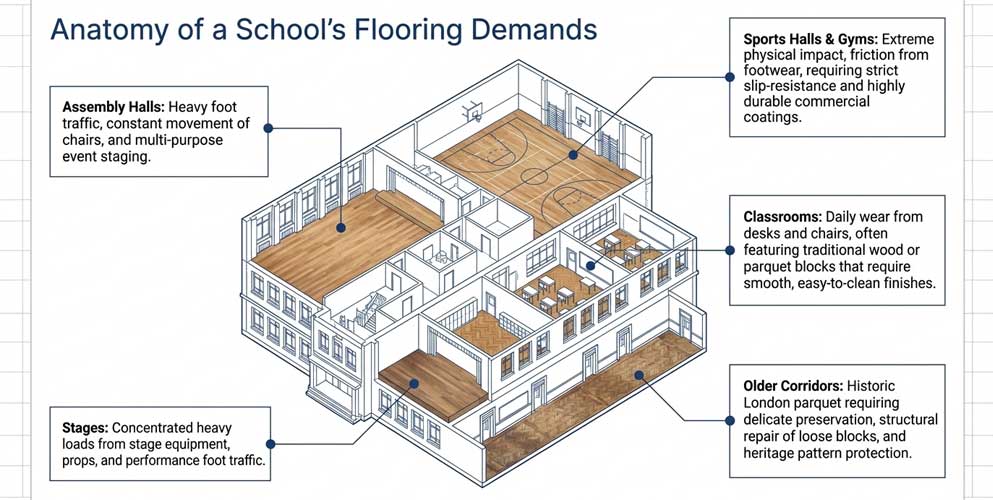
Schools contain a variety of wooden floors that serve different purposes throughout the building. From large assembly halls and sports facilities to classrooms and stages, these floors experience constant use from pupils, staff, and equipment. Over time, the protective finish wears away, leaving the wood exposed to scratches, stains, and general deterioration. Our team has extensive experience restoring the most common wooden floors found in London schools, ensuring that each surface is sanded and finished using the most suitable techniques and products.
- School Assembly Hall Floors – Assembly halls are among the busiest spaces in any school, used daily for assemblies, events, indoor sports, and performances. Constant foot traffic and movement of chairs and equipment gradually wear down the protective finish, leaving scratches, dull areas, and uneven surfaces. Professional sanding removes the damaged layer and restores the natural appearance of the timber before applying durable commercial finishes designed for heavy use.
- Sports Hall & Gym Floors – Sports halls and gymnasiums require extremely durable wooden floors capable of withstanding intense physical activity. Basketball, badminton, and other sports create constant impact and friction on the surface, which gradually damages the protective coating. Our sanding process restores gym floors and applies specialist finishes that provide durability, slip resistance, and long-lasting protection.
- Classroom Wooden Floors – Many classrooms in older London schools still feature traditional wooden flooring or parquet blocks. Daily use from desks, chairs, and foot traffic can lead to scratches, dents, and worn patches. Professional sanding and refinishing restores the floor to a clean, smooth condition while protecting the surface and making routine cleaning easier.
- Stage Floors in School Halls – School stages are used for performances, presentations, and assemblies, which means they are regularly exposed to stage equipment, props, and heavy foot traffic. Over time the finish becomes worn and uneven. Stage floor sanding restores the timber surface and protects it with durable finishes suitable for school productions and events.
- Parquet Floors in Older School Buildings – Many historic London schools feature parquet flooring arranged in decorative patterns. While extremely durable, parquet floors can develop loose blocks, gaps, or worn finishes over time. Our restoration process carefully sands the surface while preserving the original pattern and repairing damaged sections before refinishing the floor.
Signs a School Floor Needs Sanding
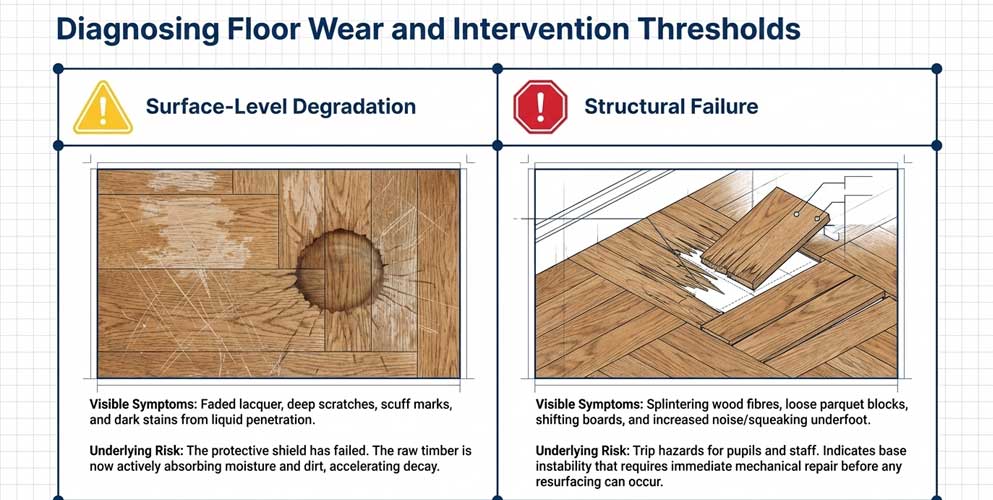
Wooden floors in schools are exposed to much heavier use than most domestic floors. Daily foot traffic, sports activities, moving furniture, and regular cleaning gradually wear down the protective finish that shields the wood surface. Once this protective layer deteriorates, the timber becomes more vulnerable to scratches, stains, and structural damage. Recognising the early signs that a floor needs professional floor sanding helps prevent more serious deterioration and ensures the floor remains safe and functional for pupils and staff.
Common signs that a school floor may require sanding and restoration include:
- Worn or faded finish – when the protective lacquer becomes dull or uneven, the wood beneath is exposed to further damage.
- Visible scratches and scuff marks – heavy foot traffic and sports equipment can leave deep marks across the surface.
- Dark stains or discolouration – spilled liquids and dirt can penetrate the wood once the finish wears away.
- Splintering or rough areas – damaged wood fibres may create rough patches that are uncomfortable or unsafe.
- Loose boards or parquet blocks – movement in the floor structure can cause sections to become unstable.
- Uneven or patchy appearance – areas of the floor may show different levels of wear, particularly in high-traffic zones.
- Increased noise or movement – squeaks and shifting boards may indicate underlying issues that should be addressed during restoration.
If these problems are ignored, the condition of the floor can deteriorate further and eventually require more extensive repairs. Professional sanding removes the damaged surface layer and restores the wood to a smooth, even condition before applying a new protective finish designed for heavy use in school environments.
Our School Floor Sanding Process
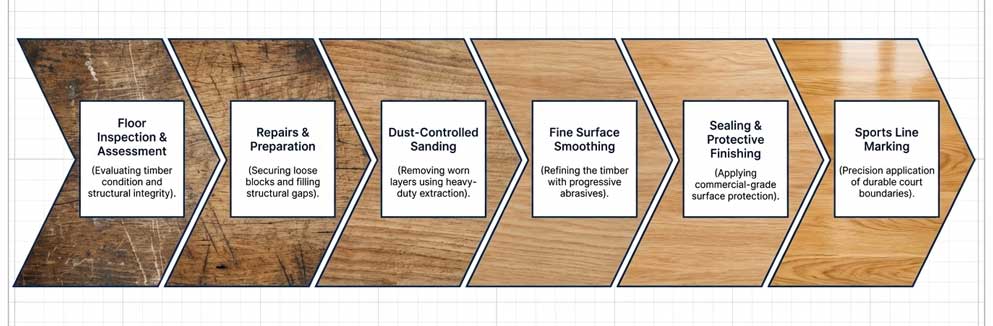
Restoring wooden floors in schools requires a careful and methodical approach. High-traffic environments such as sports halls, assembly halls, and classrooms demand durable finishes and precise sanding to ensure the surface remains safe and long-lasting. Our experienced flooring team follows a proven restoration process that removes worn layers, repairs damaged areas, and applies protective finishes suitable for heavy school use.
Step 1 – Floor Inspection and Assessment
Every project begins with a detailed inspection of the floor. During this stage we assess the overall condition of the timber, identify worn finishes, and check for structural issues such as loose boards, damaged parquet blocks, or uneven areas. Understanding the condition of the floor allows us to determine the most effective sanding and restoration approach for the specific environment.
Step 2 – Repairs and Floor Preparation
Before sanding begins, any necessary repairs are carried out to ensure the floor is stable and ready for restoration. This may include securing loose boards, replacing damaged sections, or addressing gaps that have developed between floorboards over time. Proper preparation ensures that the sanding process produces a smooth and even result across the entire surface.
Step 3 – Professional Dust-Controlled Sanding

We use professional sanding equipment designed to remove the worn surface layer of wood efficiently while minimising dust. This process gradually eliminates scratches, stains, and old finishes, revealing clean timber beneath. Modern sanding systems with dust extraction help maintain a cleaner environment, which is particularly important when working in educational buildings.
Step 4 – Fine Sanding and Surface Smoothing
After the main sanding stage, the floor is refined using progressively finer sanding abrasives. This step smooths the wood surface and prepares it for sealing or finishing. Achieving an even and well-prepared surface is essential for ensuring the final finish adheres properly and provides long-lasting protection.
Step 5 – Sealing and Protective Finishing
Once sanding is complete, the floor is sealed and finished using high-quality products designed for commercial environments. These finishes protect the wood against wear, moisture, and daily traffic while enhancing the natural appearance of the timber. The type of finish used may vary depending on whether the floor is located in a sports hall, assembly hall, or classroom.
Step 6 – Optional Sports Line Marking
For sports halls and gym floors, we can also apply professional sports court markings after the floor has been sanded and sealed. This ensures the markings are clear, durable, and properly integrated with the floor finish, allowing the space to be used safely for various sports and school activities.
Following this structured restoration process allows us to achieve consistent, high-quality results while ensuring school floors remain safe, durable, and visually appealing for many years of continued use.
Safety Considerations for School Floor Sanding

Safety is a key priority when carrying out floor sanding work in educational buildings. Schools must ensure that maintenance work does not create risks for pupils, staff, or visitors, and that the materials used are suitable for busy environments. Professional school floor sanding involves careful planning, safe working practices, and the use of products designed specifically for commercial and public spaces.
Our team follows strict procedures to ensure that every school floor restoration project is completed safely and efficiently. This includes using modern equipment, low-odour finishes, and scheduling work during appropriate periods to minimise disruption to school activities.
- Dust-controlled sanding equipment – modern sanding machines with dust extraction significantly reduce airborne dust and help maintain a cleaner working environment.
- Low-odour finishes – we use high-quality finishes that minimise strong smells and allow floors to return to service more quickly.
- Slip-resistant coatings – protective finishes designed for sports halls and assembly spaces help provide safe traction for pupils and staff.
- Careful scheduling – sanding projects are often planned during school holidays, weekends, or quieter periods to avoid disrupting lessons.
- Safe materials and professional application – all products are applied according to manufacturer guidelines to ensure long-lasting and reliable results.
By following professional safety procedures and using appropriate finishes, school floors can be restored without compromising the health and safety standards required in educational environments.
Best Finishes for School Wooden Floors
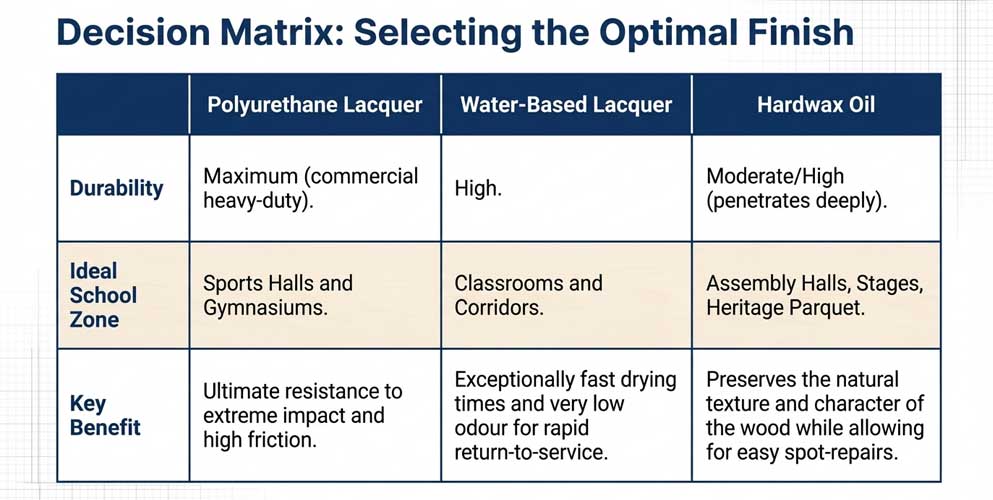
Choosing the right finish is an essential part of restoring school wooden floors. Educational buildings experience constant daily traffic, sports activities, and regular cleaning, which means the protective coating applied after sanding must be durable and suitable for heavy use. Different areas within a school may require different finishes depending on how the space is used.
Professional floor finishes not only enhance the appearance of the wood but also create a protective layer that helps prevent scratches, stains, and premature wear. The most commonly used finishes for school floors include:
- Polyurethane lacquer – one of the most durable options for high-traffic environments such as sports halls and gym floors. This finish forms a tough protective layer that resists heavy use, making it ideal for areas where sports and physical activities take place.
- Water-based lacquer – a popular choice for school environments because it dries quickly and produces very low odour during application. Water-based finishes allow floors to return to use sooner and provide excellent protection while maintaining the natural colour of the wood.
- Hardwax oil – often used in assembly halls, classrooms, or stage floors where a more natural wood appearance is preferred. Hardwax oil penetrates the wood surface and provides protection while preserving the natural texture and character of the timber.
The best finish for a school floor depends on several factors, including the level of traffic, the type of activities carried out in the space, and the desired appearance of the wood. During a site visit, our specialists assess the condition of the floor and recommend the most suitable finishing system to ensure long-lasting protection and reliable performance.
How Much Does School Floor Sanding Cost in London?
The cost of school floor sanding in London can vary depending on several factors, including the size of the floor area, the condition of the wood, and the type of finish required. Sports halls, assembly halls, and large communal spaces often involve significant floor areas, which means each project must be carefully assessed before an accurate quotation can be provided.
In general, the overall price of a school floor restoration project is influenced by a number of key considerations:
- Floor size – larger halls or sports facilities usually reduce the cost per square metre but require more preparation and finishing time.
- Condition of the floor – heavily worn floors, deep scratches, or damaged boards may require additional repairs before sanding can begin.
- Type of finish applied – commercial-grade lacquers, sports finishes, or specialist coatings can affect the final cost.
- Repairs and preparation work – replacing damaged boards, securing loose parquet blocks, or filling gaps may be necessary before sanding.
- Sports line marking – gym floors or sports halls may require professional court markings after the sanding and finishing process.
Because every school building and floor condition is different, the most reliable way to determine the cost is through a professional site assessment. During a site visit we evaluate the floor condition, measure the area, and recommend the most suitable restoration approach.
If you are planning a school floor restoration project, you can call 020 8830 9782 to discuss your requirements with our team, or book a free site visit so we can inspect the floor and provide a detailed quotation.
Why Choose FlooringFirst for School Floor Sanding

Restoring wooden floors in schools requires experience, reliable equipment, and an understanding of the unique demands placed on educational facilities. At FlooringFirst, we have extensive experience working with wooden floors in schools, colleges, and other public buildings across London. Our team focuses on delivering high-quality restoration while ensuring minimal disruption to school activities.
We use professional sanding systems and durable commercial finishes designed to withstand heavy daily use. Each project is carefully planned to ensure the floor is restored efficiently and safely, whether the work involves a sports hall, assembly hall, classroom floor, or stage area.
- Over 20 years of flooring experience – extensive knowledge of wooden floor restoration across London properties.
- Professional dust-controlled sanding equipment – modern machines help reduce dust during the sanding process.
- Commercial-grade finishes – durable coatings designed for high-traffic environments such as schools and sports halls.
- Experience with large floor areas – assembly halls and sports halls require specialist sanding techniques and equipment.
- Carefully scheduled projects – work can often be planned during school holidays or quiet periods to minimise disruption.
Our goal is to restore school floors to a safe, durable, and visually appealing condition so they can continue to serve pupils and staff for many years.
Below is a list of just some of the schools and institutions we've worked with:
- St Paul's Primary School
- Malmesbury Primary School
- University of Westminster
- Latymer Upper School
- Tollgate Primary School
- Camden School For Girls
- Martin Primary School
- St Vincent Primary School
- St Dominique College
- The Old Grammar School
- Barnfield Primary School
- St Bernadette's Catholic Nursery & Primary School
- Furness Primary School
- Oakthorpe Primary School
- Canada Villa Youth & Community Centre
- Swanbourne House School
- St Joan Of Arc Catholic School
- Yehudi Menuhin School
- Norbury School
- Leopold Primary School
- John Roan School
- Orchard House School
- St James' Catholic High School
- Christ Church C Of E Primary School
- Star Primary School
- St Peter's R C Primary School
- Lady Margaret Primary School
- Devonshire House School
- Imperial College
- Sheen Mount Primary School
- Lyndhurst House School
Frequently Asked Questions About School Floor Sanding
How long does school floor sanding take?
The duration of a school floor sanding project depends on the size of the floor area and the condition of the wood. Smaller areas such as classrooms may be completed within a day or two, while larger spaces like assembly halls or sports halls may take several days to sand, repair, and finish.
Can sports hall floors be sanded and refinished?
Yes. Sports hall floors are commonly sanded and refinished to restore their durability and appearance. After sanding, specialised finishes can be applied to protect the floor and provide the appropriate level of slip resistance for sporting activities.
How often should school wooden floors be sanded?
The frequency of sanding depends on how heavily the floor is used. In high-traffic areas such as sports halls or assembly halls, floors may require sanding every 7–10 years, while lighter-use areas may last longer with regular maintenance and recoating.
Can school floor sanding be done during holidays?
Yes. Many schools schedule sanding projects during summer holidays, half terms, or other quiet periods. This allows the work to be completed without disrupting lessons or daily school activities.
Do damaged boards or parquet blocks need to be replaced before sanding?
Damaged or loose boards are usually repaired or replaced before sanding begins. Carrying out these repairs ensures the floor is stable and allows the sanding process to produce a smooth, even result.
Need reliable school floor sanding with minimal disruption? Call our team today on 020 8830 9782 or book a free site visit and let our specialists assess your school floors and recommend the safest, most durable restoration solution.