Hardwood Floor Sanding London
Floor Sanding & Restoration in London — At a Glance
- Price range: £25–£45 per sqm
- Typical duration: 1–2 days for an average room
- Free site visit: Yes — book online or call 020 8830 9782
- Customer rating: 4.5/5 (590+ reviews)
- Experience: 22 years, established 2004
Hardwood floors: solid oak, ash, walnut, maple and reclaimed timber: are built to last generations, but they need proper sanding to stay that way. We sand hardwood floors across London using dust-controlled equipment and finish them with your choice of oil or varnish. Over 20 years of experience means we know exactly how each species behaves under the machine and which finish will serve it best long-term.
- Over 20 years sanding floors across London
- Free, no-obligation quotes
- Fully insured, dust-controlled equipment
- Prices from £25–£50 per sqm
Our Hardwood Floor Sanding Process
Every job follows the same proven sequence: from first assessment to final inspection.
1. Assessment: Species, Thickness and Condition
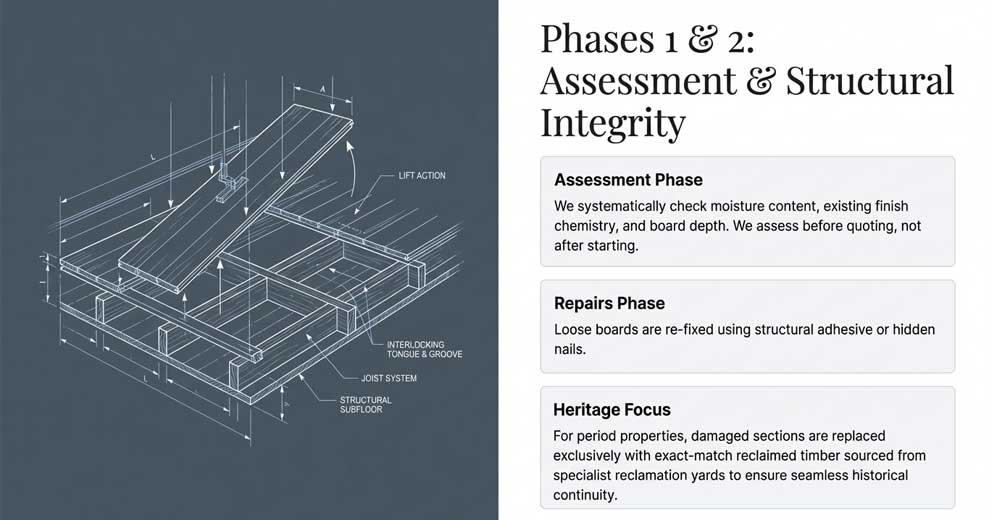
Before sanding any hardwood floor we check the species, board thickness, moisture content and the type of existing finish. Dense hardwoods like oak and walnut behave differently to softer species like ash or pine: sanding speed, paper grit sequence and finish absorption all vary. We assess this before quoting, not after starting.
2. Repairs: Boards, Gaps and Structural Issues
Any loose boards are re-fixed with nails or adhesive. Damaged sections are replaced with matching reclaimed timber: essential for period hardwood where the original species may no longer be in production. We source matching boards from reclamation yards rather than using inferior replacements.
3. Coarse Sanding: Stripping and Levelling
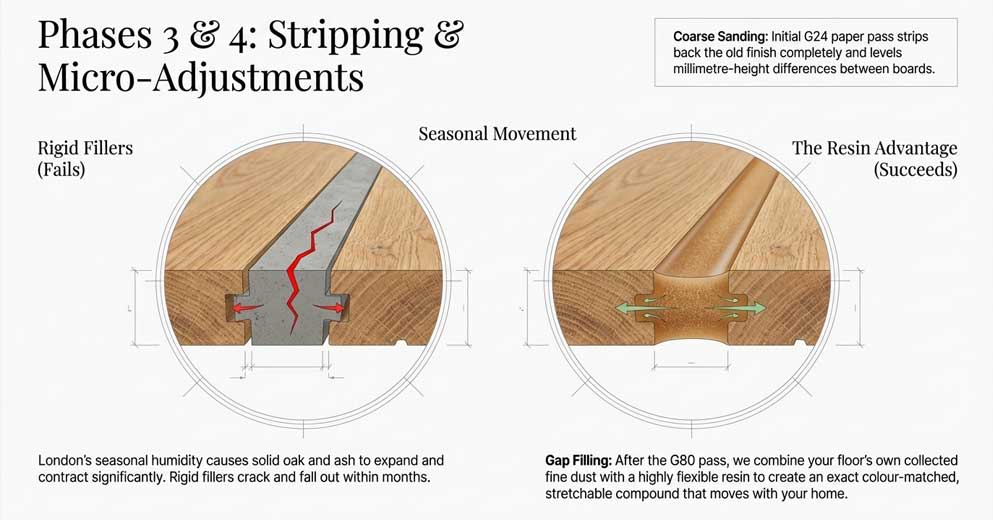
We begin with G24 paper to strip back the old finish completely and level any height differences between boards. On solid hardwood, this pass is slower and more controlled than on softwood: the denser grain requires the machine to work at a consistent pace to avoid burn marks or uneven removal.
4. Gap Filling
After the G80 pass, we mix the collected fine dust with flexible resin filler to create a colour-matched compound. Applied across the floor and left to cure. On hardwood, this stage is particularly important: oak and ash move significantly with seasonal humidity changes, and rigid fillers crack within months.
5. Fine Sanding and Finish Application
G120 removes the dried filler and opens the grain to receive the finish. We apply a minimum of two coats: three on high-traffic areas: with a light screen between coats on a rotary buffer. Oil penetrates the grain for natural, repairable protection; varnish forms a harder surface film for maximum durability. Both are available in matt, satin and gloss.
6. Final Inspection
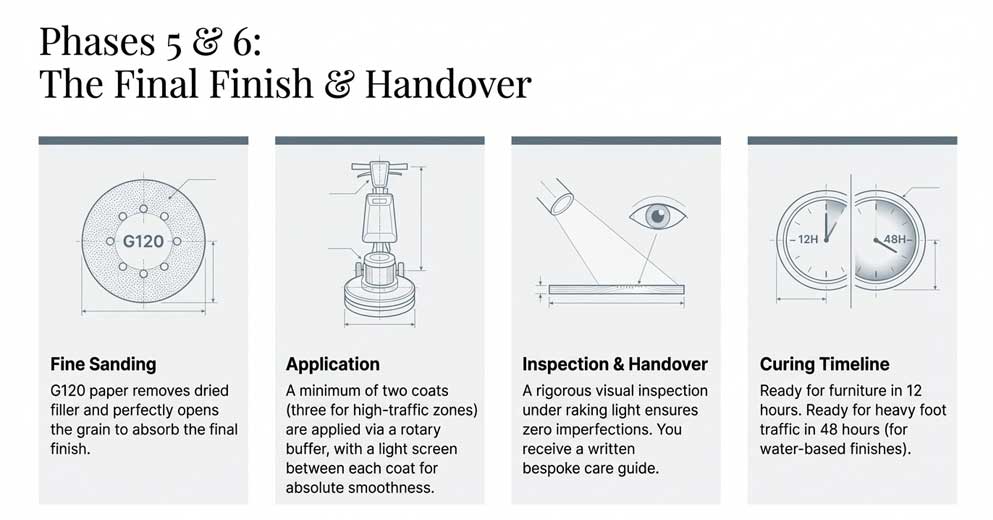
We inspect under raking light before leaving. You receive a written care guide. Allow 12 hours before furniture, 48 hours before heavy traffic on water-based finishes.
Hardwood Floor Sanding Cost in London
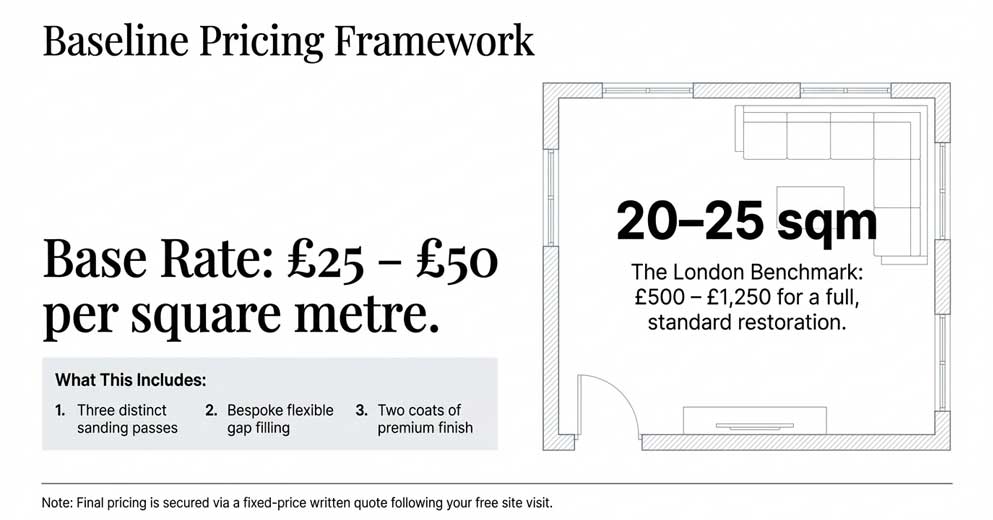
The cost of hardwood floor sanding in London typically ranges from £25–£50 per sqm for a standard job including three sanding passes, gap filling and two coats of finish. A typical London living room (20–25 sqm) comes to £500–£1250.
Factors that affect the final price:
- Floor condition: repairs, loose boards or bitumen residue add time and cost
- Pattern complexity: geometric parquet patterns require additional passes
- Finish type: hardwax oil and multi-coat varnish are priced differently
- Staining: colour changes add one full extra sanding and application stage
We provide fixed-price written quotes after a free site visit or photo assessment.
Frequently Asked Questions
How much does hardwood floor sanding cost in London?
Hardwood floor sanding in London typically costs £25–£50 per sqm for a full restoration including three sanding passes, gap filling and two coats of finish. A 20 sqm living room comes to approximately £500–£1,000 depending on condition and finish chosen.
Can all hardwood floors be sanded?
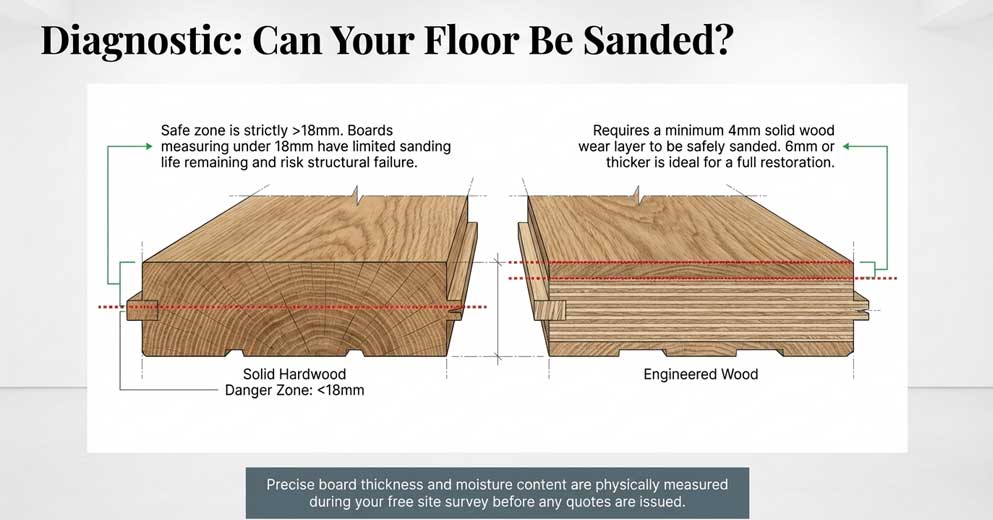
Most solid hardwood floors can be sanded multiple times: the limiting factor is board thickness. Boards under 18mm may have limited sanding life; we check thickness at the survey. Engineered hardwood can be sanded if the wear layer is at least 4mm, ideally 6mm or more.
How long does hardwood floor sanding take?
A single room (up to 25 sqm) takes one day for sanding and a second day for the finish coats. Larger areas are proportionally longer. The floor is ready for furniture within 12–24 hours of the last coat.
What finish should I use on hardwood floors?
Hardwax oil is our most popular choice for hardwood: it penetrates the grain, is easy to maintain and can be spot-repaired without sanding the whole floor. Varnish gives a harder surface and requires less ongoing maintenance but is harder to repair if damaged. We discuss both options at the survey.
How often should hardwood floors be sanded?
A well-maintained hardwood floor with oil finish should be lightly re-oiled every 2–3 years and fully sanded every 10–15 years. Varnished floors can go longer between full sands, but cannot be spot-repaired. With proper maintenance, a solid hardwood floor can be sanded 4–6 times over its lifetime.
Related Services
Areas We Cover
We sand hardwood floors across all London boroughs, including South West London (Wandsworth, Clapham, Battersea, Wimbledon), South East London (Greenwich, Dulwich, Peckham), North London (Islington, Highgate, Muswell Hill), West London (Hammersmith, Chiswick, Ealing) and Central London. We also cover Surrey, Kent and parts of Hertfordshire.