Floorboards Sanding & Restoration
Floor Sanding & Restoration in London — At a Glance
- Price range: £25–£45 per sqm
- Typical duration: 1–2 days for an average room
- Free site visit: Yes — book online or call 020 8830 9782
- Customer rating: 4.5/5 (590+ reviews)
- Experience: 22 years, established 2004
Floorboards sanding is one of the best ways to bring tired timber floors back to life. In many London homes, original boards sit hidden under old carpet, paint, adhesive, or worn finishes, yet underneath there is often a floor full of natural character that can be restored rather than replaced.
At FlooringFirst!, we provide professional floorboards sanding and restoration in London for homeowners, landlords, and period properties looking to improve appearance, durability, and long-term value. Whether your boards are scratched, dull, uneven in colour, or affected by gaps and minor damage, we can assess the condition of the floor and recommend the most suitable repair, sanding, and finishing approach.
Our service is designed to help you keep the charm of original timber while achieving a cleaner, smoother, and more practical surface for everyday use. With the right preparation, repairs, and protective finish, old floorboards can once again become a real feature of the room.
Need advice on restoring old floorboards? Call 020 88309782 or book a free site visit to arrange an inspection and quotation.
Why Restore Original Floorboards Instead of Replacing Them?
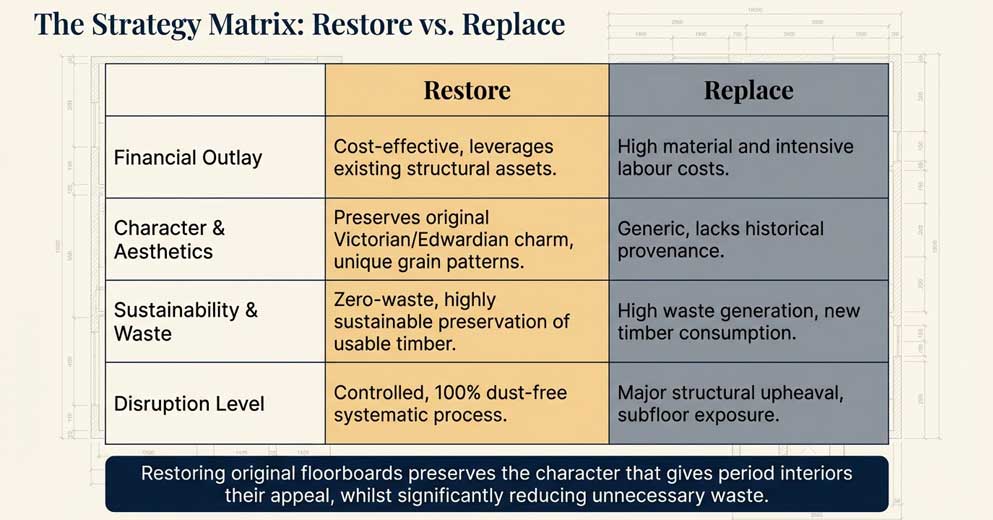
In many properties, especially older London homes, the existing floorboards are worth saving. Restoring original floorboards is often more cost-effective than lifting everything and starting again, and it also helps preserve the character that gives period interiors their appeal.
Sanding and refinishing can remove years of wear, old coatings, and surface marks, revealing the natural timber underneath. When the boards are structurally sound, restoration is usually the more practical option, particularly when combined with repairs such as damaged board replacement, securing loose boards, or gap filling with resin.
- Preserves original character – ideal for Victorian, Edwardian, and older London properties.
- Can be more cost-effective – especially when the boards are still in good structural condition.
- Reduces waste – restoring usable timber is often the more sustainable choice.
- Improves the whole room – sanded floorboards can make interiors feel brighter, cleaner, and more finished.
- Keeps period features intact – rather than replacing them with modern alternatives.
Replacement may still be needed in isolated areas where boards are badly damaged, rotten, or missing, but many floors that look tired at first glance can still be transformed with the right restoration process.
Types of Floorboards We Restore
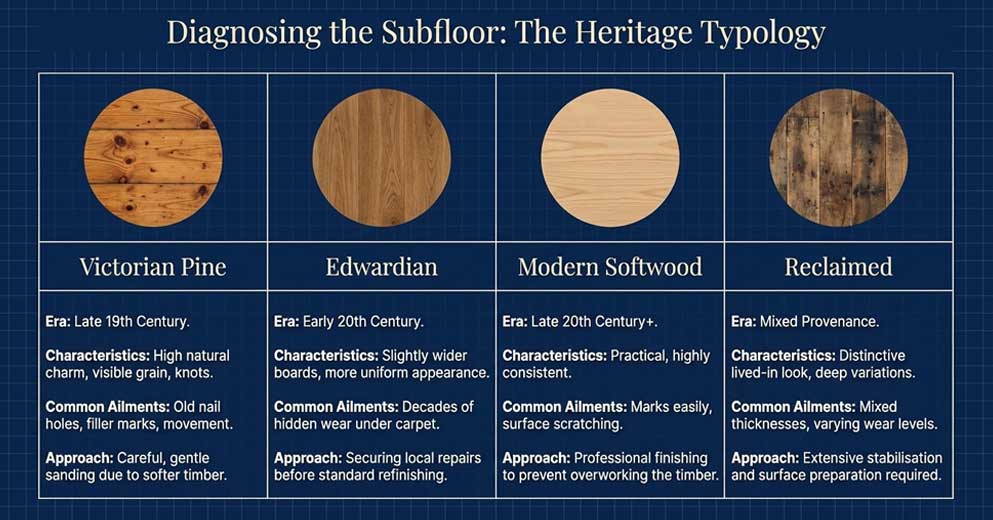
Not all timber subfloors are the same, which is why floorboards sanding and restoration should always be tailored to the age, condition, and type of boards in the property. We regularly work on original and replacement floorboards across London homes, from period houses to more modern residential interiors.
Some boards respond beautifully to sanding and finishing, while others need more careful preparation, repairs, or realistic expectations about the final appearance. Our job is to assess what can be improved and choose the right approach for that particular floor.
Victorian Pine Floorboards
Victorian pine floorboards are among the most common types we restore in London. They are often found beneath old carpets in period terraces and conversions, and they usually have plenty of natural charm, with visible grain, knots, colour variation, and the aged look many homeowners want to preserve.
These boards can often be restored very successfully, but they may also show old nail holes, filler marks, paint remnants, stains, and movement between boards. Careful sanding and suitable finishing products are important because pine is softer than hardwood and needs a more considered approach.
Edwardian Floorboards
Edwardian floorboards also have strong visual character and are popular in many London family homes. Depending on the property, they may be slightly wider, more uniform, or in a different state of repair than Victorian boards, but they often respond very well to restoration.
Where the boards have been covered for decades, sanding can reveal attractive timber underneath, although some areas may still require local repairs or securing before the floor is ready for finishing.
Modern Softwood Floorboards
Modern softwood floorboards may not always have the same period character as older boards, but they can still be improved significantly through sanding and refinishing. These floors are often chosen for practicality and can be made to look cleaner, fresher, and more consistent.
Because softwood can mark more easily, professional sanding helps create a smoother result without overworking the timber. The finish chosen also plays a big role in how the floor performs over time.
Reclaimed Floorboards
Reclaimed floorboards can create a beautiful lived-in look, but they often need more preparation before sanding begins. It is common to find slight variations in thickness, tone, wear, and previous treatment, especially where reclaimed boards have been mixed together during earlier repairs or refurbishments.
These floors may need extra attention to stabilise loose sections, improve consistency, and prepare the surface properly before the final finish is applied. When handled well, reclaimed boards can become one of the most distinctive features in a room.
Common Problems We See With Old Floorboards
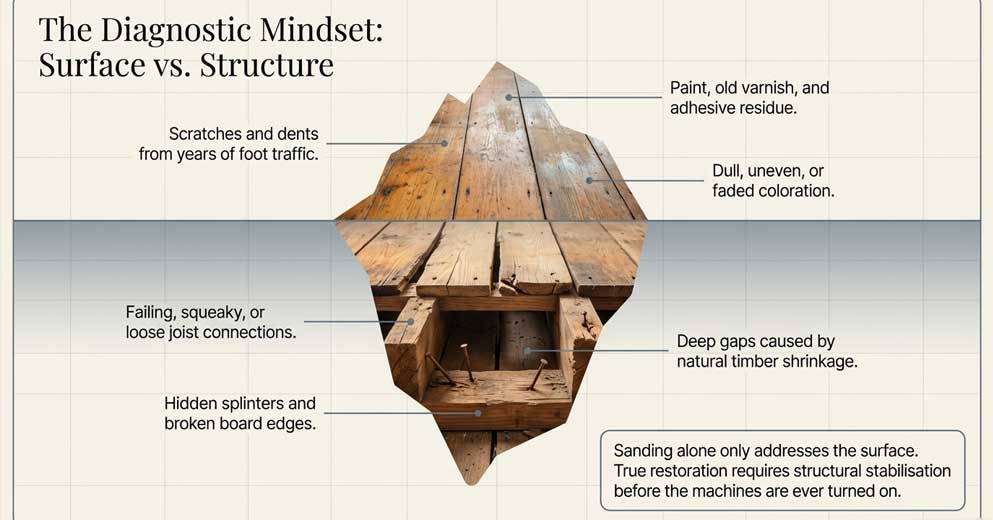
Old timber floors rarely wear in a perfectly even way. Over time, original floorboards can develop a mix of cosmetic and structural issues, and understanding the difference is important because some problems are solved by sanding alone, while others need repair work first.
- Scratches and dents caused by years of foot traffic, furniture movement, and general use.
- Paint, old varnish, and adhesive residue left behind after previous floor coverings or decorating work.
- Gaps between floorboards from natural movement, age, shrinkage, or earlier alterations.
- Loose or squeaky boards that move underfoot and need securing before sanding.
- Black marks and stains from water, spills, plant pots, pets, or long-term neglect.
- Worn uneven areas where some sections have taken more traffic than others.
- Splinters and rough surfaces where the old finish has broken down completely.
Sanding can greatly improve surface wear, old coatings, minor marks, and overall appearance, but not every issue disappears completely. Deep staining, damaged boards, or movement in the floor may need repairs before the final result can look its best. This is why a proper assessment is always worthwhile before work begins.
Floorboard Repairs Before Sanding
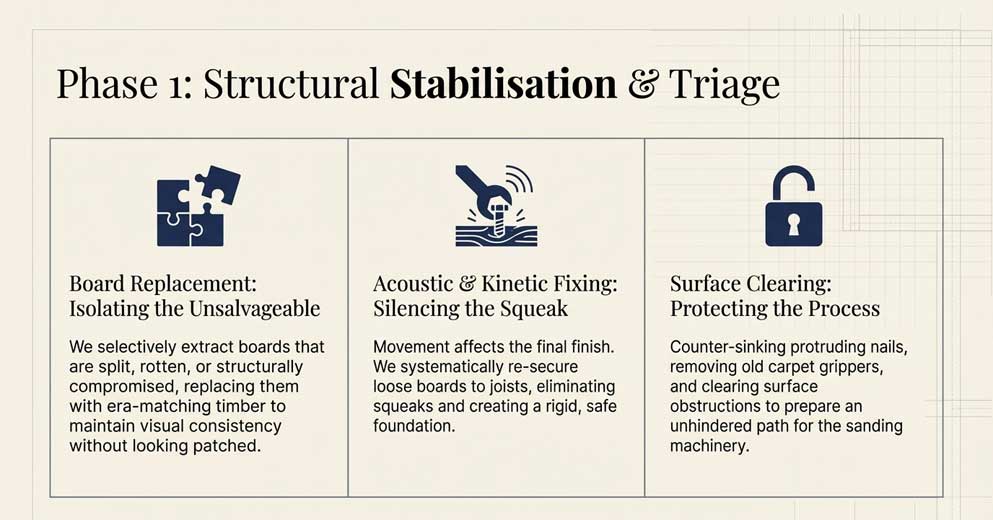
Good results depend on more than sanding alone. Before any machines are used, it is often necessary to carry out floorboard repairs so the surface is stable, safe, and ready for refinishing. This stage helps improve both the final look of the floor and the long-term performance of the restoration.
In many London properties, original boards have shifted slightly over time, old repairs may have failed, and isolated sections may be too damaged to leave as they are. By dealing with these issues first, sanding can be carried out more evenly and the finish will sit far better across the floor.
Replacing Damaged Boards
Some boards are simply too worn, split, rotten, or broken to restore properly. In these cases, we can replace individual sections before sanding begins, using matching or similar timber wherever possible. The aim is to keep the repair practical and visually consistent rather than making the floor look patched together.
Fixing Squeaks and Movement
Squeaky or moving floorboards are often a sign that boards need securing before restoration. If movement is left untreated, it can affect the final finish and reduce the overall quality of the result. Re-fixing loose boards and checking the cause of movement helps create a more solid floor underfoot.
Securing Loose Boards and Preparing the Surface
We also check for lifted edges, protruding nails, previous poor repairs, and uneven localised areas that could interfere with the sanding process. This part of the work is especially important on older softwood floors where years of use may have left the boards less stable than they appear at first glance.
- Loose boards are re-secured to reduce movement and improve safety.
- Damaged sections are identified early so they can be repaired before finishing.
- Nails, fixings, and surface obstructions are checked to protect sanding equipment and improve consistency.
- Related problems can be addressed together, such as squeaky floor repairs or replacing damaged floorboards.
Not every floor needs extensive repairs, but on many old floorboard surfaces, this preparation stage is what separates an average result from a properly restored one.
Floorboard Sanding Process Step by Step
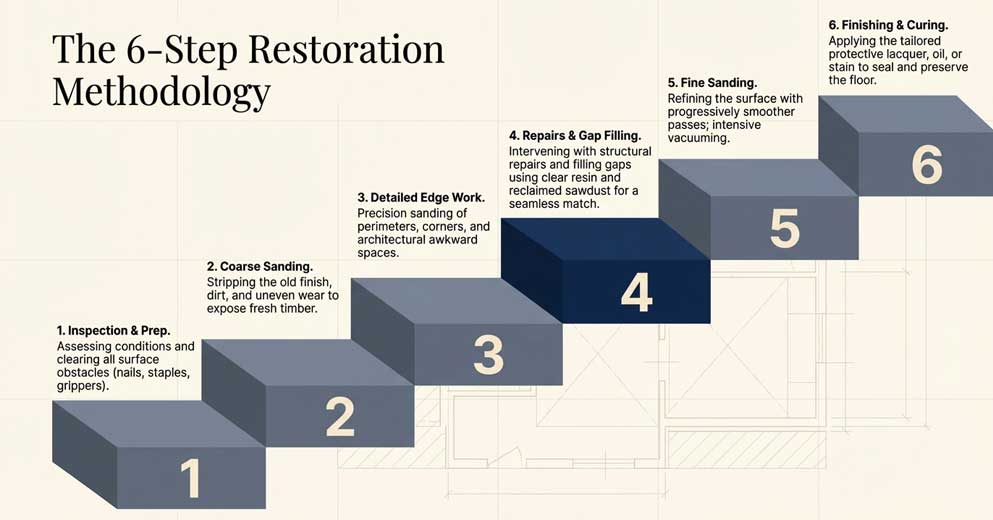
Professional floorboards sanding is a structured process designed to restore the timber gradually while keeping disruption as controlled as possible. The exact method can vary depending on the age and condition of the boards, but the main stages are usually similar.
1. Inspection and Preparation
We start by assessing the floor, identifying repairs, checking the condition of the boards, and preparing the room for work. Old nails, staples, carpet grippers, and surface obstacles must be dealt with before sanding can begin safely.
2. Coarse Sanding
The first sanding pass removes the old finish, dirt, paint residue, surface damage, and uneven wear. This stage exposes the fresh timber underneath and shows more clearly where further repairs or filling may be needed.
3. Edge Work and Detailed Sanding
Edges, corners, and harder-to-reach sections are sanded separately so the whole floor has a more even appearance. This is an important step, especially in smaller rooms or period properties with more awkward layouts.

4. Repairs and Gap Filling Where Needed
Once the main surface is opened up, local repairs can be completed and minor gaps may be filled where appropriate. For some floors, this includes resin gap filling to improve the look of small to medium gaps before the final sanding stages.
5. Fine Sanding and Surface Preparation
The floor is then refined with smoother sanding passes to create a cleaner, more even finish ready for staining or sealing. After that, the room is carefully vacuumed and prepared so the chosen finish can be applied properly.
6. Finishing and Drying
The final stage is applying the chosen protective finish, whether that is lacquer, oil, or stain followed by sealing coats. Drying and curing times depend on the product used, but once complete, the floor is left looking far cleaner, smoother, and better protected for daily use.
Where useful on the live page, this section would also work well with before-and-after photos or simple process images to make the service feel more transparent and engaging.
Finishing Options for Sanded Floorboards
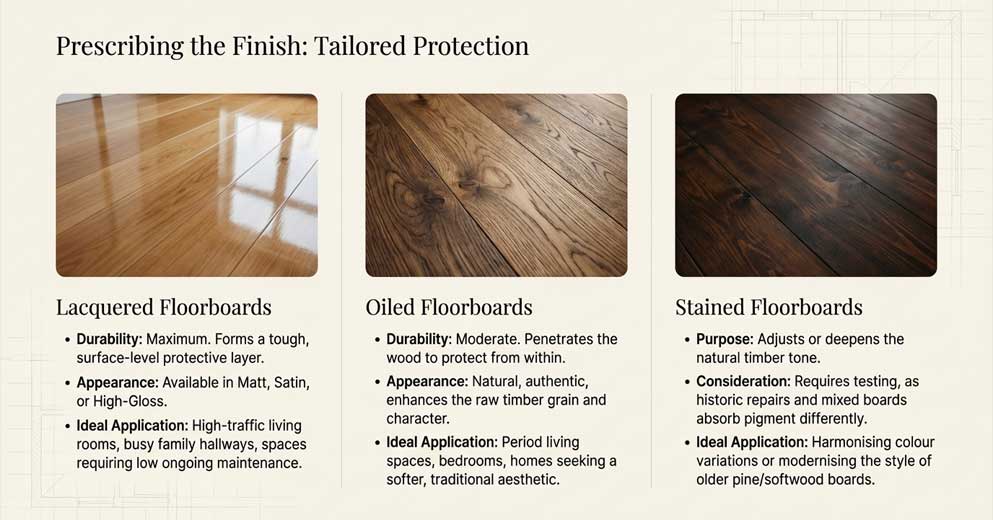
Once the sanding is complete, the next step is choosing the right finish. This part matters just as much as the preparation, because the finish affects both the look of the floorboards and how well they stand up to everyday use. The best option depends on the type of timber, the style you want, and how much wear the room will receive.
Lacquered Floorboards
Lacquer is a popular choice for floorboards in busy homes because it forms a durable protective layer over the timber. It is often selected for living rooms, hallways, and family spaces where resistance to wear is important. Lacquer is available in matt, satin, and more reflective finishes, so it can suit both modern and traditional interiors.
For many households, lacquer offers a practical balance of appearance and durability, especially where the aim is to keep maintenance straightforward.
Oiled Floorboards
Oil and hardwax oil finishes are often chosen when the goal is a more natural look. They tend to enhance the grain and character of older boards, which makes them especially attractive for period properties where homeowners want to keep a softer, less coated appearance.
Oiled floorboards can look beautifully authentic, but the maintenance expectations are different from lacquered floors, so it is important to choose this option for the right reasons rather than appearance alone.
Stained Floorboards
Floorboard staining is useful when the colour of the timber needs adjusting, either to darken the floor, tone down colour variation, or create a more specific interior style. This can work very well on some floorboard floors, especially when combined with the right topcoat afterwards.
However, not every old floor responds in exactly the same way to stain, particularly where there are earlier repairs, mixed boards, or deep natural variation in the timber. That is why testing and professional advice are important before committing to a colour.
- Choose lacquer if durability and easier ongoing care are the priorities.
- Choose oil if you want a more natural, character-led appearance.
- Choose stain if the colour of the bare boards needs to be changed or refined.
If colour adjustment is part of the project, our wood floor staining service can also be relevant depending on the condition and style of the boards.
Benefits of Professional Floorboards Sanding
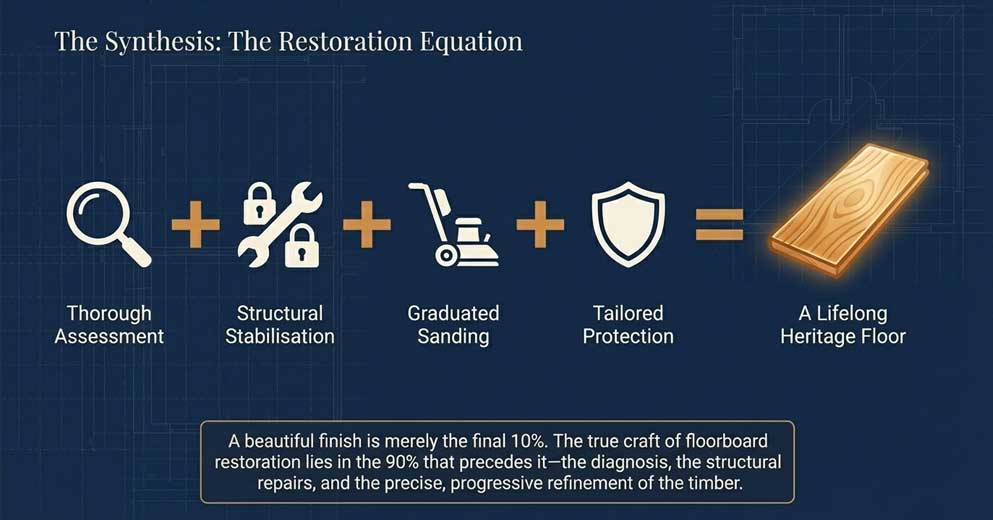
Well-restored floorboards can completely change the feel of a room. What starts as a dull, marked, or neglected surface can become one of the most attractive parts of the property once it has been properly repaired, sanded, and finished.
- Restores natural timber character and reveals the grain hidden under old coatings and dirt.
- Improves the appearance of the whole room by making it feel cleaner, brighter, and more finished.
- Extends the life of the floor when combined with the right repairs and protective finish.
- Removes years of visible wear such as scratches, dull patches, and uneven colour.
- Provides a far better result than most DIY sanding, especially on older softwood floorboards.
- Helps preserve original features in period homes rather than replacing them unnecessarily.
Professional sanding is also about consistency. Using the right machines, abrasives, preparation methods, and finishing products makes a major difference, particularly on old floors where the margin for error is much smaller than many people expect.
Floorboard Sanding Cost Guide
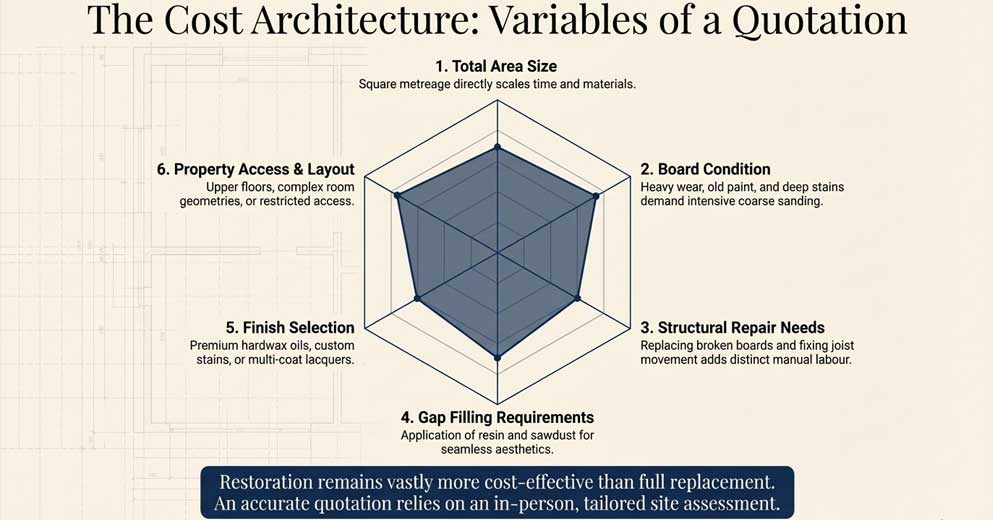
One of the most common questions we hear is how much floorboards sanding in London costs. There is no single price that suits every project because timber floors vary so much in condition, size, and repair needs, but the cost is usually influenced by a few key factors.
- The size of the area – larger spaces usually affect the total quotation.
- The condition of the boards – floors with paint, heavy wear, deep staining, or uneven surfaces often need more preparation.
- Repair work before sanding – replacing broken boards or fixing movement will add to the scope of work.
- Gap filling requirements – some floors need extra preparation to improve the final appearance.
- The finish selected – lacquer, oil, and stain systems can affect both labour and material costs.
- Access and property layout – upper floors, restricted access, or more complex room layouts can influence the quotation.
Restoring floorboards is often more cost-effective than full replacement, especially when the existing timber is still structurally sound. A site visit is usually the best way to provide an accurate quote because it allows us to assess the actual condition of the boards rather than relying on guesswork.
Looking for a quote for floorboards sanding and restoration? Call 020 88309782 or book a free site visit and we will assess the floor and recommend the most suitable solution.
Why Choose FlooringFirst! for Floorboards Sanding in London

Choosing the right contractor is just as important as choosing the right finish. At FlooringFirst!, we have extensive experience working with old floorboards in London properties, including period homes where character, careful preparation, and practical repair work all matter.
- Experienced with period homes – we regularly restore Victorian, Edwardian, and other older floorboard floors.
- Repair and sanding in one service – we can address damaged boards, movement, and preparation issues before refinishing.
- Professional equipment and methods – helping achieve a cleaner, more even result.
- Advice on the right finish – based on appearance, durability, and expected wear.
- Free site visits and honest recommendations – we assess what is realistic for your floor before any work starts.
Our approach is focused on getting the best possible result from the boards you already have, while being realistic about repairs, finishing choices, and the condition of older timber floors. If you want a floor that looks better, feels more solid, and keeps its original character, professional restoration is usually the right step.
Speak to our London floor sanding team today. Call 020 88309782 or book a free site visit to get advice and a tailored quotation for your floorboards.
Frequently Asked Questions About Floorboards Sanding
Below are some of the questions we are most often asked about floorboards sanding and restoration. These answers help explain what to expect, when repairs may be needed, and how to choose the right finish for your home.
Can old floorboards hidden under carpet be sanded?
In many cases, yes. Old floorboards that have been covered by carpet for years can often be restored successfully, provided the timber is still in a workable condition. Once the carpet, underlay, gripper rods, staples, and old residues are removed, we can assess whether the boards only need sanding and finishing or whether some repairs are needed first.
Do all floorboards need repairs before sanding?
No, not every floor needs repair work, but many older floors benefit from at least some preparation before sanding begins. Loose boards, squeaks, cracked sections, protruding nails, or isolated damaged areas are best dealt with first so the finished surface looks better and performs more reliably.
Can sanding remove black stains from floorboards?
Sanding can improve many surface stains, but the result depends on how deeply the stain has penetrated the timber. Light and moderate marks may reduce significantly, while deeper black stains caused by water, metal reactions, or long-term damage may still remain visible to some extent. A site inspection helps set realistic expectations.
Is it better to oil or lacquer floorboards?
That depends on the look and level of durability you want. Lacquered floorboards are often chosen for busy family homes because they provide a durable protective layer and straightforward maintenance. Oiled floorboards usually create a more natural, character-led look and can be a very attractive choice for period interiors. The best option depends on the room, the timber, and how you plan to use the space.
How long does floorboards sanding take?
The timeframe varies depending on the size of the area, the condition of the boards, the amount of repairs required, and the finishing system selected. Smaller rooms may be completed relatively quickly, while larger or more complex projects can take longer. Drying and curing times for finishes should also be factored into the overall schedule.
Does floorboards sanding create a lot of dust?
Professional sanding is carried out using dust-controlled equipment, which greatly reduces airborne dust compared with older sanding methods or DIY hire machines. No sanding process is ever completely dust-free, but modern professional systems make the work much cleaner and more manageable.
How much does floorboards sanding cost in London?
The cost depends on the condition of the floorboards, the size of the space, the amount of preparation or repairs required, and the type of finish chosen. Floors with paint, heavy wear, damaged boards, or filling requirements usually need more labour than floors in better condition. The most accurate way to price the work is through a site visit.
Can only a few damaged floorboards be replaced before sanding?
Yes, it is often possible to replace only the damaged or missing boards rather than removing the whole floor. This is a common approach when most of the floor is still restorable but localised sections are split, loose, rotten, or beyond repair. After replacement, the entire area can be sanded and finished to create a more consistent overall result.