Project Overview
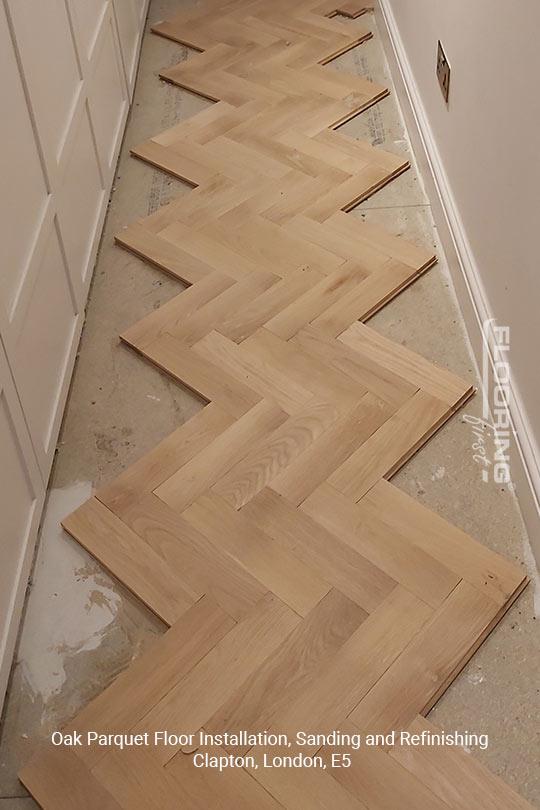
This Clapton E5 project combined a new oak parquet floor installation with full sanding and refinishing of the laid floor. The client was having a new herringbone parquet floor put down in the main ground floor reception room, and wanted the installation, sanding, and finishing all handled as a single project. Oak parquet blocks were specified, laid in the traditional herringbone pattern, then sanded and finished to a natural lacquer once the adhesive had fully cured.
The Challenge
Installing and then sanding a new parquet floor involves careful sequencing. The blocks must be fully bonded to the subfloor before any sanding takes place, otherwise the sanding process can lift blocks or cause them to move and leave gaps. The adhesive cure time needs to be respected rather than rushed, which means the project takes longer than either installation or sanding alone. The subfloor in this property also needed plywood overlay work to bring it up to the flatness required for a glued parquet installation. Parquet is far less forgiving of subfloor irregularities than a floating engineered board, so this preparation stage could not be skipped.
Our Approach
Subfloor Preparation
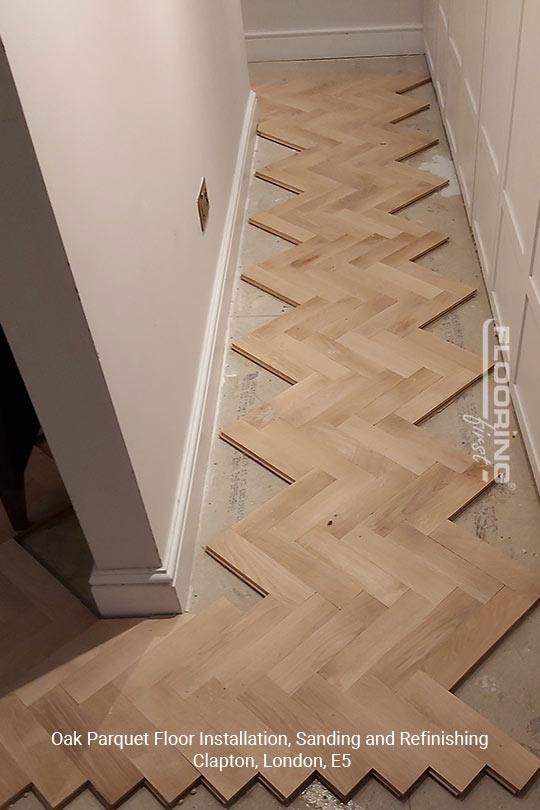
We installed a plywood subfloor overlay across the full room, secured and flat, to provide the base needed for a glued parquet installation. The surface was checked with a long straight edge at multiple points to confirm it was within the tolerance required.
Parquet Block Installation
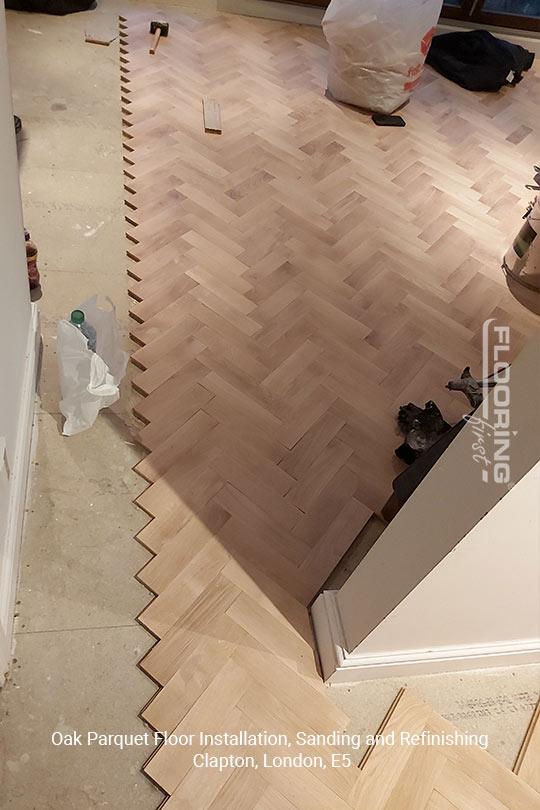
The herringbone pattern was set out from the centre of the room to ensure the pattern sits symmetrically. Oak parquet blocks were bonded to the prepared subfloor using a flexible wood floor adhesive, which provides the bond needed while allowing a small degree of movement as the timber responds to changes in room conditions. The full room was completed before the floor was left to cure.
Sanding the New Floor
Once the adhesive had fully cured, we sanded the floor following the correct diagonal approach for herringbone parquet. New parquet blocks often have slight height variations between individual pieces, so the initial sanding pass works to level the surface before the finishing passes refine it. The result is a flat, consistent surface across the whole room.
Finishing
A natural-tone hardwearing lacquer was applied in three coats to protect the new oak floor. The finish was chosen to let the natural colour and grain of the oak read clearly without adding any artificial tint.
The Result
The finished herringbone floor is a significant upgrade to the room. The pattern reads well in the space, the oak colour is warm and consistent, and the finish provides good protection for daily use. The client was pleased with the quality of the work and the way the installation was managed as a single cohesive project. Parquet installation and sanding in London typically costs from £70 to £100 per square metre for supply, fit, sand, and finish, reflecting the additional skill and time required compared to a straightforward strip board installation.
Frequently Asked Questions
How long does new parquet adhesive need to cure before sanding?
This depends on the specific adhesive product used, the ambient temperature, and the subfloor conditions. Most wood floor adhesives require a minimum of 24 to 48 hours before sanding can begin, and some two-component adhesives need longer. We always follow the manufacturer's guidance and will not rush this stage.
Is new parquet more expensive than engineered boards?
Parquet installation is generally at the higher end of wood floor pricing because of the additional skill required in laying the pattern, the adhesive bonding process, and the specialist sanding approach. For a herringbone oak parquet installed, sanded, and finished, you can expect to pay from around £70 to £100 per square metre as a guide.
How should a new oak parquet floor be maintained long term?
Regular sweeping and occasional damp mopping with a wood-compatible cleaner is sufficient for day-to-day maintenance. Avoid excess water on the surface. Felt pads under furniture legs prevent scratches. The floor should be refinished when the lacquer shows signs of wear, typically every five to ten years depending on use.