Floor Sanding & Fitting
Book Free Visit Price Guide 020 88309782
Monday - Friday 07:30 - 17:30, Saturday 07:30 - 16:00
cs@flooringfirst.co.uk
020 88309782
Monday - Friday 07:30 - 17:30, Saturday 07:30 - 16:00
cs@flooringfirst.co.uk
  • Book Free Visit
  • Home
  • Floor Sanding
  • Floor Fitting
  • Floor Repairs
  • Aftercare
    • Wooden Floors
    • Cleaning & Polishing
    • Re-Oiling Wooden Floors
    • Vinyls & Linoleum
    • Vinyl Floor Polishing
    • Get a Quote...
  • For Businesses
  • Gallery
  • Service Guide
  • Shop
  • Book Free Visit

See Few Examples of Our Works

Floor Sanding, Solid, Parquet & Laminate Floor Fitting

Gallery

See Our Floor Works

WHY CHOOSE US
CASE STUDIES
PRICE GUIDE
OFFERS
GALLERY
ASK EXPERT
WHY CHOOSE US
CASE STUDIES
PRICE GUIDE
OFFERS
GALLERY
ASK EXPERT

Floor Sanding & Fitting Project Gallery

All Projects Renovations Installations

3  |   Tadworth  |   October 2020

An engineered wood floor in Tadworth, KT20 was refreshed through dust-free sanding and premium-quality finishing systems after signs of wear. The surface was carefully restored, leaving a smooth, elegant appearance with renewed appeal and dependable long-term durability.

Case studies

Project Overview

This project involved the professional sanding and restoration of an existing wood floor at a property in Tadworth, KT20. The floor had seen years of daily wear and was in need of attention to bring it back to a quality finish. Our team carried out a full assessment before starting work, checking for any boards that needed attention alongside the main sanding and finishing work.

Before the Work

Before work began, the floor showed typical signs of wear. Surface scratches, dull patches, and general finish deterioration were present. A thorough survey was carried out to plan the correct sanding depth, assess board condition, and choose the most appropriate finish for the space.

Survey photos showing the floor condition before work:

Floor condition before work at KT20 Floor condition before work at KT20

Our Approach

The following services were carried out as part of this project:

  • Beading Installation (incl. materials)
  • Engineered - Sand, Buff & Lacquer
  • Engineered Flooring Installation
  • Duralay Heatflow Underlay For Wood Floors with Underfloor Heating
  • Tradition Engineered Oak Flooring, Rustic, Lacquered, 150x5x18 mm

The Result

Once the sanding and finishing process was complete, the floor was transformed. The wood grain was opened up and brought back to life, the surface was smooth and even, and the new finish provided lasting protection. The client was left with a floor that looked, and performed, as good as new.

Photos of the completed work:

Engineered Wood floor after sanding work in KT20 Engineered Wood floor after sanding work in KT20 Engineered Wood floor after sanding work in KT20

Frequently Asked Questions

How long does floor sanding take?
Most residential sanding jobs are completed in one to two days, depending on floor size and condition. Lacquering or oiling adds further drying and curing time, which we factor into the job schedule.

Do I need to vacate the property during sanding?
Modern dustless sanding equipment keeps dust to a minimum, but we recommend keeping pets and young children clear of the area during the work. Most clients remain in their property throughout.

How much does floor sanding cost in London?
Prices typically range from £25 to £45 per square metre depending on floor condition, finish type, and any repair work required. Gap filling and board replacement are priced separately if needed.

Have a similar project? Call us on 020 88309782 or Book a Free Site Visit

Close
5  |   Homerton  |   September 2020

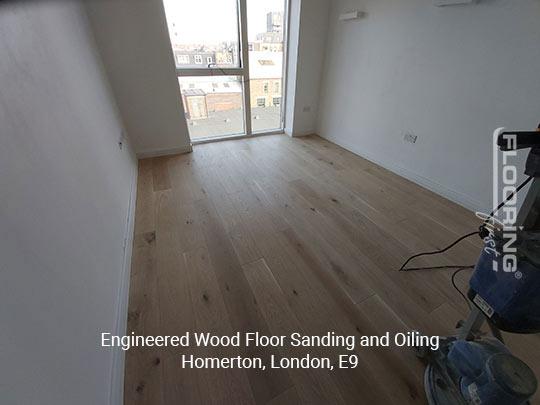
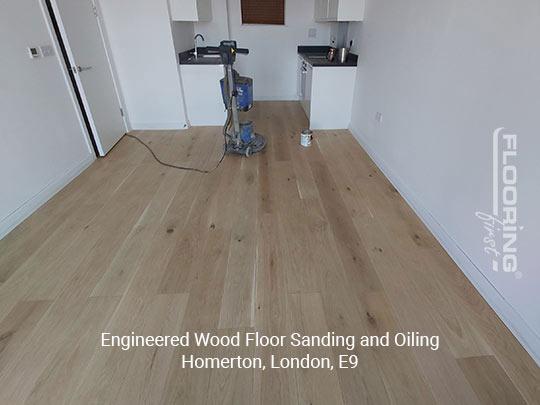
Slight surface sanding is a great option for engineered wood floors since it will remove all imperfections and issues on the surface without stripping off the thickness of the wood itself. We have added a bit of high-quality oil finish for this Homerton project and the result is outstanding.

Case studies
  • Engineered wood floor sanding and oiling in Homerton 4
  • Engineered wood floor sanding and oiling in Homerton
  • Engineered wood floor sanding and oiling in Homerton 1
  • Engineered wood floor sanding and oiling in Homerton 2
  • Engineered wood floor sanding and oiling in Homerton 3

Engineered wood floor showing surface wear before sanding in Homerton Close-up of worn engineered wood surface prior to treatment

Project Overview

This engineered wood floor sanding and oiling project was completed at a residential property in Homerton, East London. The floor, installed around seven years before we were called in, was looking tired. The original oil finish had worn through in the main traffic lanes, leaving dry, unprotected wood exposed while the rest of the surface retained a patchy sheen. The client wanted a consistent, refreshed finish without a heavy lacquer look, so we agreed that a light surface sand followed by a quality oil re-coat was the right approach. Engineered floor sanding typically runs between £25 and £45 per square metre, depending on the level of work required.

The Challenge

The main thing to understand with engineered wood is that the real wood veneer on top is thinner than in solid boards, typically between three and six millimetres. This means there is a limited number of times the floor can be sanded before the veneer is too thin to work with safely. In this case, the floor had not been professionally sanded before, so we had good material to work with, but we still needed to be conservative with the depth of cut. A standard drum sander set too aggressively could remove more wood than necessary or, worse, break through the veneer into the plywood core below. The other challenge was the existing oil finish, which needed to be fully stripped to allow the new oil to penetrate the wood properly.

Our Approach

  1. Surface assessment: We measured the veneer thickness in a discreet corner to confirm adequate depth for sanding, then identified the worst-worn areas and checked for any cupped or warped boards.
  2. Light surface sanding: Using a buffing machine rather than a drum sander, we worked across the floor with a medium-grit abrasive pad to strip the old oil finish and smooth the surface. This technique removes far less material than a full drum sand while still achieving a clean base for re-oiling.
  3. Edge work: The perimeter was carefully sanded by hand with a detail sander to match the centre of the room without marking the skirting boards.
  4. Fine buffing: A finer abrasive pad completed the prep work, leaving the surface clean, open-grained, and ready for oil penetration.
  5. First oil coat: We applied a generous first coat of a high-quality hardwax oil, working it into the grain with a cloth applicator and allowing it to penetrate before removing any excess. This coat nourishes the wood and begins building protection.
  6. Second oil coat: After the first coat had cured overnight, we applied a second, thinner coat and buffed it to an even sheen. The finish is now consistent across the entire floor, with no more patchy worn areas.
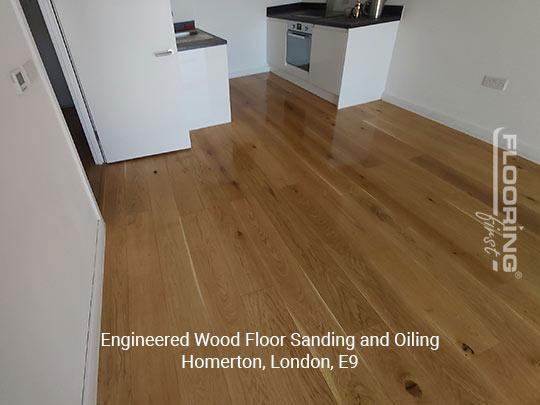
Engineered wood floor after sanding and oiling treatment in Homerton

The Result

The floor looked completely different after treatment. The patchy, worn surface was replaced by a consistent, natural-looking finish that brought out the grain of the wood without making it look plastic or overly shiny. The oil soaks into the wood rather than sitting on top, which means it feels more natural underfoot and is far easier to spot-repair in future if a section gets damaged. The client was pleased with how much the floor had improved without the cost or disruption of replacement.

Frequently Asked Questions

How many times can an engineered wood floor be sanded?

This depends on the thickness of the real wood veneer. A three-millimetre veneer can typically be lightly sanded once or twice. A six-millimetre veneer allows two or three full sands over the floor's lifetime. We always check the veneer depth before quoting to confirm sanding is viable.

What is the difference between an oil finish and a lacquer on engineered wood?

Oil penetrates the wood fibres and provides a natural look and feel. It is relatively easy to maintain, as you can re-oil specific areas without sanding the entire floor. Lacquer sits on the surface as a hard film, offering stronger protection in very high-traffic areas but requiring a full sand and re-coat when it wears through.

How long after oiling before the floor can be used?

With a hardwax oil, light foot traffic is usually fine after 24 hours. Full hardness and maximum protection develop over seven to ten days. We advise clients to avoid dragging heavy furniture across the floor for at least a week after treatment.

Have a similar project? Call us on 020 88309782 or Book a Free Site Visit

Close
6  |   Streatham  |   September 2020

A set of worn floorboards in Streatham, SW16 was revitalised through dust-free sanding and premium finishing systems after years of use. The timber was carefully restored, leaving a smooth, clean surface with refreshed character and dependable long-term durability.

Case studies

Project Overview

This project involved the professional sanding and restoration of an existing wood floor at a property in Streatham, SW16. The floor had seen years of daily wear and was in need of attention to bring it back to a quality finish. Our team carried out a full assessment before starting work, checking for any boards that needed attention alongside the main sanding and finishing work.

Before the Work

Before work began, the floor showed typical signs of wear. Surface scratches, dull patches, and general finish deterioration were present. A thorough survey was carried out to plan the correct sanding depth, assess board condition, and choose the most appropriate finish for the space.

Survey photos showing the floor condition before work:

Floor condition before work at SW16 Floor condition before work at SW16 Floor condition before work at SW16

Our Approach

The following services were carried out as part of this project:

  • Floorboards - Fireplace Heart Removal
  • Floorboards - Refitting
  • Floorboards - Replacement (incl. materials)
  • Floorboards - Sand, Buff & Lacquer
  • Gap Filling
  • Stairs - Sand & Seal
  • Stairs Step Fitting (Wooden Floors)

The Result

Once the sanding and finishing process was complete, the floor was transformed. The wood grain was opened up and brought back to life, the surface was smooth and even, and the new finish provided lasting protection. The client was left with a floor that looked, and performed, as good as new.

Photos of the completed work:

Floorboards floor after sanding work in SW16 Floorboards floor after sanding work in SW16 Floorboards floor after sanding work in SW16

Frequently Asked Questions

How long does floor sanding take?
Most residential sanding jobs are completed in one to two days, depending on floor size and condition. Lacquering or oiling adds further drying and curing time, which we factor into the job schedule.

Do I need to vacate the property during sanding?
Modern dustless sanding equipment keeps dust to a minimum, but we recommend keeping pets and young children clear of the area during the work. Most clients remain in their property throughout.

How much does floor sanding cost in London?
Prices typically range from £25 to £45 per square metre depending on floor condition, finish type, and any repair work required. Gap filling and board replacement are priced separately if needed.

Have a similar project? Call us on 020 88309782 or Book a Free Site Visit

Close
5  |   Hackney  |   September 2020

An engineered wood floor in Hackney, E9 was brought back into excellent condition through dust-free sanding and premium-quality finishing systems. The surface was carefully restored, leaving a smooth, elegant appearance with refreshed appeal and dependable long-term durability.

Case studies

Project Overview

This project involved the professional sanding and restoration of an existing wood floor at a property in Hackney, E9. The floor had seen years of daily wear and was in need of attention to bring it back to a quality finish. Our team carried out a full assessment before starting work, checking for any boards that needed attention alongside the main sanding and finishing work.

Before the Work

Before work began, the floor showed typical signs of wear. Surface scratches, dull patches, and general finish deterioration were present. A thorough survey was carried out to plan the correct sanding depth, assess board condition, and choose the most appropriate finish for the space.

Survey photos showing the floor condition before work:

Floor condition before work at E9 Floor condition before work at E9

Our Approach

The following services were carried out as part of this project:

  • Engineered - Sand, Buff & Oil

The Result

Once the sanding and finishing process was complete, the floor was transformed. The wood grain was opened up and brought back to life, the surface was smooth and even, and the new finish provided lasting protection. The client was left with a floor that looked, and performed, as good as new.

Photos of the completed work:

Engineered Wood floor after sanding work in E9 Engineered Wood floor after sanding work in E9 Engineered Wood floor after sanding work in E9

Frequently Asked Questions

How long does floor sanding take?
Most residential sanding jobs are completed in one to two days, depending on floor size and condition. Lacquering or oiling adds further drying and curing time, which we factor into the job schedule.

Do I need to vacate the property during sanding?
Modern dustless sanding equipment keeps dust to a minimum, but we recommend keeping pets and young children clear of the area during the work. Most clients remain in their property throughout.

How much does floor sanding cost in London?
Prices typically range from £25 to £45 per square metre depending on floor condition, finish type, and any repair work required. Gap filling and board replacement are priced separately if needed.

Have a similar project? Call us on 020 88309782 or Book a Free Site Visit

Close
6  |   Winchmore Hill  |   September 2020

A well-used parquet floor in Winchmore Hill, N21 was restored through dust-free sanding and premium-quality finishing systems. The wood blocks were carefully refinished, leaving a smooth, elegant surface with renewed character and dependable long-term durability.

Case studies

Project Overview

This project involved the professional sanding and restoration of an existing wood floor at a property in Winchmore Hill, N21. The floor had seen years of daily wear and was in need of attention to bring it back to a quality finish. Our team carried out a full assessment before starting work, checking for any boards that needed attention alongside the main sanding and finishing work.

Before the Work

Before work began, the floor showed typical signs of wear. Surface scratches, dull patches, and general finish deterioration were present. A thorough survey was carried out to plan the correct sanding depth, assess board condition, and choose the most appropriate finish for the space.

Survey photos showing the floor condition before work:

Floor condition before work at N21 Floor condition before work at N21 Floor condition before work at N21

Our Approach

The following services were carried out as part of this project:

  • Door Frame Trimming
  • Gap Filling
  • Lift & Dispose Hardwood Flooring
  • Parquet - Sand, Buff & Lacquer
  • Parquet Floor Fitting - With Border
  • Subfloor Plywood edges cutting

The Result

Once the sanding and finishing process was complete, the floor was transformed. The wood grain was opened up and brought back to life, the surface was smooth and even, and the new finish provided lasting protection. The client was left with a floor that looked, and performed, as good as new.

Photos of the completed work:

Parquet floor after sanding work in N21 Parquet floor after sanding work in N21 Parquet floor after sanding work in N21

Frequently Asked Questions

How long does floor sanding take?
Most residential sanding jobs are completed in one to two days, depending on floor size and condition. Lacquering or oiling adds further drying and curing time, which we factor into the job schedule.

Do I need to vacate the property during sanding?
Modern dustless sanding equipment keeps dust to a minimum, but we recommend keeping pets and young children clear of the area during the work. Most clients remain in their property throughout.

How much does floor sanding cost in London?
Prices typically range from £25 to £45 per square metre depending on floor condition, finish type, and any repair work required. Gap filling and board replacement are priced separately if needed.

Have a similar project? Call us on 020 88309782 or Book a Free Site Visit

Close
9  |   West Ealing  |   August 2020

Check out how we completely transformed this beautiful parquet floor in West Ealing. A bit of professional sanding and a couple of layers of a glossy lacquer finish can truly do wonders and improve every parquet floor’s condition and appearance.

Case studies
  • Parquet floor sanding & refinishing in West Ealing 7
  • Parquet floor sanding & refinishing in West Ealing
  • Parquet floor sanding & refinishing in West Ealing 1
  • Parquet floor sanding & refinishing in West Ealing 2
  • Parquet floor sanding & refinishing in West Ealing 3
  • Parquet floor sanding & refinishing in West Ealing 4
  • Parquet floor sanding & refinishing in West Ealing 5
  • Parquet floor sanding & refinishing in West Ealing 6
  • Parquet floor sanding & refinishing in West Ealing 8

Parquet floor before sanding in West Ealing, showing dull worn surface Parquet floor condition before restoration, close view of pattern

Project Overview

This parquet floor sanding and refinishing project was carried out at a family home in West Ealing, West London. The property had a beautiful original herringbone parquet in the hallway, front reception room, and on the staircase. The floors had not been professionally treated in many years and were in need of a full sand and refinish. The client was also keen to have the staircase brought up to the same standard as the floors to create a consistent look throughout the ground floor. Parquet sanding with a lacquer finish typically falls in the £70 to £100 per square metre range, which is well justified given the result.

The Challenge

The biggest technical challenge with this project was the volume and variety of surfaces involved. Sanding a herringbone parquet floor demands a very different technique from sanding a straight-run timber floor. The blocks are laid at 45-degree angles to each other, so you cannot sand straight along the room. Any drum sanding has to be done on the diagonal to avoid cross-grain scratching. On the staircase, working with an industrial sander is not possible, so each tread had to be sanded by hand or with a detail sander, requiring considerably more time and care. The treads also had nosing edges that needed to be rounded and smoothed without creating flat spots.

Our Approach

  1. Floor inspection: We checked every block across the main rooms for security, re-gluing and nailing down any that had come loose before sanding began.
  2. Coarse diagonal sanding: The drum sander was run at 45 degrees to the herringbone grain in two opposing directions to strip the old finish and level the surface evenly without risking cross-grain damage.
  3. Intermediate sanding: A second pass with a medium-grit belt smoothed the marks left by the coarse cut and began preparing the surface for finishing.
  4. Fine sanding and edging: Fine-grit passes completed the main surface work. The edge sander was used along the walls and in doorway alcoves where the drum cannot reach.
  5. Staircase work: Each tread was sanded by hand using a combination of orbital and detail sanders, working with the grain to avoid scratching the surface. The nosings were carefully shaped to remove any sharp edges while maintaining their profile.
  6. Lacquering: Three coats of gloss lacquer were applied to both the floor and the staircase treads, with a fine buff between each coat. The consistent finish across both surfaces ties the whole area together visually.

Parquet floor and staircase after sanding and lacquering in West Ealing

The Result

The transformation across both the rooms and the staircase was significant. The flat, worn surface of the parquet was replaced by a bright, glossy finish that gives full definition to the herringbone pattern. The staircase now matches the floors exactly, which makes the whole entrance area feel considered and well-finished. The client described it as looking better than when the house was originally fitted out. With proper care and an occasional re-coat when the finish shows wear, this floor should last another 20 years before needing professional attention again.

Frequently Asked Questions

Can a parquet floor and staircase be sanded to match?

Yes, provided both are made from a compatible wood species and the finish used is the same. Getting the exact colour and sheen level to match across both surfaces requires care and consistency in the finishing process, but it is absolutely achievable and makes a real difference to the overall look of the space.

How long does it take to sand and refinish a parquet floor?

A typical room takes one to two days for sanding and preparation, plus the time needed for each lacquer coat to dry between applications. A standard three-coat lacquer process generally takes three to four days in total, including curing time between coats. Larger areas or those combined with staircase work take longer.

Is gloss lacquer the best finish for parquet?

Gloss lacquer is very popular for parquet because it emphasises the pattern clearly and is practical and easy to clean. Satin or matt lacquer is an option for those who prefer a softer appearance. Oil finishes work well too, though they require more regular re-treatment than lacquer. The choice depends on your lifestyle and personal preference.

Have a similar project? Call us on 020 88309782 or Book a Free Site Visit

Close
6  |   Ealing  |   August 2020

A well-used parquet floor in Ealing, W13 was revived through dust-free sanding and premium-quality finishing systems. The wood blocks were carefully refinished, leaving a smooth, elegant surface with renewed character and dependable long-term durability.

Case studies

Project Overview

This project involved the professional sanding and restoration of an existing wood floor at a property in Ealing, W13. The floor had seen years of daily wear and was in need of attention to bring it back to a quality finish. Our team carried out a full assessment before starting work, checking for any boards that needed attention alongside the main sanding and finishing work.

Before the Work

Before work began, the floor showed typical signs of wear. Surface scratches, dull patches, and general finish deterioration were present. A thorough survey was carried out to plan the correct sanding depth, assess board condition, and choose the most appropriate finish for the space.

Survey photos showing the floor condition before work:

Floor condition before work at W13 Floor condition before work at W13 Floor condition before work at W13

Our Approach

The following services were carried out as part of this project:

  • Gap Filling
  • Parquet - Sand, Buff & Lacquer
  • Stairs - Sand & Seal
  • Lift & Refit Loose Fingers ( per sqm)

The Result

Once the sanding and finishing process was complete, the floor was transformed. The wood grain was opened up and brought back to life, the surface was smooth and even, and the new finish provided lasting protection. The client was left with a floor that looked, and performed, as good as new.

Photos of the completed work:

Parquet floor after sanding work in W13 Parquet floor after sanding work in W13 Parquet floor after sanding work in W13

Frequently Asked Questions

How long does floor sanding take?
Most residential sanding jobs are completed in one to two days, depending on floor size and condition. Lacquering or oiling adds further drying and curing time, which we factor into the job schedule.

Do I need to vacate the property during sanding?
Modern dustless sanding equipment keeps dust to a minimum, but we recommend keeping pets and young children clear of the area during the work. Most clients remain in their property throughout.

How much does floor sanding cost in London?
Prices typically range from £25 to £45 per square metre depending on floor condition, finish type, and any repair work required. Gap filling and board replacement are priced separately if needed.

Have a similar project? Call us on 020 88309782 or Book a Free Site Visit

Close
3  |   Tottenham  |   August 2020

Worn floorboards in Tottenham, N4 were refreshed through dust-free sanding and premium finishing systems after years of daily use. The timber was carefully restored, leaving a smooth, clean surface with renewed character and dependable long-term durability.

Case studies

Project Overview

This project involved the professional sanding and restoration of an existing wood floor at a property in Tottenham, N4. The floor had seen years of daily wear and was in need of attention to bring it back to a quality finish. Our team carried out a full assessment before starting work, checking for any boards that needed attention alongside the main sanding and finishing work.

Before the Work

Before work began, the floor showed typical signs of wear. Surface scratches, dull patches, and general finish deterioration were present. A thorough survey was carried out to plan the correct sanding depth, assess board condition, and choose the most appropriate finish for the space.

Our Approach

The following services were carried out as part of this project:

  • Floorboards - Sand, Buff & Lacquer
  • Gap Filling
  • Refitting loose boards prior to sanding

The Result

Once the sanding and finishing process was complete, the floor was transformed. The wood grain was opened up and brought back to life, the surface was smooth and even, and the new finish provided lasting protection. The client was left with a floor that looked, and performed, as good as new.

Photos of the completed work:

Floorboards floor after sanding work in N4 Floorboards floor after sanding work in N4 Floorboards floor after sanding work in N4

Frequently Asked Questions

How long does floor sanding take?
Most residential sanding jobs are completed in one to two days, depending on floor size and condition. Lacquering or oiling adds further drying and curing time, which we factor into the job schedule.

Do I need to vacate the property during sanding?
Modern dustless sanding equipment keeps dust to a minimum, but we recommend keeping pets and young children clear of the area during the work. Most clients remain in their property throughout.

How much does floor sanding cost in London?
Prices typically range from £25 to £45 per square metre depending on floor condition, finish type, and any repair work required. Gap filling and board replacement are priced separately if needed.

Have a similar project? Call us on 020 88309782 or Book a Free Site Visit

Close
3  |   Harrow  |   August 2020

A set of worn floorboards in Harrow, HA1 was restored through dust-free sanding and premium finishing systems after years of use. The timber was carefully renewed, leaving a smooth, clean surface with refreshed character and dependable long-term durability.

Case studies

Project Overview

This project involved the professional sanding and restoration of an existing wood floor at a property in Harrow, HA1. The floor had seen years of daily wear and was in need of attention to bring it back to a quality finish. Our team carried out a full assessment before starting work, checking for any boards that needed attention alongside the main sanding and finishing work.

Before the Work

Before work began, the floor showed typical signs of wear. Surface scratches, dull patches, and general finish deterioration were present. A thorough survey was carried out to plan the correct sanding depth, assess board condition, and choose the most appropriate finish for the space.

Our Approach

The following services were carried out as part of this project:

  • Floorboards - Refitting
  • Floorboards - Sand, Buff & Lacquer
  • Gap Filling

The Result

Once the sanding and finishing process was complete, the floor was transformed. The wood grain was opened up and brought back to life, the surface was smooth and even, and the new finish provided lasting protection. The client was left with a floor that looked, and performed, as good as new.

Photos of the completed work:

Floorboards floor after sanding work in HA1 Floorboards floor after sanding work in HA1 Floorboards floor after sanding work in HA1

Frequently Asked Questions

How long does floor sanding take?
Most residential sanding jobs are completed in one to two days, depending on floor size and condition. Lacquering or oiling adds further drying and curing time, which we factor into the job schedule.

Do I need to vacate the property during sanding?
Modern dustless sanding equipment keeps dust to a minimum, but we recommend keeping pets and young children clear of the area during the work. Most clients remain in their property throughout.

How much does floor sanding cost in London?
Prices typically range from £25 to £45 per square metre depending on floor condition, finish type, and any repair work required. Gap filling and board replacement are priced separately if needed.

Have a similar project? Call us on 020 88309782 or Book a Free Site Visit

Close
7  |   Islington  |   July 2020

Everyone’s favourite part about real wood flooring is the fact it can be re-sanded and refinished and look like brand-new even after decades. This Islington project was focused on improving the floor’s appearance and condition while restoring its natural beauty and durability.

Case studies
  • Hardwood sanding, buffing, lacquer & gap filling in Islington 6
  • Hardwood sanding, buffing, lacquer & gap filling in Islington
  • Hardwood sanding, buffing, lacquer & gap filling in Islington 1
  • Hardwood sanding, buffing, lacquer & gap filling in Islington 2
  • Hardwood sanding, buffing, lacquer & gap filling in Islington 3
  • Hardwood sanding, buffing, lacquer & gap filling in Islington 4
  • Hardwood sanding, buffing, lacquer & gap filling in Islington 5

Worn hardwood floor in Islington before sanding and gap filling Hardwood floorboards showing scratches and worn lacquer before treatment

Project Overview

This hardwood floor sanding, gap filling, and lacquering project was completed at a Victorian terraced property in Islington, North London. The original pine floorboards were in poor condition: the lacquer had worn through in the main traffic routes, the surface was scratched and stained, and the gaps between boards had grown wide enough to cause draughts and let dust collect. The client wanted the floor restored to a smart, practical condition that would work well for a busy family home. Hardwood floor sanding in London typically runs between £25 and £45 per square metre, inclusive of gap filling and a standard lacquer finish.

The Challenge

Older Victorian pine boards can be tricky to work with. The boards in this property were around 19 millimetres thick and had clearly been sanded at least once before, leaving less material to work with than a virgin floor. Some boards also had significant gaps, not just the standard seasonal movement gaps but wider ones caused by boards shrinking as the central heating dried the timber out over decades. The gap filling needed to be done properly, with a flexible material that would move slightly with the wood rather than cracking out within a couple of years. The surface also had a few deep scratches and dark staining around one area that would need extra passes to remove fully.

Our Approach

  1. Preparation: We punched all nail heads below the surface to protect the sanding belts, then swept and vacuumed the floor thoroughly before starting.
  2. Coarse sanding: An initial pass with a coarse belt on the drum sander removed the bulk of the old finish and surface imperfections, including most of the staining.
  3. Gap filling: Once the first sanding pass was complete and sawdust was available, we mixed dust with a flexible resin binder and worked the filler into every gap. This ensures the fill is colour-matched to the actual floor and provides some flexibility to accommodate seasonal wood movement.
  4. Medium and fine sanding: After the filler had cured, we completed medium and fine sanding passes across the whole floor, including a careful edge-sanding run along the skirting boards.
  5. Buffing: A buffing machine with a fine pad completed the surface preparation, leaving the wood clean, smooth, and open-pored for the lacquer.
  6. Three-coat lacquering: We applied three coats of a hard-wearing water-based lacquer in a satin finish, lightly abrading between coats to ensure good adhesion and a consistent sheen level throughout.

Hardwood floor after sanding, gap filling and lacquering in Islington

The Result

The floor went from looking tired and patchy to genuinely smart. The gaps were filled, the staining was gone, and the satin lacquer gave the old pine a warm, natural appearance that suited the period character of the house. The client was particularly pleased with the gap filling, which had stopped the draught that had been coming through the floor in winter. A well-maintained lacquer finish on pine can last eight to fifteen years before it needs refreshing, and the floor will be far easier to clean and keep looking good in the meantime.

Frequently Asked Questions

Is gap filling always necessary when sanding a hardwood floor?

It depends on the size and number of the gaps. Small seasonal movement gaps of one to two millimetres are normal and do not necessarily need filling. Larger gaps that collect dirt, cause draughts, or create a spongy feel underfoot benefit significantly from being filled. We assess this during the initial inspection and advise accordingly.

What causes the gaps between floorboards to get wider over time?

The most common cause is low humidity, usually from central heating drying out the air during winter. Wood is hygroscopic and will shrink when it loses moisture. Improving indoor humidity levels, ideally keeping relative humidity between 45 and 65 per cent, helps reduce this effect.

How long will a lacquered pine floor last before it needs re-sanding?

A pine floor with a good lacquer finish and normal domestic traffic can go ten to twenty years between full sanding jobs. In high-traffic areas such as hallways, the finish will wear first, and a maintenance coat applied before it wears through completely can extend the time between full sanding jobs considerably.

Have a similar project? Call us on 020 88309782 or Book a Free Site Visit

Close

  • 1
  • 2
  • 3
  • 4
  • 5
  • 6
  • 7
  • 8
  • 9
  • 10
  • 11
  • 12
  • 13
  • 14
  • 15
  • 16
  • 17
  • 18
  • 19
  • 20
  • 21
  • 22
  • 23
  • 24
  • 25
  • 26
  • 27
  • 28
  • 29
  • 30
  • 31
  • 32
  • 33
  • 34
  • 35
  • 36
  • 37
  • 38
  • 39
  • 40
  • 41
  • 42
  • 43
  • 44
  • 45
  • 46
  • 47
  • 48
  • 49
  • 50
  • 51
  • 52
  • 53
  • 54
  • 55

Have a similar project?

Call us on 020 88309782 or book a free site visit

Book Free Site Visit

Our Flooring Company

Contacts & Showroom Book Free Site Survey About Our Flooring Company Join Our Team Work as a Contractor

Service Information

Terms of Service Terms of Sales Deliveries & Charges Cookie Settings Returns Policy Privacy Policy

Help

FAQs Case Studies Sitemap Glossary
𝕏
FlooringFirst! Services
158 Coles Green Road
London, NW2 7HW
T: 020 88309782
Floor Sanding Services: Central London, East London, Near London, North London, Northwest London, Southeast London, Southwest London, West London
Wood Floor Installation Service: Central London, East London, Near London, North London, Northwest London, Southeast London, Southwest London, West London

  • Flooring Services
  • Floor Sanding
    • Wood Floor Staining
    • Wood Floor Gap Filling
    • Commercial Floor Sanding
    • Engineered Floor Sanding & Refinishing
  • Wood Floor Fitting
    • Parquet Floor Installation
    • Laminate Floor Installation
    • Engineered Wood Floor Installation - Supply & Fit
    • Solid Wood Floor Fitting - Supply & Fit
    • LVT Floor Installation - Supply & Fit
  • Floor Repairs
    • Parquet Floor Repair and Restoration
    • Engineered Wood Floor Repairs
    • Wood Floor Scratch Repair
    • Floorboards Replacement
  • Care & Maintenance
    • Re-Oiling & Recoating Oiled Floors
    • Vinyl & Linoleum Cleaning
    • Hardwood Floor Buffing
    • Wood Floor Polishing
  • Shop
  • Shop
  • Gallery
  • Service Guide
  • Bookings
  • Book Free Survey
  • Service Advice
  • Product Advice