Back to Floor Sanding
Floorboard Repair Before Sanding
If you are comparing options for floorboard repair before sanding, focus on outcomes rather than headlines. A good project is built around a clear scope, realistic timings, and a finish standard you can verify at handover. In UK homes and commercial spaces, the final result depends as much on preparation as on sanding or coating itself. This guide shows how to plan the work, compare quotes, and choose a contractor with confidence. Most problems start before the first machine is switched on: hidden moisture, loose boards, poor access planning, unclear exclusions, and no written aftercare. When these points are handled early, projects run faster, costs are more predictable, and you avoid expensive rework. Use the framework below to buy on value, not guesswork.
What a professional service should include
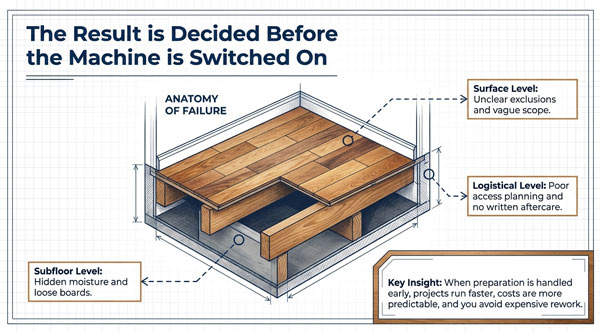
Ask every contractor for an itemised scope. You should be able to see exactly what is and is not included, with no vague wording. A serious quote should reference subfloor checks, prep work, finish system, drying windows, and snagging criteria.
- Detailed site survey with notes on floor condition, access and moisture risk.
- Written fixed-scope quotation that separates labour, materials and optional extras.
- Preparation works: nail punching, minor repairs, edge access and dust control setup.
- Clear finish schedule (number of coats, product type, expected sheen level).
- Practical programme with start date, cure times and room re-entry guidance.
- Handover checklist and aftercare instructions in writing.
Cost planning: where the money actually goes

For most projects, price is driven by condition and complexity, not just square metres. Flat, clean, modern boards are quicker to process than damaged parquet or floors with heavy coatings. Access restrictions, furniture management, parking permits and out-of-hours work can all shift the final cost.
When reviewing a quote, check whether VAT is included and whether disposal, consumables or sealing products are treated as add-ons. If you compare like-for-like scopes, the cheapest offer often stops being the best value. A better target is risk-adjusted value: reliable delivery, durable finish, and a lower chance of callbacks.
- Confirm measured area and any excluded rooms, landings or stairs.
- Check repair assumptions (board replacement, gap filling, adhesive work).
- Verify the exact finish brand/spec and expected number of coats.
- Clarify cure windows and who carries the risk for delayed access.
- Ensure all provisional sums are explained in plain language.
How to compare quotes without being misled
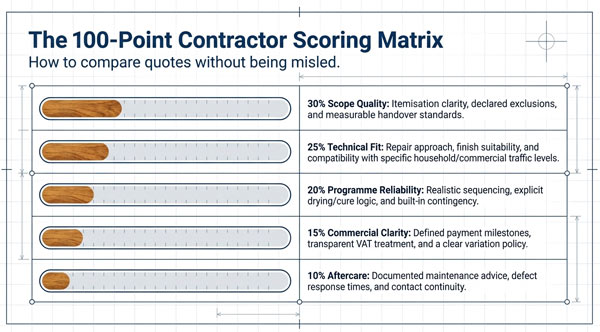
Use a simple scoring model so decisions are repeatable. Weight quality controls and communication are just as important as headline cost. If one quote is materially lower, ask what has been removed rather than assuming efficiency.
- Scope quality (30%): itemisation, exclusions, measurable handover standard.
- Technical fit (25%): repair approach, finish suitability, compatibility with traffic levels.
- Programme reliability (20%): realistic sequencing, drying/cure logic, contingency.
- Commercial clarity (15%): payment milestones, VAT treatment, variation policy.
- Aftercare (10%): maintenance advice, defect response, contact continuity.
This approach quickly highlights who is selling confidence and who is selling ambiguity. In practice, clients who choose based on total delivery quality usually spend less over 12-24 months than those selecting the lowest day-one price.
Project timeline and disruption control
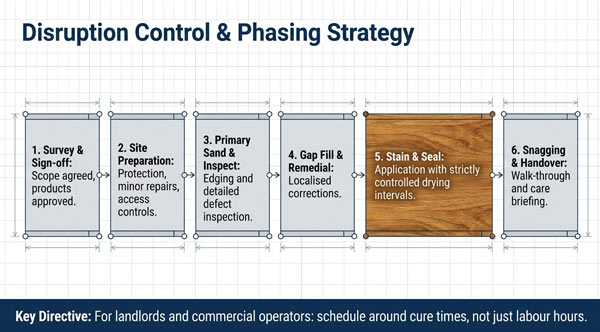
Well-run jobs are phased. Even in occupied properties, disruption can be reduced through access windows, room sequencing and early communication with tenants or staff. Agree on who moves furniture, when noise-intensive work will occur, and where equipment can be stored safely.
Typical sequence
- Survey and sign-off: scope agreed, products approved, programme fixed.
- Site preparation: protection, access controls, and minor repairs.
- Primary sanding and edging, then detailed inspection for defects.
- Gap filling or localised remedial works if needed.
- Stain/seal application with controlled drying intervals.
- Snagging walk-through, care briefing and documented handover.
For landlords and commercial operators, a fast turnaround matters. The best way to protect occupancy is to schedule around cure times, not just labour hours. A contractor willing to document this in writing is usually a safer partner.
Quality checks that protect your spend
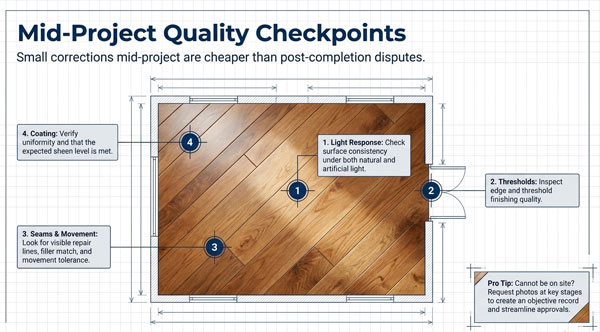
Don’t wait until the last day to inspect. Build checkpoints into the programme so issues are caught early. Small corrections mid-project are far cheaper than post-completion disputes.
- Surface consistency under natural and artificial light.
- Edge and threshold finishing quality.
- Visible repair lines, filler match and movement tolerance.
- Coating uniformity and expected sheen level.
- Protection plan for the first 7-14 days after completion.
Request photos at key stages if you cannot be on site. This creates an objective record and makes approval decisions easier for all parties.
Common buying mistakes (and how to avoid them)
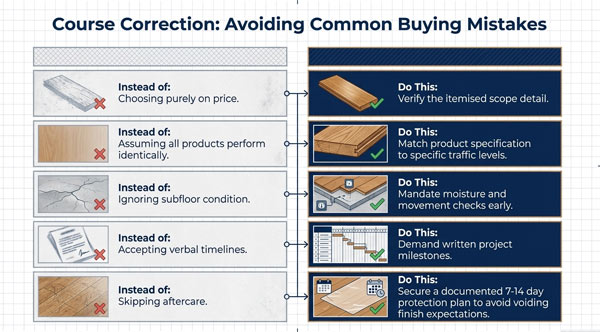
- Choosing purely on price without checking the scope detail.
- Assuming all products perform the same in busy households.
- Ignoring moisture, movement or subfloor condition.
- Agreeing on verbal timelines without written milestones.
- Skipping aftercare and then voiding finish expectations.
A short pre-start checklist prevents most of these issues. The goal is simple: make expectations measurable before money changes hands.
FAQs before you book
How many quotes should I collect?
Usually, three itemised quotes are enough if all suppliers inspected the site and priced the same scope.
Should I pay a large deposit?
Deposits should be proportionate to materials and booking risk. Tie the remaining payments to clear milestones.
Can work be done in phases?
Yes. Phased delivery is common in occupied homes and helps reduce disruption while protecting quality.
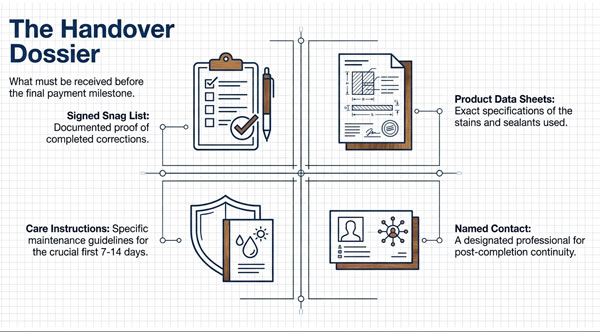
What should be in the final handover pack?
Signed snag list, product data, care instructions and a named contact for post-completion queries.
Next Step: Book with Confidence
When requesting quotes for floorboard repair before sanding, make sure every contractor responds to the same written brief. This simple step immediately improves quote accuracy and allows for a fair, like-for-like comparison.
Rather than focusing on the lowest headline price, prioritise:
- Clear written scope of works
- Realistic timelines and programme commitments
- Transparent pricing with no hidden extras
- Documented aftercare and maintenance guidance
In short, invest in certainty — not promises. A contractor who communicates clearly and prices transparently is far more likely to deliver a durable finish and keep your project on schedule.
Final Checks Before Signing
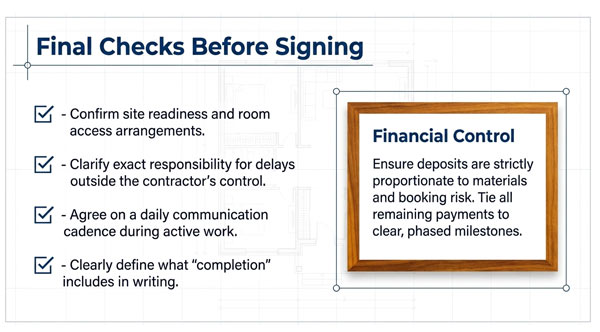
Before confirming your booking, carry out one last practical review:
- Confirm site readiness and room access arrangements
- Clarify responsibility for delays outside the contractor’s control
- Agree on daily communication updates during active work
- Define clearly what “completion” includes
For higher-traffic homes or commercial spaces, request a maintenance plan at handover. Even a simple annual review can extend the life of the finish, reduce unexpected repair costs, and help preserve the floor’s original appearance for years to come.