Back to Floor Sanding
How Many Times Can a Wood Floor Be Sanded?
It's one of the first questions we get asked on almost every site visit. The homeowner is standing in a room with floorboards that have clearly seen better days, and before we've even talked about finishes or timelines, they want to know: will this floor survive another sanding, or am I better off ripping it out?
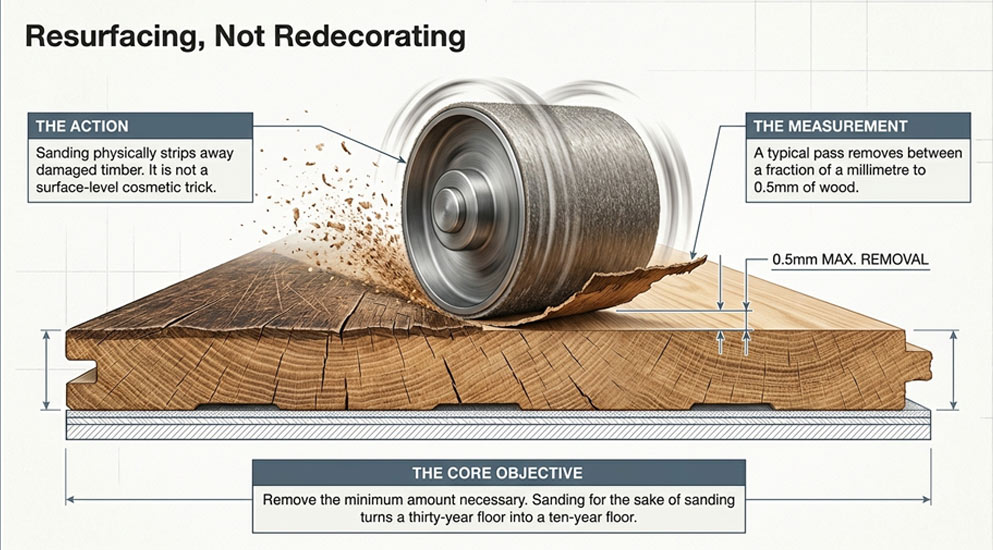
It's a fair question, and the honest answer is "it depends" — though that's rarely satisfying to hear. Sanding can transform a tired, scratched, or dated floor into something that looks brand new, but every pass of the machine takes away a thin layer of timber. There's no getting around that. So how many times can wood floor be sanded before there's nothing left to work with? It comes down to a handful of factors: the type of floor, its overall thickness, the depth of the wear layer if it's engineered, how many times it's already been sanded, and the condition it's in right now.
Why Wood Floors Cannot Be Sanded Forever
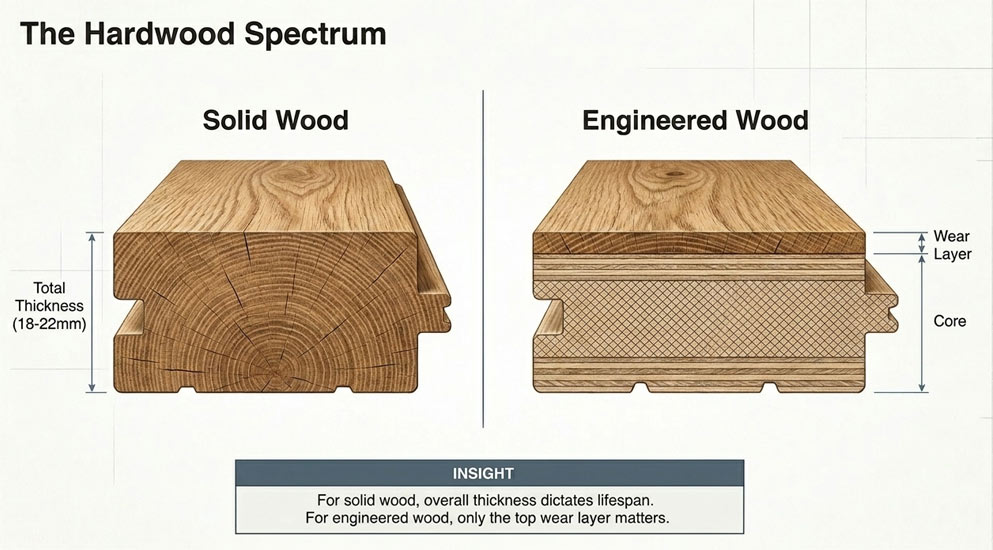
Sanding isn't a cosmetic trick that sits on top of the wood — it physically resurfaces it. The machine strips away the damaged, discoloured, or worn top layer to expose fresh timber underneath, which is exactly why an old floor can look decades younger once it's finished. But that fresh layer comes from somewhere. Every cycle removes a small amount of material, and there's a finite amount of timber to remove before the boards become too thin to take the strain of foot traffic, fixings, or future restoration.
This is why an experienced sander doesn't go in heavy-handed. The goal on any job is to remove the minimum amount of wood necessary to get rid of damage and achieve a smooth, even surface — not to sand for the sake of sanding. I've seen floors ruined by previous "restorations" where someone took far more off than they needed to, simply because they weren't paying attention to how much was left. That's the kind of mistake that turns a thirty-year floor into a ten-year floor.
How Many Times Can Solid Wood Flooring Be Sanded?
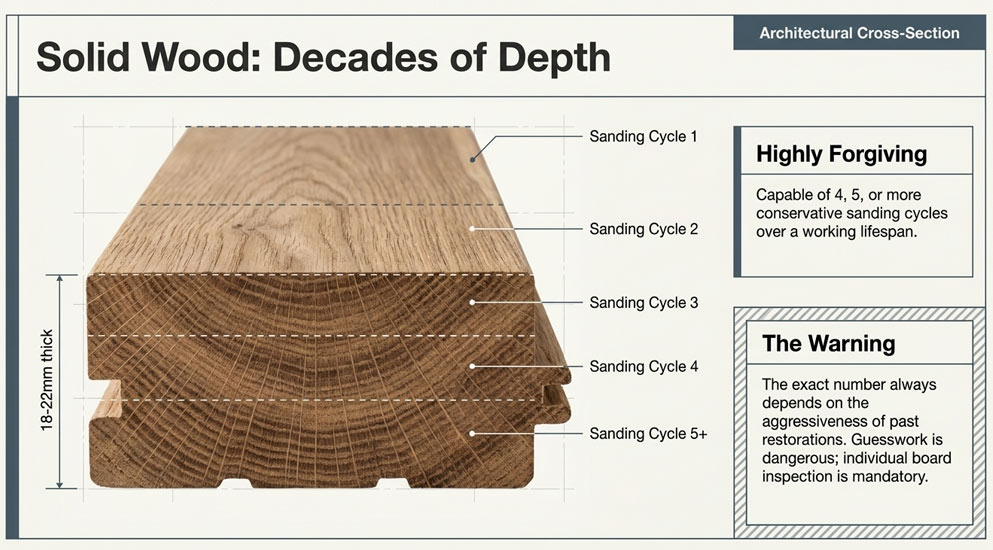
Solid wood is the most forgiving option here, and it's usually where we give homeowners the most reassuring answer. Most solid boards run somewhere between 18mm and 22mm thick, and a typical sanding pass only removes a fraction of a millimetre to perhaps half a millimetre, depending on how much work the floor needs.
Do that math over a few decades and you can see why solid floors are often capable of multiple sanding cycles — sometimes four, five, or more over their working life, provided each restoration is done conservatively. I've worked on Victorian and Edwardian boards in London homes that have clearly been sanded several times before we ever got near them, and there was still enough depth left to do the job properly. That said, the exact number always depends on what's happened to the floor before you arrived, which is why guesswork isn't good enough — every floor needs to be looked at individually.
| Floor Type |
Typical Thickness |
Potential Sanding Cycles |
| Solid Wood Flooring |
18-22mm |
Multiple times over its lifespan |
| Engineered Wood (2-3mm wear layer) |
Varies |
Limited restoration potential |
| Engineered Wood (4-6mm wear layer) |
Varies |
Greater restoration potential |
These figures are a useful starting point, but they're not a substitute for a proper inspection. A board that looks fine on the surface can be hiding a much thinner profile underneath, particularly if it's been restored before.
Can Engineered Wood Flooring Be Sanded?
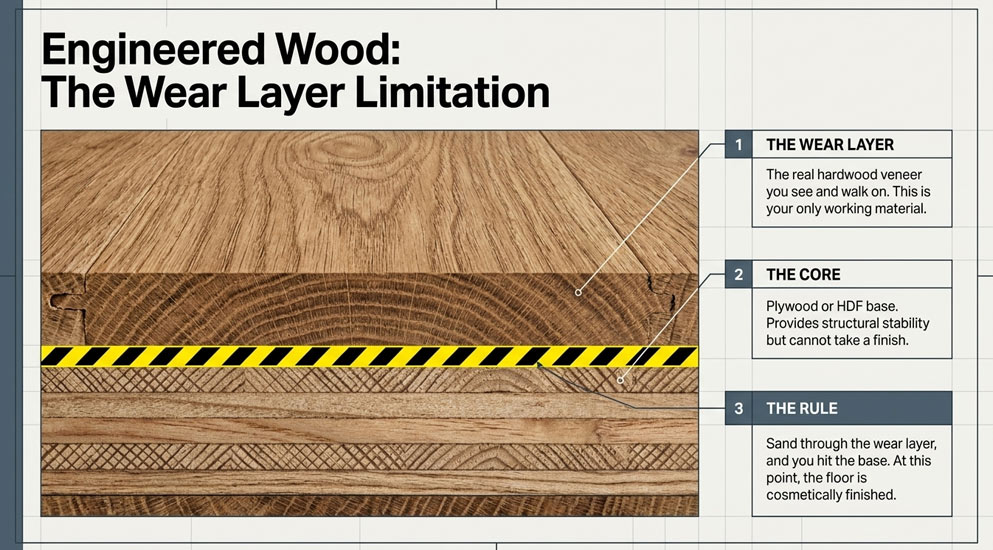
We still hear this misconception fairly regularly: that engineered wood flooring can't be sanded at all. It's not true, but it's also not quite as simple as solid wood. The deciding factor isn't the total thickness of the board — it's the thickness of the wear layer, the solid timber veneer sitting on top of the plywood or HDF base. Sand through that layer and you hit the base material, at which point the floor is finished, cosmetically speaking.
This is exactly the sort of detail that needs a professional assessment before any decision gets made, because two engineered floors that look identical from a few feet away can have very different restoration potential.
Engineered Flooring with a 2-3mm Wear Layer
This is the thinnest end of the engineered market, and it generally only allows for one light restoration in its entire lifespan, if that. Sanders working on these floors have to be especially careful, since there's very little margin for error.
Engineered Flooring with a 4mm Wear Layer
A 4mm wear layer gives a noticeably better margin to work with. These floors are often suitable for two, sometimes more, light sanding cycles, depending on how aggressively they were sanded previously.
Engineered Flooring with a 5-6mm Wear Layer
At this thickness, engineered boards start to behave much more like solid wood in terms of restoration potential. I've sanded 6mm wear-layer floors more than once without any concerns about exposing the base layer, provided the work was done carefully each time.
What Is a Wear Layer and Why Does It Matter?
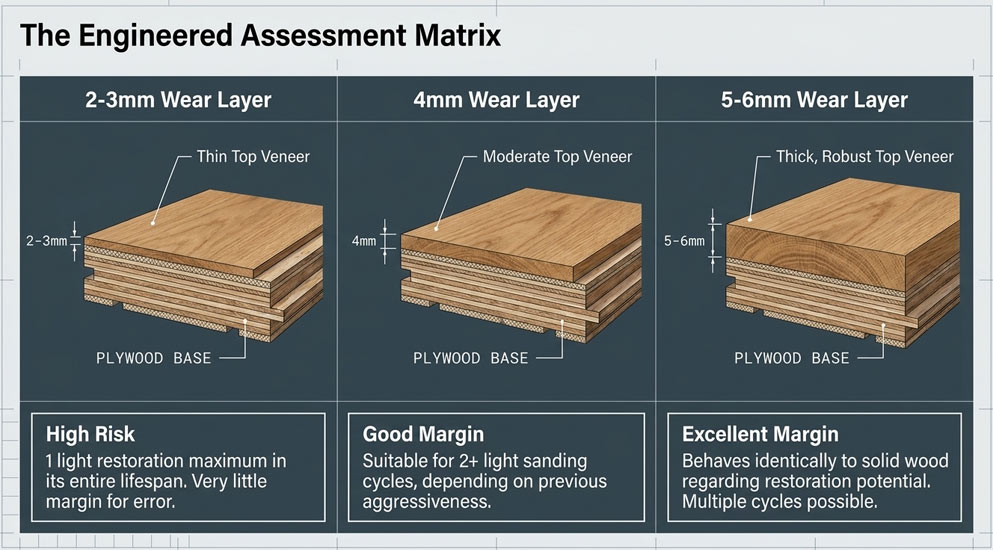
If you're not familiar with the term, the wear layer is simply the top section of an engineered board made from real hardwood — the part you actually see and walk on. Underneath it sits a core, usually plywood, which gives the board its stability but isn't designed to be sanded or finished.
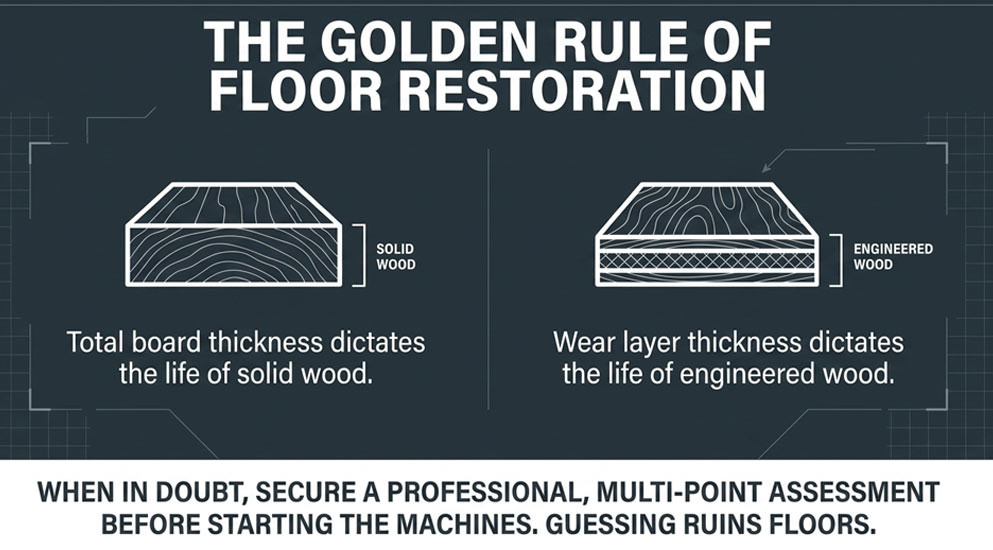
Think of it like the difference between a solid oak worktop and a veneered one. With solid wood, you can sand right through the entire thickness of the board and you'll still have oak. With engineered flooring, you're only ever working with that top veneer — once it's gone, what's left underneath isn't designed to take a finish or look presentable. This is why wear layer thickness, not overall board thickness, is the figure that actually matters when you're trying to work out how much restoration potential a floor has left.
How Professionals Determine Whether a Floor Can Be Sanded Again
Before any machine goes near a floor, a proper inspection should answer a few key questions. We measure board thickness at several points, not just one, since wear isn't always even across a room. We check the depth of the wear layer on engineered floors, often using a small test area in an inconspicuous spot. We look closely for evidence of how heavily the floor has been sanded before — sometimes you can see this in slightly inconsistent board colour or finish absorption. We check for exposed tongues, which is usually a sign that the boards are getting dangerously thin. We inspect individual boards for damage that might need replacing rather than sanding around. And we look for structural movement, because a floor that's lifting, bouncing, or unevenly settled has problems that sanding alone won't fix.
Skipping this step is how floors get ruined. I'd rather spend twenty minutes properly assessing a floor and tell a homeowner it's not ready for another sand than start the job and find out halfway through that there's nothing left to work with.
Signs Your Floor May Be Too Thin for Another Sanding
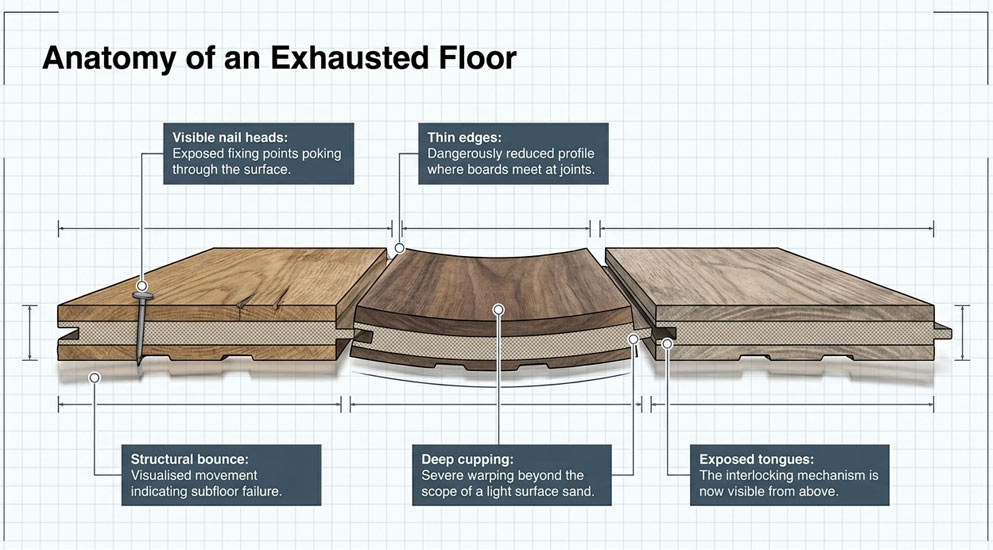
A few warning signs tend to come up again and again on older floors:
- Visible nail heads poking through or close to the surface.
- Exposed fixing points that weren't visible before previous restorations.
- Thin board edges, particularly where boards meet at joints.
- Deep cupping or warping that's gone beyond what a light sand can correct.
- Significant structural movement in the subfloor or boards themselves.
- A history of heavy sanding in the past, even if it's not obvious from the surface.
None of these automatically means the floor is finished. We've come across floors with visible nail heads in one corner that were perfectly fine everywhere else, and the solution was simply to treat that section differently rather than write off the whole room. But these signs do mean a more careful, board-by-board evaluation is needed before deciding anything.
When Repairing Makes More Sense Than Full Sanding
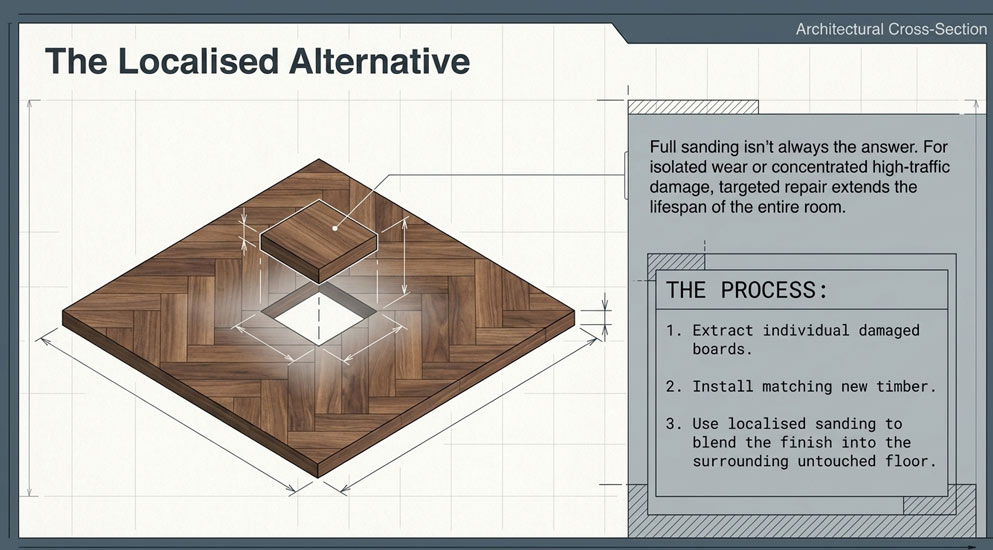
Sometimes the answer isn't a full sand at all. If only a handful of boards are showing genuine wear or damage, a targeted wood floor repair can extend the life of the rest of the floor without touching boards that don't need it. I've replaced individual damaged boards in a room and then blended the new timber in through localised sanding and finishing, leaving the rest of the original floor untouched. For parquet specifically, this kind of localised parquet floor restoration is often more appropriate than a full re-sand, since parquet damage tends to be concentrated in specific high-traffic areas rather than spread evenly.
This approach makes sense when the floor as a whole still has plenty of life left and the damage is isolated, rather than systemic.
Sanding vs Replacing: Which Option Offers Better Value?
This is the question that usually follows once we've established how much restoration potential is left. There's no single right answer — it depends on budget, how attached you are to the existing floor, and how much disruption you're willing to take on. Our guide on sanding versus buying a new wood floor goes into more depth on this, but here's the short version.
| Sanding |
Replacement |
| Lower cost |
Higher investment |
| Retains original floor |
Completely new surface |
| Less disruption |
More extensive work |
| Sustainable option |
Greater material usage |
| Preserves character |
New appearance |
For a lot of period properties, sanding wins out simply because the original floor has character that a new installation can't replicate. For floors that have genuinely reached the end of their usable life, replacement is the more sensible long-term investment rather than spending money chasing a finish that won't hold. If you're somewhere in between, it's worth reading through our comparison of repairing versus replacing a hardwood floor before committing either way.
How Often Should a Wood Floor Be Sanded?
Most floors don't need anywhere near as much sanding as people assume. With reasonable care, a well-maintained floor can go many years — often a decade or more — between restorations. Protective finishes do a lot of the heavy lifting here, and good maintenance habits matter more than people expect: regular cleaning, avoiding excessive standing water, and using protective pads under furniture all reduce the surface wear that eventually calls for a re-sand.
Lifestyle plays a role too. A floor in a household with large dogs and heavy foot traffic is naturally going to need attention sooner than one in a quieter home. None of this means sanding should be avoided — it just means it doesn't need to happen as often as some homeowners fear.
Frequently Asked Questions
Can engineered wood flooring be sanded twice? It depends entirely on the wear layer. Floors with a 4mm or thicker wear layer can often handle two light sanding cycles, while 2-3mm wear layers usually only allow for one.
How much wood is removed during floor sanding? A typical sanding pass removes a fraction of a millimetre, though this varies depending on how much damage or unevenness needs correcting.
Can very old floorboards still be sanded? Often, yes. Age alone doesn't rule out sanding — what matters is remaining thickness and condition, which is exactly what a proper inspection for thin floorboards is designed to establish.
Is sanding always cheaper than replacement? Generally, yes, but not always the better long-term choice if a floor has very little restoration potential left.
What happens if a floor is sanded too many times? Boards become thin enough to risk structural weakness, exposed fixings, or visible damage that can't be sanded out without going through the entire board.
Conclusion
The number of times a wood floor can be sanded ultimately comes down to its construction, thickness, wear layer, and how it's been treated in the past. Many solid wood floors can be restored numerous times across several decades, while engineered flooring depends largely on how much wear layer remains. Understanding the difference between total board thickness and wear layer thickness is the single most useful piece of knowledge for anyone trying to work out how much life is left in their floor.
If you're unsure where your own floor stands, the safest route is always a professional floor sanding assessment before deciding between restoration and replacement. It's a much better starting point than guessing — and it's saved more than a few homeowners from either wasting money on a floor that wasn't ready, or replacing one that had plenty of life left in it.