Project Overview
This project in Tadworth involved restoring a hardwood floor to a clean, well-protected finish through sanding, gap filling, and a multi-coat lacquer application. Before any sanding started, we carried out a thorough structural assessment to confirm the floor was stable enough for the work ahead. Floor sanding and refinishing in this area typically runs between £25 and £45 per square metre, with the precise cost depending on floor size and the condition of the boards.
The Challenge
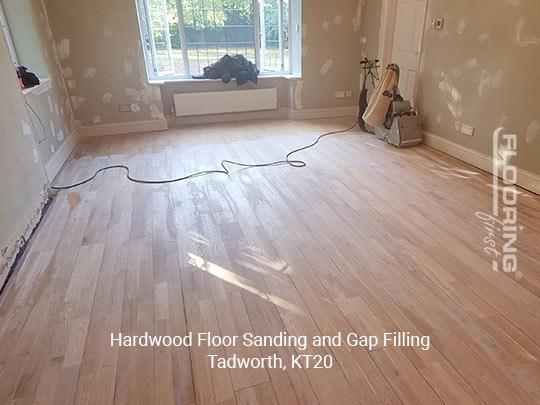
This Tadworth project was an exciting challenge — bringing a beautiful hardwood floor back to its former condition. We had to begin by making sure the floor was strong and stable enough to withstand the intensive sanding and lacquering processes ahead. Using our experience in woodworking and construction, we inspected every section of the existing surface carefully. We checked for boards that had become loose over time, identified any areas where the timber had cracked or split, and made sure there was nothing compromised that would affect the long-term result once the restoration was complete.
Our Approach
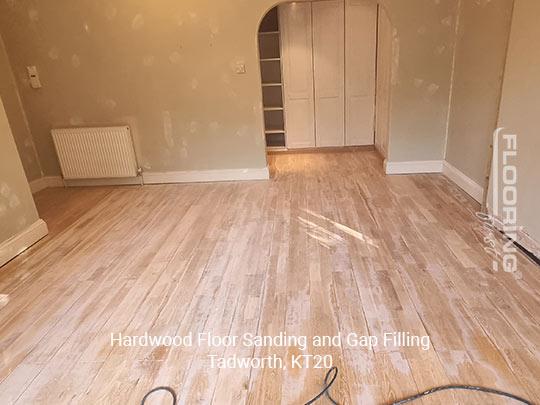
- Structural inspection and repairs: We worked through the floor methodically, securing any loose boards and addressing cracked or weakened sections before picking up a sander. This groundwork is what makes the difference between a result that lasts and one that fails prematurely.
- Gap filling: Gaps between boards were filled to create an even surface across the room before sanding commenced.
- Multi-pass sanding: Industrial-grade equipment was used throughout. We started with a coarser abrasive grade to level the surface and remove the old finish, then worked through progressively finer grades until the floor was smooth and even — no deep scratches, no gouges left behind.
- Lacquer application: Multiple coats of lacquer were applied to build a durable layer of protection. The lacquer enhances the natural colour and grain of the wood while defending against scuffs, fading, UV exposure, and general daily wear.
The Result
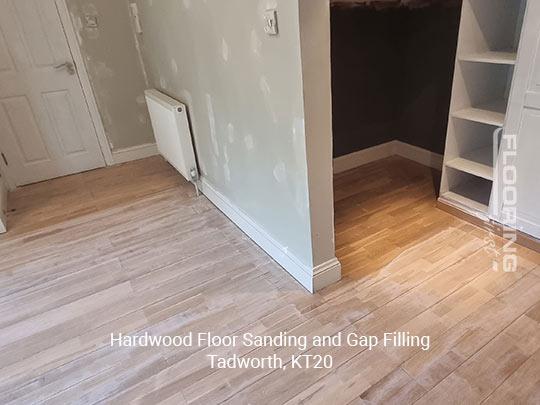
We then began the meticulous sanding process using industrial-grade equipment designed for hardwood floors. Several rounds of sanding with varying abrasive grades produced a smooth, even finish. The lacquer layers built up a durable protective coat that will stand up to regular use for many years. The entire process required patience and careful technique from the team to ensure quality results for the Tadworth client — and that is exactly what was delivered.
Frequently Asked Questions
Q: Why is a structural check important before sanding?
A: Sanding applies significant mechanical force to the floor surface. If boards are loose or the subfloor underneath is soft or damaged, sanding can make these problems worse rather than better. Fixing any structural issues before starting means the finished floor will be stable and the new finish will not crack or lift at weak points.
Q: How many coats of lacquer do you apply?
A: We typically apply three coats of lacquer — a sealer coat and two finish coats — with light sanding between each to promote adhesion. This builds a solid, hardwearing surface. Some specifications call for an additional coat in high-traffic areas.
Q: Can hardwood floors be restored in occupied homes?
A: Yes, though it is more practical if the room being worked on can be cleared and left empty during the process. Most of the inconvenience comes from drying time between coats rather than the sanding itself. We work around the client's schedule wherever possible.