Project Overview
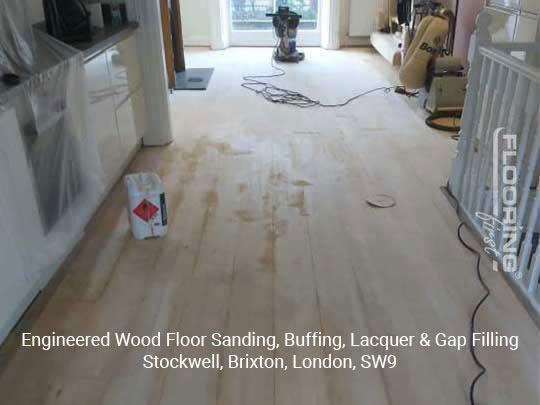
Our Stockwell clients requested a full restoration package for their engineered wood floor, covering sanding, buffing, lacquering and gap filling. They also asked us to move furniture before we started and return it once we had finished. The floor had seen heavy use over a number of years and had several visible gaps between boards, areas of worn lacquer, and a general dullness that no amount of cleaning could fix. The aim was to bring it back to a condition close to new without replacing the boards.
The Challenge
Combining gap filling with sanding and lacquering requires careful sequencing. Fill too early and the sanding process can pull filler out. Fill after sanding but before lacquering is the correct approach, but the filler must be fully dry before the lacquer goes on or the finish will bubble. Getting the colour match right on the gap filler is also important -- the wrong colour draws the eye and looks worse than no filler at all. The gaps on this floor were mostly in the middle of the room where movement had been greatest, and they varied in width, which required blending filler to get a close colour match to the board.
Our Approach
- Furniture clearance: We moved all furniture to one side of each room in stages to allow continuous working.
- Initial sanding: Drum sanding along the grain removed the old lacquer and flattened the surface, including slight ridges at a few board edges.
- Edge and detail work: Edge sanders and hand tools addressed the perimeter and any tight spots.
- Gap filling: We prepared a sawdust-and-resin filler matched to the board colour and worked it into the gaps, then allowed it to cure before continuing.
- Buffing: A fine-grit buff over the entire surface brought the wood to an even finish ready for lacquering.
- Lacquering: Two coats of water-based lacquer were applied with a light sand between coats to ensure good adhesion and a hard-wearing surface.
- Furniture return: Everything was put back in position and the rooms were handed back clean.
The Result
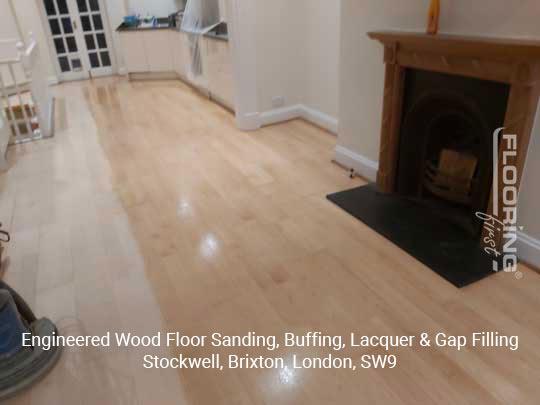
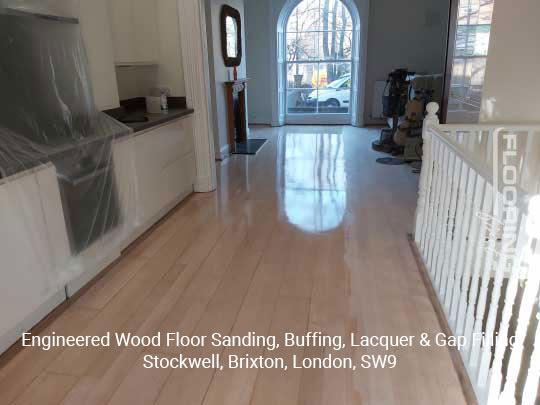
The floor came up exceptionally well. The gaps had disappeared and the lacquer gave the whole surface a clean, consistent sheen. The clients commented that the floor looked better than it had when they first moved in. For sanding, gap filling and relacquering a floor in this condition, costs generally sit between £25 and £45 per square metre, making it a very cost-effective alternative to replacement.
Frequently Asked Questions
Can gaps in engineered wood flooring be prevented?
Some seasonal movement and minor gapping is normal in wood floors as boards expand and contract with humidity changes. Keeping indoor humidity between 45% and 65% year-round reduces movement significantly. Wide or persistent gaps usually indicate a fitting or subfloor issue and are worth addressing properly.
What type of lacquer do you use?
We primarily use water-based lacquers, which have lower odour than solvent-based products, dry faster between coats and produce a hard-wearing finish. For clients who prefer an oil finish, we can offer Danish oil or hardwax oil alternatives.
Do you cover Stockwell and the surrounding area?
Yes. We work across south London including Stockwell, Brixton, Clapham and the wider SW postcode area. Contact us to arrange a free survey.