Wood Floor Fitting Timeline: How Long Does Installation Take, Day by Day?
Wood Floor Fitting & Installation in London — At a Glance
- Price range: £35–£60 per sqm
- Typical duration: 1–3 days depending on floor type
- Free site visit: Yes — book online or call 020 8830 9782
- Customer rating: 4.5/5 (590+ reviews)
- Experience: 22 years, established 2004
Once a sanding project is sorted, the next question we get most often is the fitting equivalent: "how long will it take to actually get the new floor down?" The honest answer depends on the material, the size of the area, and how much preparation the subfloor needs — but most residential installations follow a predictable pattern once you know what to expect.
Typical Installation Timelines by Flooring Type
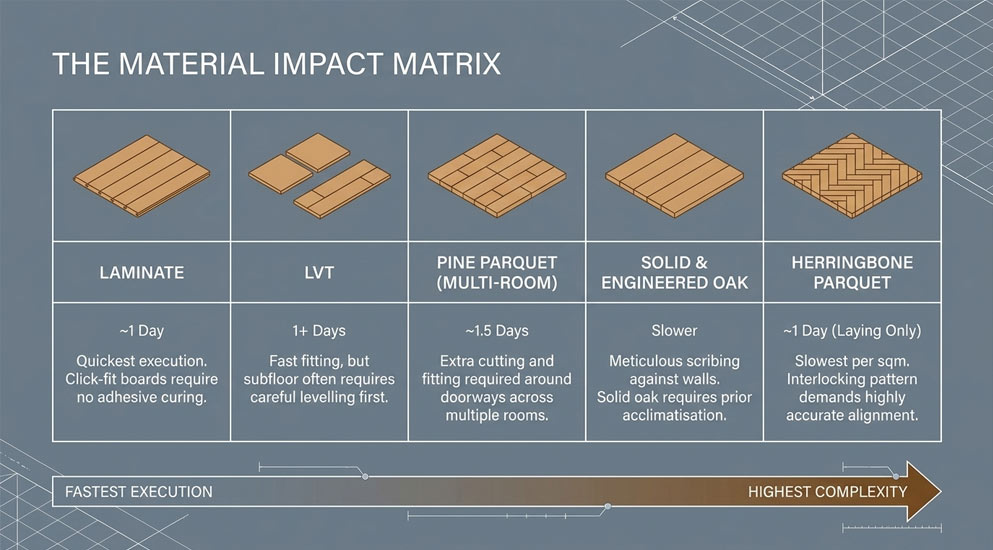
These figures assume one team working on a property cleared of furniture, with the subfloor already in reasonable condition.
Herringbone parquet installation (15 sqm): around 1 day for the installation itself, excluding subfloor preparation, skirting board trimming, and door frame trimming. Herringbone's interlocking pattern takes longer to lay accurately than a straight-plank floor, so this estimate covers laying time only — finishing adds further days depending on the chosen floor finish.
Laminate flooring installation (30 sqm): around 1 day, including preparation and insulation underlay. Laminate installation is one of the quicker jobs we do, since the click-fit boards don't need adhesive curing time the way solid wood or parquet does.
Multi-room pine parquet (30 sqm or less spread across several rooms): sanding and sealing with varnish can usually be completed in around 1.5 days. Splitting the same square metreage across multiple smaller rooms typically takes a little longer than one large room of the same size, simply because of the extra cutting and fitting around doorways and thresholds.
Engineered and solid wood flooring generally takes a little longer to install than laminate, since boards often need scribing to fit against walls and skirting, and solid oak floor fitting in particular benefits from acclimatising to the room for a day or two beforehand to reduce the risk of movement after fitting.
LVT installation tends to sit between laminate and solid wood for speed — quicker than scribed hardwood, but the subfloor often needs more careful levelling first, which can add a day if the existing floor isn't flat.
The figures above are based on fair, typical conditions and a minimum amount of subfloor repair. Accurate estimation is only really possible at the time of a free site visit.
Example Day-by-Day Installation Schedule
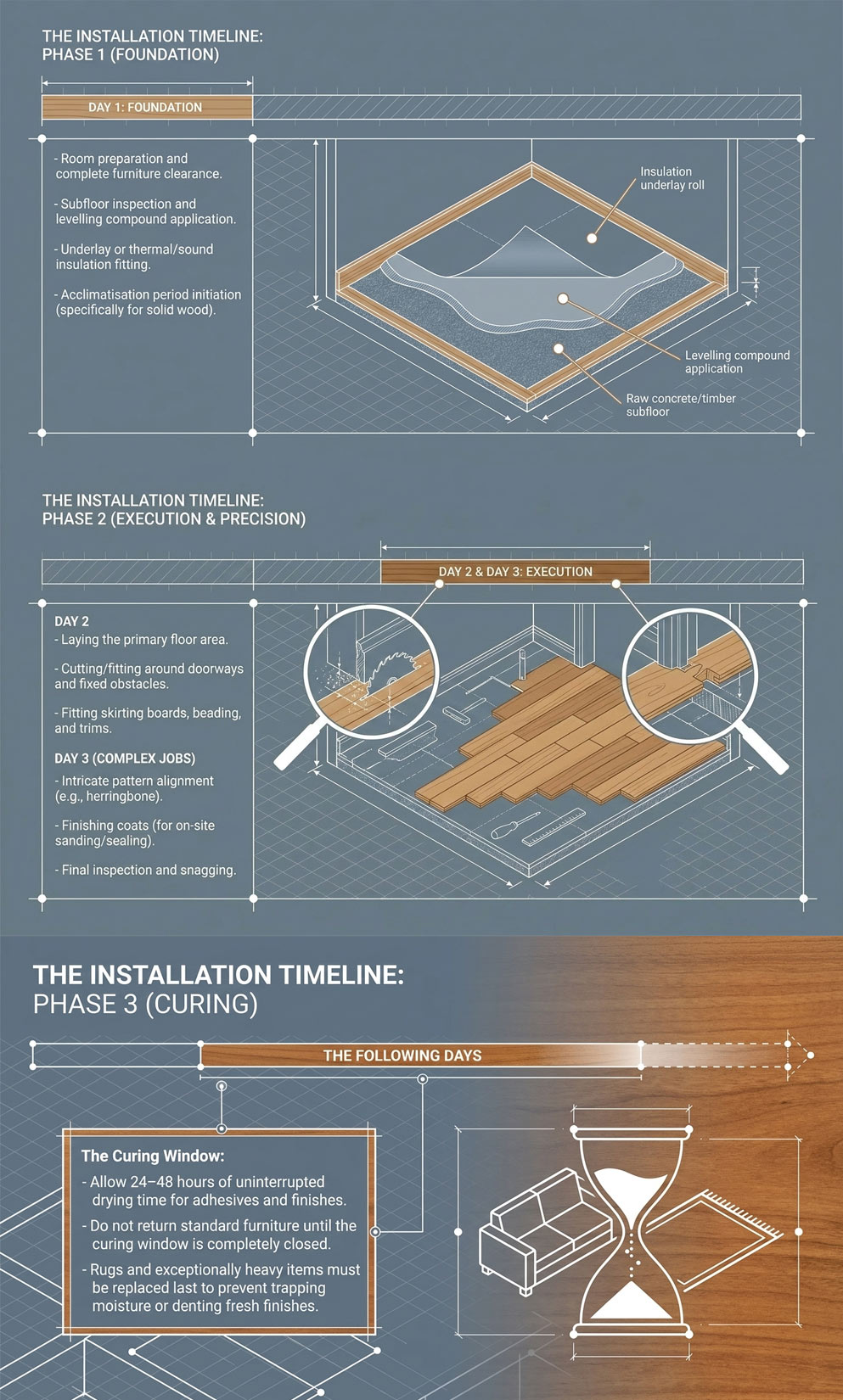
For a typical single-room installation, a realistic schedule looks something like this:
Day 1
- Room preparation and furniture clearance
- Subfloor inspection and levelling where needed
- Underlay or insulation fitting
- Acclimatisation period for solid wood (if required)
Day 2
- Laying the main floor area
- Cutting and fitting around doorways, thresholds and fixed obstacles
- Fitting skirting boards, beading, and trims
Day 3 (larger or more detailed installations, such as herringbone or multi-room jobs)
- Detail work and pattern alignment
- Finishing coats, if sanding and sealing on-site rather than pre-finished boards
- Final inspection and snagging
Following Days
- Drying and curing time before furniture returns
- Rugs and heavier items replaced last, once finishes have fully cured
Smaller, single-room laminate or LVT jobs often compress into a single day. Larger herringbone, multi-room, or solid wood projects tend to follow this pattern over two to three days.
What Can Delay a Wood Floor Installation?
Even with careful planning, certain things only become apparent once the old flooring comes up or the subfloor is exposed:
- Uneven or damaged subfloors that need levelling compound or repair before new flooring can go down
- Loose or damp floorboards underneath old carpet or lino that weren't visible during the initial assessment
- Old adhesive residue left over from a previous floor, which needs removing before laying can begin
- Doorways and thresholds that need trimming to clear the new floor height
- Acclimatisation requirements for solid wood, which can add a day or two if the property has been unheated or recently had building work
- Poor weather and high humidity, which slow adhesive curing and finish drying
- Pattern complexity, particularly for herringbone or other parquet layouts, which simply take longer to lay accurately than straight planks
Experienced fitters build some flexibility into the schedule precisely because of this — a subfloor that looks fine from the surface can reveal a different story once the old covering is lifted.
Can You Stay in the House During Installation?
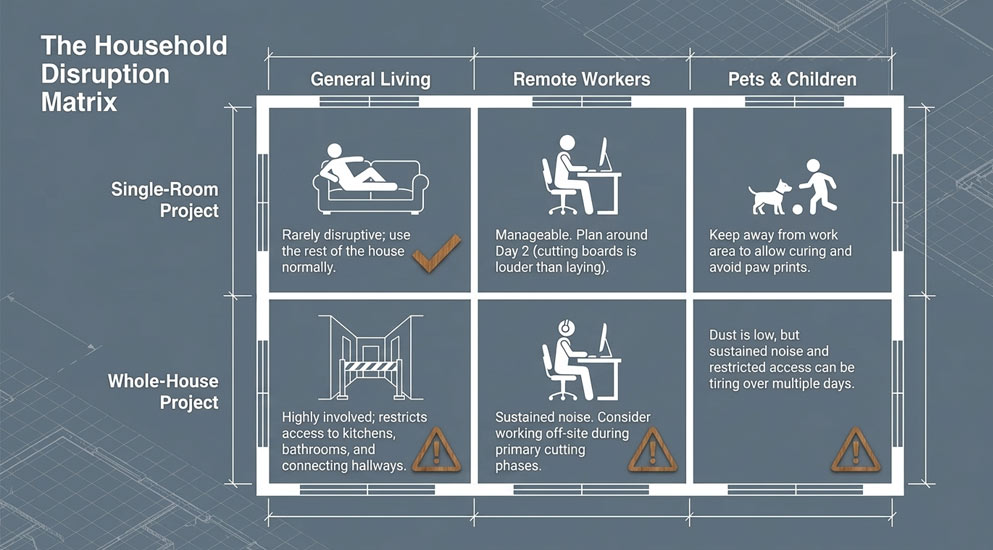
In most cases, yes, though it depends on the scope of the job.
Single-room installations are rarely disruptive — you simply avoid that room while it's being fitted and use the rest of the house as normal.
Whole-house projects are more involved, particularly around access to kitchens, bathrooms, and bedrooms while flooring is being laid through hallways and connecting rooms.
Families with young children may find the noise and disruption tiring over several days, even though dust levels during fitting are generally lower than during sanding.
Home workers should plan around the noisiest days — cutting and fitting tends to be louder than the laying itself.
Pets are best kept away from the work area while adhesives or finishes are curing, both for their safety and to avoid paw prints in fresh finish.
For most single-room jobs, staying put is entirely practical. For larger, multi-room installations, some homeowners choose to spend a night or two elsewhere simply for convenience rather than necessity.
Tips for Keeping Your Installation on Schedule
- Empty the room beforehand. The less time spent clearing furniture on the day, the more time available for the actual fitting.
- Confirm your flooring has arrived and acclimatised, particularly for solid wood, which often needs a few days in the property before fitting.
- Ensure easy access for materials and equipment — clear hallways and doorways before the team arrives.
- Maintain good ventilation while adhesives or finishes cure.
- Avoid heavy traffic too early, even if the floor looks finished, and follow aftercare guidance on cleaning products once the floor is back in everyday use.
- Ask about gap filling and finishing in advance if you're having an unfinished floor sanded and sealed on-site rather than fitting pre-finished boards — this adds time that's easy to forget about when budgeting the schedule.
Frequently Asked Questions
How long does it take to fit a wood floor in one room? Most single rooms are fitted within a day for laminate or LVT, and one to two days for parquet, herringbone, or solid wood, depending on pattern complexity and subfloor condition.
How long before I can move furniture back after fitting? Generally 24–48 hours once any adhesive or finish has fully dried, though heavier pieces benefit from waiting a little longer.
Does herringbone take longer than straight-plank flooring? Yes. The interlocking pattern needs more careful cutting and alignment, so herringbone typically takes noticeably longer to lay than the same area in straight planks.
Can weather affect installation timelines? Yes — cold or humid conditions slow adhesive curing and finish drying, and solid wood may need longer to acclimatise in a cold or damp property.
Does the subfloor affect how long fitting takes? Significantly. An uneven or damp subfloor needs levelling or drying out before new flooring can go down, which can add anywhere from a few hours to a full day.
Conclusion

Most wood floor installations are quicker than people expect for straightforward, single-room jobs, but pattern complexity, subfloor condition, and acclimatisation time can all stretch a schedule for larger or more detailed projects. Knowing the likely stages in advance — preparation, laying, detail work, and curing — makes it much easier to plan around the disruption rather than be caught out by it.
If you'd like an accurate schedule for your own installation, the best next step is a free site visit, where we can assess your subfloor and flooring choice before giving you a realistic timeline.