Project Overview
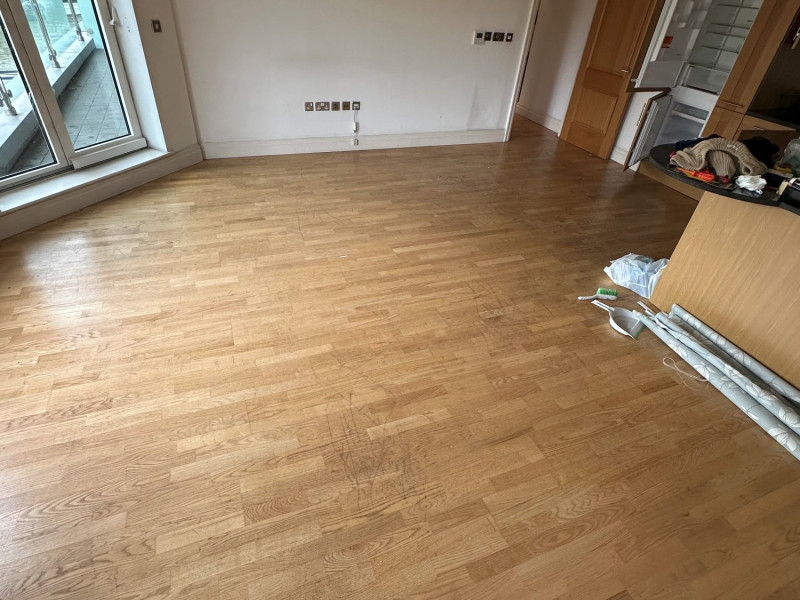
This project involved restoring a solid engineered oak floor in a London living room. The floor had accumulated years of daily wear — surface scratches across the main walking routes, and deeper structural damage in one concentrated spot where a large piano had stood for an extended period. The client wanted to avoid a full replacement and was keen to see how much of the original character could be saved.
The Challenge
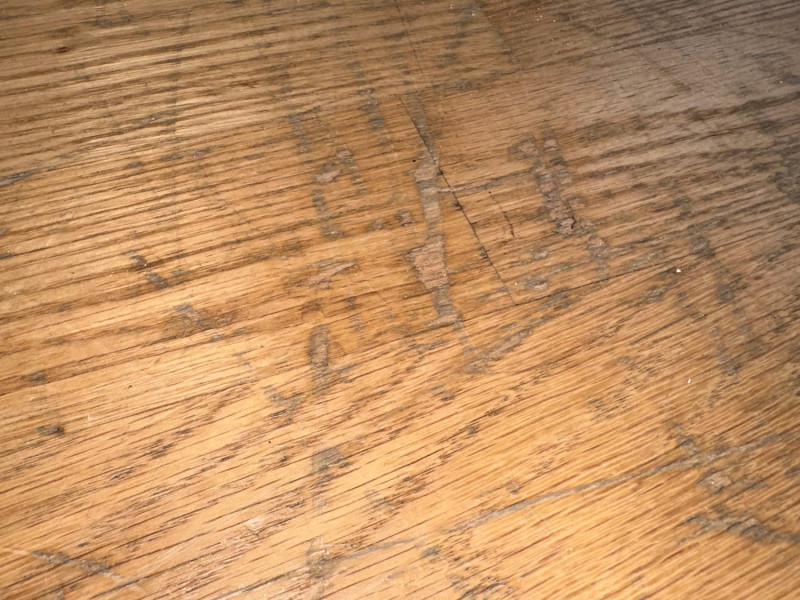
Upon inspection, the floor displayed a combination of superficial scuffs and deep gouges in high-traffic and load-bearing areas. The most significant damage was located beneath the piano, where the legs had left visible, concentrated indentations over time.
Engineered flooring comes with a wear layer of varying thickness — typically between 3mm and 6mm on quality boards. Before any sanding begins, that wear layer has to be measured carefully. Sand too aggressively and you risk breaking through to the core. The piano indentations added a further complication: simple sanding alone would not be enough to level them out.
Our Approach
We started with a detailed inspection under raking light to map every scratch, scuff, and indentation. This let us prioritise areas that needed filler work before sanding started.
The piano leg depressions were treated first. We applied a two-part wood filler, colour-matched to the oak, building it slightly proud of the surface so that subsequent sanding could bring it flush. The filler was left to cure fully — rushing this step leads to shrinkage and a visible repair. Once set, we feathered the edges with a detail sander so the repair blended into the surrounding grain.
With the deep repairs done, we moved to the main floor. We used a Bona belt sander with a fine-to-medium sequence, working with the grain throughout. Because engineered wear layers are thinner than solid wood, we kept passes controlled and checked depth regularly. The surface scratches came out cleanly through this process.
After sanding, we buffed the entire floor with a fine mesh pad to create a consistent surface ready for finishing. The client opted for a mid-sheen water-based lacquer, which was applied in three coats with light sanding between each. Water-based products dry quickly, have low odour, and do not yellow over time — a practical choice for a frequently used living room.
The Result
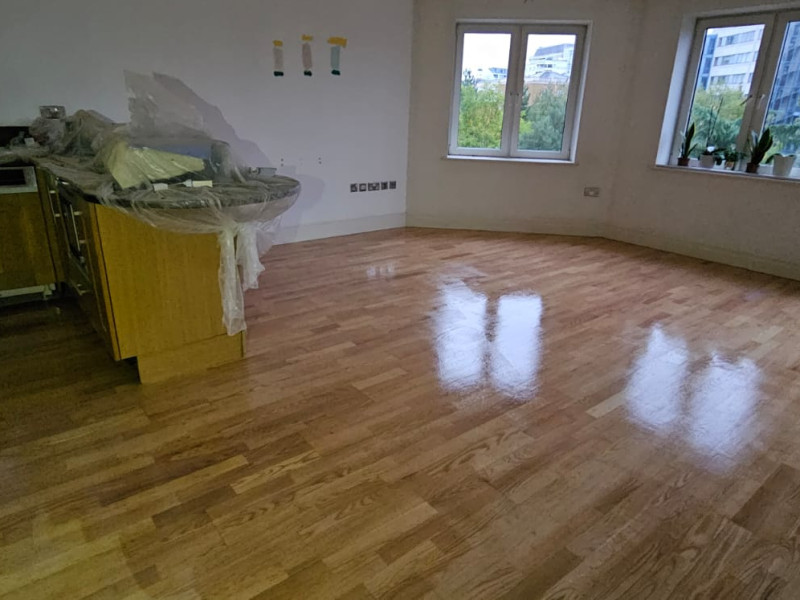
Following the restoration, the floor exhibited a dramatic improvement in both appearance and feel underfoot. All surface scratches were eliminated, and the areas previously damaged by the piano legs were expertly filled and blended to match the surrounding finish.
The client commented that the floor looked better than it had in years. Total project time was two days: one for repairs and sanding, one for the three lacquer coats. The floor was ready for light use 24 hours after the final coat.
Frequently Asked Questions
How many times can engineered flooring be sanded?
That depends on the thickness of the wear layer. Most quality engineered boards have a 3mm to 6mm layer, which allows between one and three full sandings. Boards with a 2mm layer can usually only be lightly buffed rather than properly sanded. We always check wear layer depth before quoting, so there are no surprises.
Can piano or heavy furniture indentations be repaired without replacing boards?
In most cases, yes. If the indentation has not cracked the board or compressed the wood fibres beyond repair, a two-part filler approach works well. The repair is not invisible under close inspection, but at standing height and in normal light it is not noticeable. If the board is severely crushed, board replacement is the cleaner option.
What does engineered floor restoration cost in Fulham?
For a standard living room, floor sanding and restoration typically runs between £25 and £45 per square metre in London, depending on the condition, finish choice, and whether any board repairs are needed. Repair work such as filler treatment for deep marks is usually quoted as a separate fixed cost on top of the sanding rate.