Project Overview
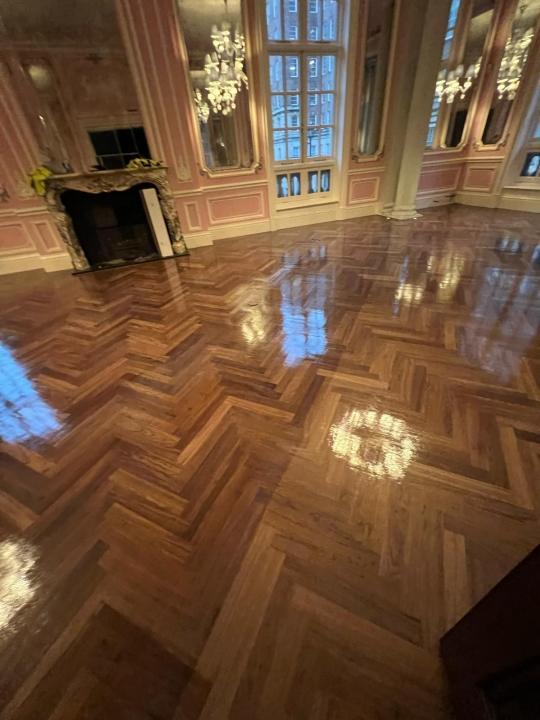
This project was a ballroom floor restoration in Mayfair, one of the most demanding environments we work in. The floor was a walnut herringbone parquet, laid in the classic 45-degree pattern. The client needed the floor freshened up and lightened ahead of a scheduled event, and the brief included a specific challenge: the room contained a full-size stuffed giraffe that could not be moved. Our team had to plan the job around it.
The Challenge
The client needed to refresh and brighten their ballroom to meet the high expectations of an upcoming event. The existing Walnut Herringbone Parquet had lost its charm and required professional restoration.
Walnut presents specific sanding challenges. It is a dense, oily species that responds differently to abrasives compared to oak or pine. The herringbone pattern adds another layer of complexity: because the blocks run at 45 degrees, the sanding direction needs to change constantly to avoid tearing the grain on half the blocks. Running a drum sander straight down the room on a herringbone will leave clear scratch marks across every other block.
The requirement to make the floor look lighter added further thought. Walnut's natural tone is deep brown, and it can be difficult to brighten without changing the character of the wood. A bleaching treatment was considered and discussed with the client, but ultimately the decision was to use a white hard-wax oil, which adds a subtle lightening effect while keeping the natural grain visible.
Our Approach
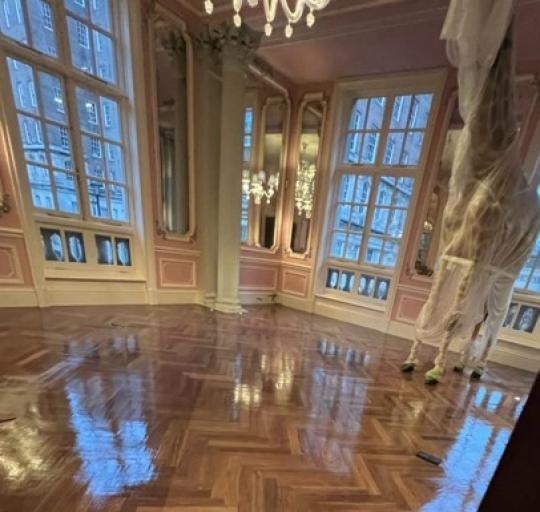
We worked diagonally across the herringbone pattern using a belt sander, which is the standard approach for this layout. This direction cuts across both sets of blocks at the same angle, so neither is sanded with or against its grain in a way that causes tearing. The abrasive sequence started coarse enough to remove the old finish and surface damage, then moved through medium and fine grits to achieve a clean, even surface.
The area around the giraffe was handled with a detail sander and hand-sanding blocks. It was slower, but the result was consistent with the main floor. Anything less careful would have left a visible patch.
Once sanding was complete, we vacuumed and tacked the floor thoroughly before applying the finish. The white hard-wax oil was worked in by hand and with a buffing machine, building up two coats with a 24-hour interval between them. The product sits in the wood rather than on top of it, which gives a more natural look and is easier to spot-repair in future.
The Result
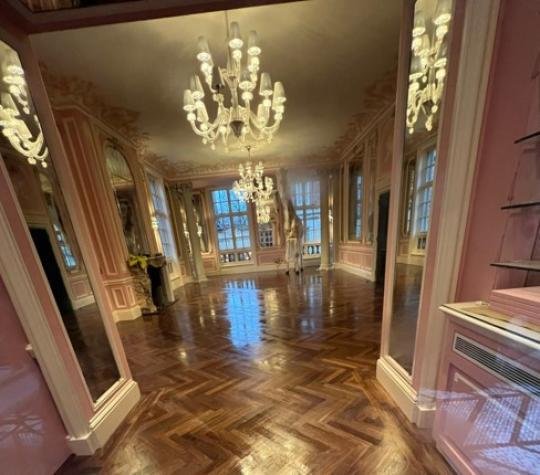
Our team precisely restored the parquet flooring to perfection, bringing out its rich tones while achieving the lighter look the client had requested. Given the prestigious Mayfair location and the pressure of the upcoming event, the standard of attention to detail needed to be high. The finished floor was ready in time and met the brief without compromise.
The giraffe, for its part, was entirely unfazed.
Frequently Asked Questions
How do you sand a herringbone parquet floor without damaging the grain?
The key is sanding diagonally, at 45 degrees to both sets of blocks. This puts you cutting slightly across the grain on every block rather than severely along it or against it on alternating ones. Combined with a fine final grit, the result is a clean surface without tearing.
Can walnut parquet be made to look lighter without bleaching?
Yes. A white-tinted or natural hard-wax oil will reflect more light from the surface and reduce the apparent depth of the dark walnut tone. It is a subtle effect rather than a dramatic one, but it works well for clients who want to keep the species character while brightening the room. Full bleaching is possible but changes the wood more significantly.
What does parquet floor sanding cost in Mayfair?
In Mayfair and central London generally, parquet sanding and finishing starts around £35 per square metre and can reach £55 or more for complex patterns, species that require extra care, or jobs with access constraints. We price based on the actual conditions rather than a flat rate.