Project Overview
This project in Greenwich involved removing old carpeting and installing a new vinyl floor throughout the property. Vinyl flooring has grown significantly in popularity over recent years, offering excellent value, durability, and a wide range of looks. Fitting costs for vinyl typically sit between £35 and £55 per square metre, including subfloor preparation and underlayment.
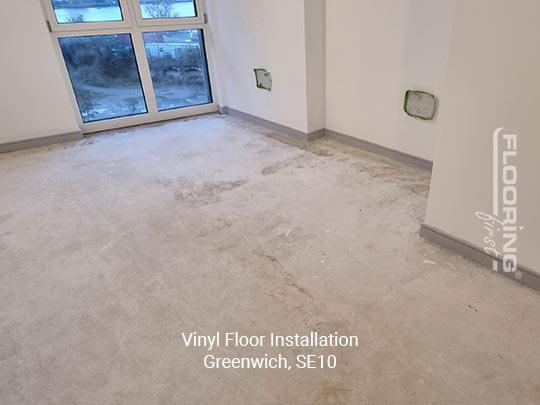
The Challenge
We started by clearing out the existing carpeting and giving the subfloor a thorough clean before beginning the installation. Old carpeting can leave adhesive residue, tack strips, and uneven spots that need addressing before a new floor can go down properly. Once the subfloor was clear and clean, an underlayment was installed to provide a stable, even base and to help protect the vinyl from moisture and any minor subfloor imperfections. With those steps done, we began laying the vinyl planks.
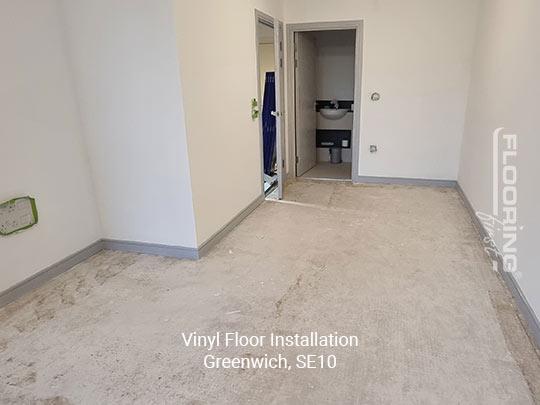
Our Approach
- Carpet removal and disposal: The existing carpet and underlay were lifted and removed from the property. Tack strips around the perimeter were taken out and the subfloor was swept and inspected for level.
- Subfloor preparation: Any raised spots, dips, or gaps in the subfloor were addressed before the underlayment went down. A flat, clean base is essential for vinyl — even small imperfections can telegraph through a thin plank over time.
- Underlayment installation: A quality underlayment was fitted to improve the feel underfoot, reduce noise, and provide a moisture barrier between the subfloor and the new vinyl.
- Vinyl plank laying: Planks were laid starting from a straight reference line and worked outward across the room. Each plank was clicked or adhered into place according to the product specification, with cuts made carefully around architraves and door frames.
- Finishing details: Threshold strips and beading were fitted at perimeters and transitions to give the installation a tidy, complete appearance.
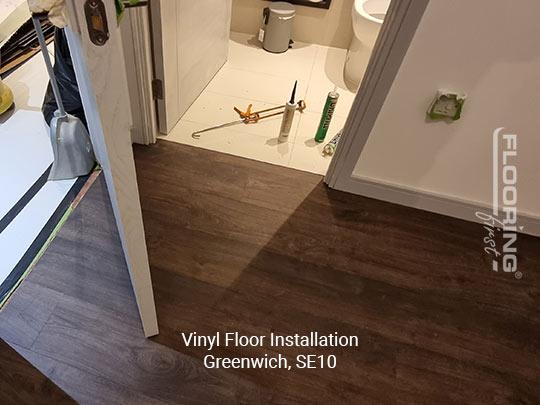
The Result
The result was a significant improvement on the old carpeting. The team worked carefully to make sure every plank was correctly seated before moving on. Vinyl floors offer tremendous value — they are durable, easy to maintain, warm underfoot compared to tile, and available in realistic wood and stone effects. This Greenwich home now has a floor that looks attractive, performs well in daily use, and will be straightforward to keep clean for years to come.
Frequently Asked Questions
Q: What is the difference between LVT and standard vinyl flooring?
A: LVT (luxury vinyl tile) is a thicker, more structured product that comes in plank or tile formats and is designed to replicate the look of wood or stone more convincingly than traditional vinyl sheet. Standard vinyl sheet is thinner and suited to areas where cost is the priority. Most residential projects we carry out use LVT planks due to their durability and appearance.
Q: Can vinyl flooring be installed over existing tiles?
A: In some cases yes, provided the tiles are flat, firmly adhered, and the height difference will not cause issues at doorways. If tiles are cracked or loose, they need to come up first. We assess this during our initial visit.
Q: How long does vinyl flooring last?
A: Quality LVT with a good wear layer — 0.55mm or above — can last 15 to 25 years in domestic use with normal maintenance. The floor is waterproof, so it handles spills and damp conditions well, which makes it a popular choice for kitchens, bathrooms, and hallways.