Project Overview
This restoration project covered two distinct and historically significant parquet styles in a single property: Versailles oak panels and walnut mosaic finger parquet. Both required careful, sympathetic treatment to bring them back to the standard the client expected. Projects combining different parquet formats are less common and require switching approach mid-job, so planning was essential before work began.
The Challenge
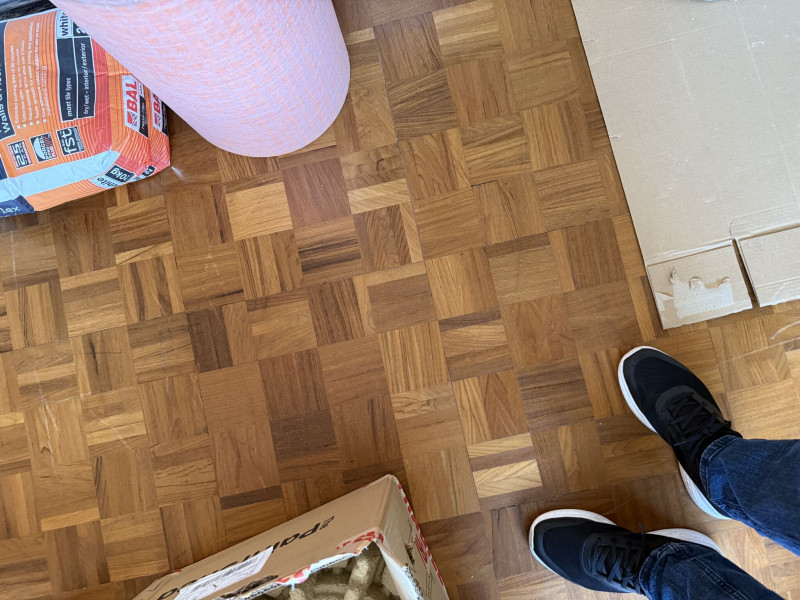
The original flooring comprised two distinct styles: a classic walnut mosaic finger parquet and elegant Versailles oak panels. Over time, both had suffered noticeable wear and tear, diminishing their visual appeal and structural integrity.
In the walnut mosaic area, the surface showed multiple scuff marks and scratches, with visible dullness due to accumulated grime and fading finish. The parquet blocks had shifted slightly in places, and some sections were uneven or loose, clear signs of age and prolonged use.
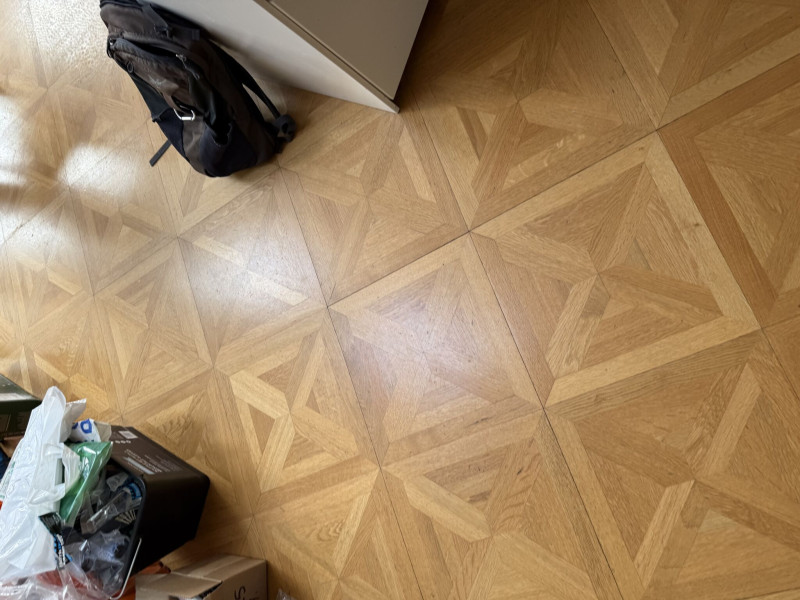
The Versailles panels presented a different set of problems. The geometric pattern of these panels means that sanding must follow the grain of each section separately, or cross-grain scratches become visible in the finish. Previous coats of finish had also darkened unevenly, making some sections appear blotchy.
Our Approach
We began with the walnut mosaic area. Loose and shifted blocks were lifted, cleaned, and re-glued with a suitable parquet adhesive before anything else happened. Trying to sand over a loose or uneven block risks catching the sander and damaging the block edge, so this preparation step was not optional.
Once the blocks were secure and adhesive cured, we sanded the walnut mosaic using a rotary machine fitted with fine abrasive, working in the direction that best followed the finger pattern. Walnut is a dense hardwood and holds its grain well, so it responds cleanly to careful sanding. The surface came up with good colour contrast and natural depth.
The Versailles panels were handled differently. We used a combination of a drum sander along the main grain direction and a detail sander for the internal mitre sections of each panel. This takes longer than sanding a straight-run floor, but it is the only way to avoid visible scratch patterns across the grain. Each panel was treated individually and checked before moving on.
Both floor areas were finished with a hard-wax oil chosen to complement the different tones of oak and walnut without making one look artificially darker than the other. Two coats were applied, with a light buff between coats.
The Result
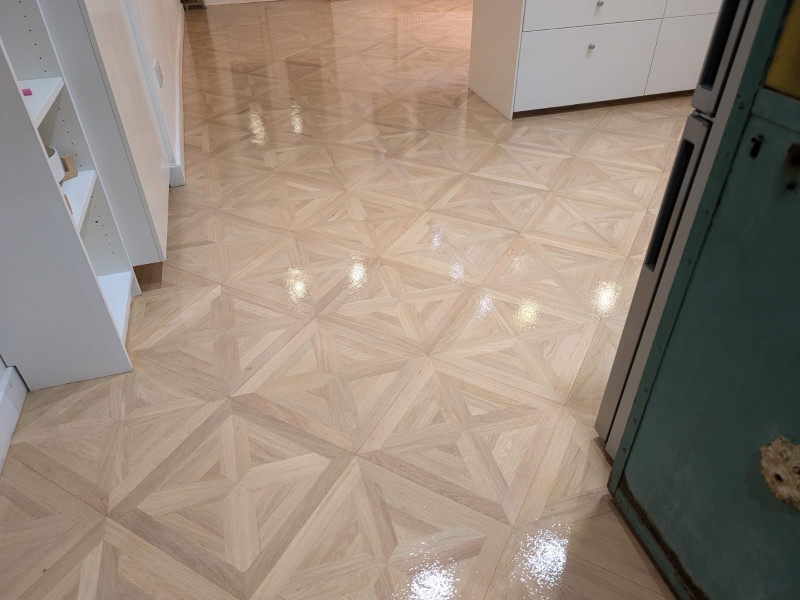
Following a complete restoration process, the transformation of both the Walnut Mosaic Finger Parquet and the Versailles Oak Panels is nothing short of remarkable. The walnut mosaic flooring has been revived with renewed depth and richness. Each individual finger block was cleaned, re-secured, and refinished, restoring the natural warmth and contrast of the walnut grain. The surface is now smooth, even, and finished with a durable, low-sheen protective coat that improves both appearance and longevity.
The Versailles panels, meanwhile, regained their geometric clarity and the warm honey tones that define good-quality oak. The client described it as looking "the way it must have looked when it was first laid."
Frequently Asked Questions
Can walnut parquet and oak Versailles panels be finished with the same product?
It depends on the desired result. Walnut is naturally darker than oak, so the same oil or lacquer will read differently on each. We typically choose a neutral or lightly tinted finish that works across both species, then adjust by applying an additional coat to the lighter areas if needed to balance the tones.
How do you handle loose parquet blocks before sanding?
Loose blocks are lifted, the old adhesive is cleaned from both the block and the subfloor, and they are re-glued with a specialist parquet adhesive. We then weight them and allow full cure time before sanding. Sanding over loose blocks causes uneven results and can crack the block edges.
What does parquet restoration cost in Kensington?
Parquet sanding and finishing runs from around £30 to £50 per square metre in Kensington, depending on species, pattern complexity, and condition. Versailles panels and other geometric formats typically fall at the higher end because of the time required to sand them correctly without cross-grain marks.