Project Overview
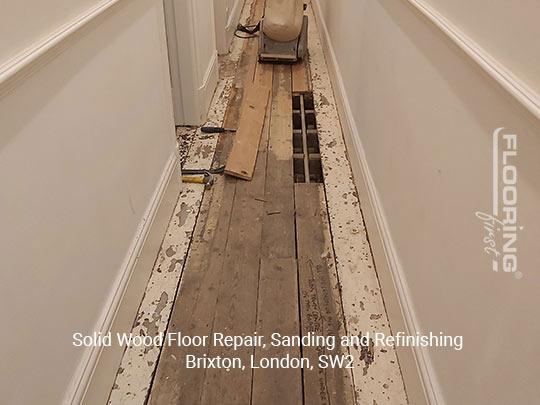
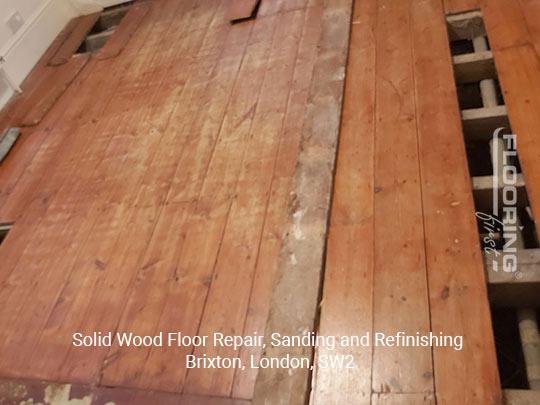
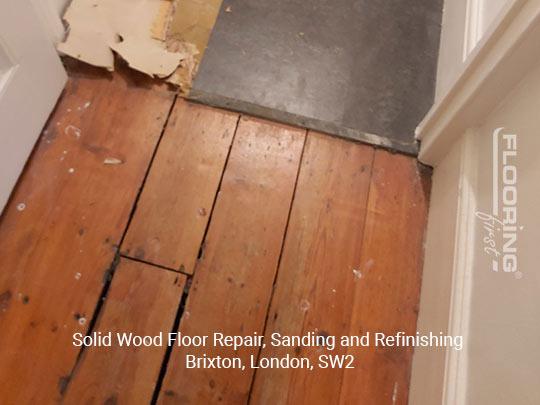
This project in Brixton tackled a solid wood floor that had been through significant wear and some localised physical damage. Several boards had cracked or split and a few sections had areas of surface staining from water ingress. The clients had been told by another contractor that the floor needed replacing, but we assessed it and confirmed that repair, sanding and refinishing would bring it back to a high standard. We replaced the boards that were beyond saving, sanded the whole floor back to bare wood, filled gaps and refinished with a protective oil.
The Challenge
When repairing a floor with replacement boards, the new timber needs to be matched as closely as possible to the existing species and profile. If the match is poor, the repaired sections will stand out permanently. This floor used a standard oak profile that was still available, which made sourcing straightforward. The greater challenge was the water staining on several boards -- sanding removed the surface discolouration in most cases but two boards had deeper penetration and needed full replacement. Getting the sanded surface level across old and new boards also required care.
Our Approach
- Inspection: A full walk of the floor to mark boards for replacement versus those that could be saved with sanding.
- Board replacement: Damaged boards were carefully lifted without disturbing adjacent boards, and matching replacement boards were cut and fitted.
- Gap filling: Gaps throughout the floor were filled with a matched compound and left to cure.
- Sanding: The full floor was sanded progressively to flatten any height differences between old and new boards and achieve a consistent surface.
- Finishing: A hardwax oil was applied in two coats, which penetrates the wood rather than sitting on top of it, giving a natural feel underfoot and good resistance to everyday wear.
The Result
The floor was saved entirely. The repaired areas were almost invisible once sanded and oiled, and the overall condition of the floor was transformed. The clients were relieved to avoid the cost and disruption of full replacement. Repair, sanding and refinishing a floor in this state costs between £25 and £45 per square metre for the sanding element, plus materials for any board replacements required. In most cases this is dramatically cheaper than new flooring and the structural integrity of an old solid wood floor is often superior to what is available as new.
Frequently Asked Questions
How do you know whether a floor can be repaired or needs replacing?
We assess the extent of structural damage, the number of boards beyond saving and the overall thickness remaining on the boards. If more than a third of the floor needs replacing, the economics of repair versus replacement start to shift. We give an honest assessment at the survey stage.
What is hardwax oil and how does it compare to lacquer?
Hardwax oil penetrates the wood fibre rather than forming a film on top. It gives a more natural, matte feel and is easy to spot-repair if the surface gets scratched. Lacquer is harder and shinier but requires full resanding if heavily damaged. Both are good options depending on the look and usage required.
Do you cover the Brixton area?
Yes. We work across Brixton and the wider south London area on a regular basis. Call us or fill in the enquiry form to arrange a free survey.