Before the Work
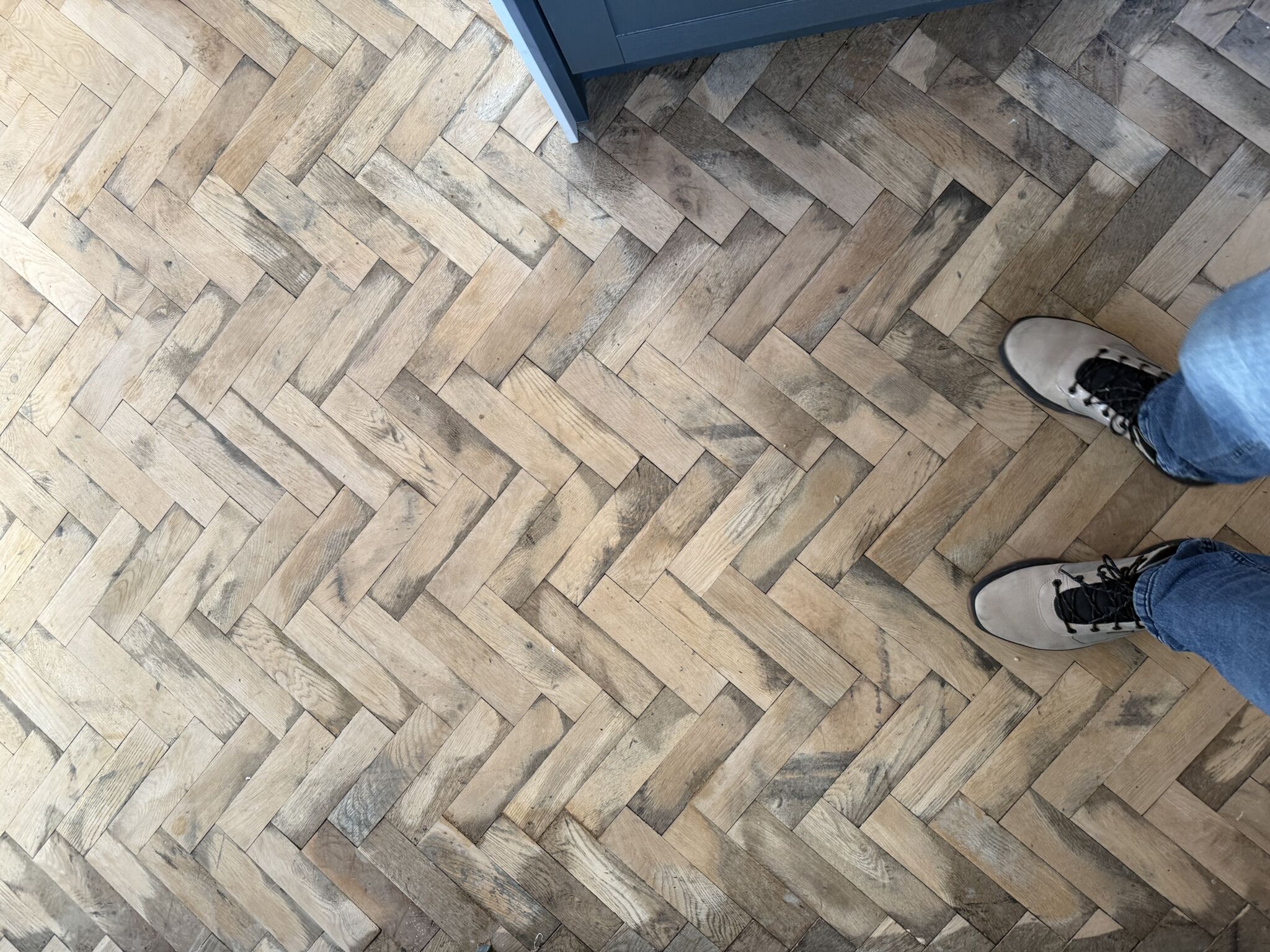
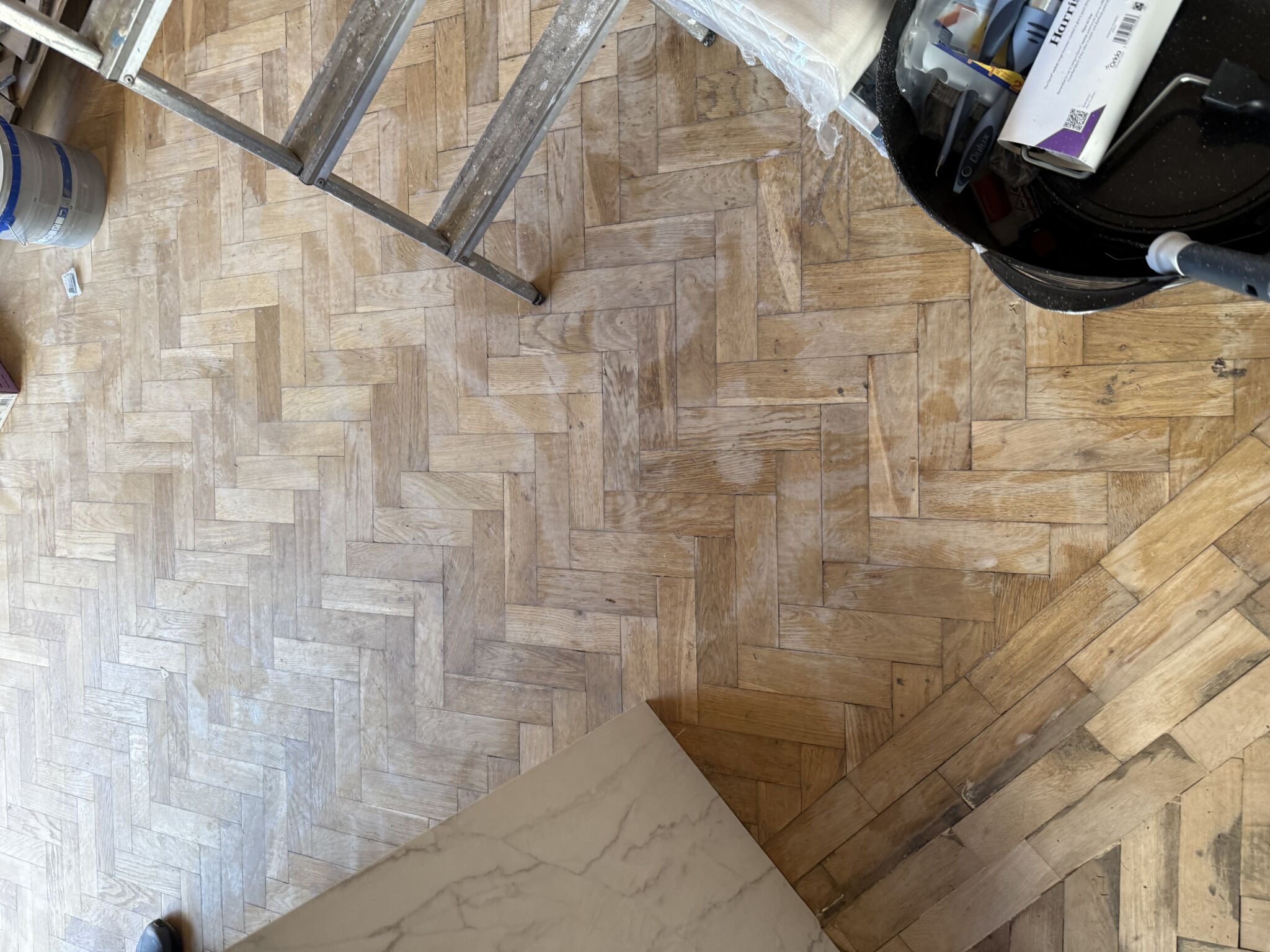
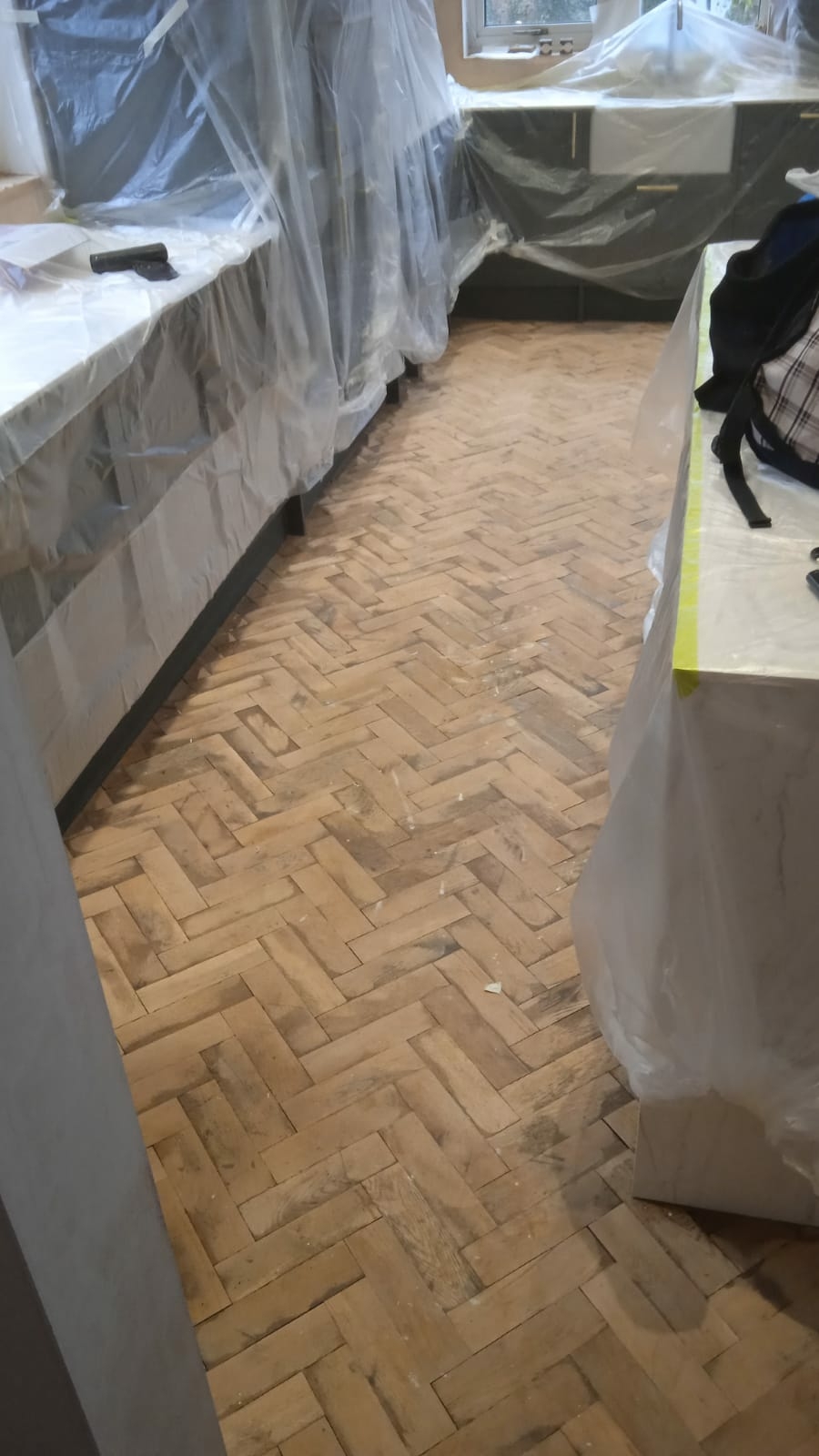
The parquet floor at this Chingford, E4 property had accumulated years of wear. Surface scratches and a dull, patchy finish had dulled the appearance of what was clearly a good quality original floor. Gaps had also opened between the blocks — a common issue in East London properties where older parquet was laid directly onto a screed or timber subfloor that has since moved slightly with age. The full condition of the timber, block adhesion, gap sizes and finish were assessed during the initial site visit before any work was agreed.
Our Approach
Before sanding began, the gaps between parquet blocks were filled using a flexible wood filler, colour-matched to the timber to blend into the finished floor rather than read as visible repairs. Filling before sanding is important — it allows the filler to be sanded flush with the surface rather than applied as a cosmetic top-up after the fact.
With gaps filled and cured, the floor was sanded using a rotary machine working in the direction that best followed the block pattern. Parquet requires more care than straight-run floors because the blocks run in multiple directions — sanding with the wrong approach leaves visible cross-grain scratches that show clearly under lacquer. The surface was then buffed with a fine pad to create a consistent, smooth base before lacquering.
Three coats of water-based lacquer were applied, with a light sand between each coat. Water-based lacquer dries quickly, has minimal odour and does not yellow over time — practical advantages in a lived-in home.
The Result
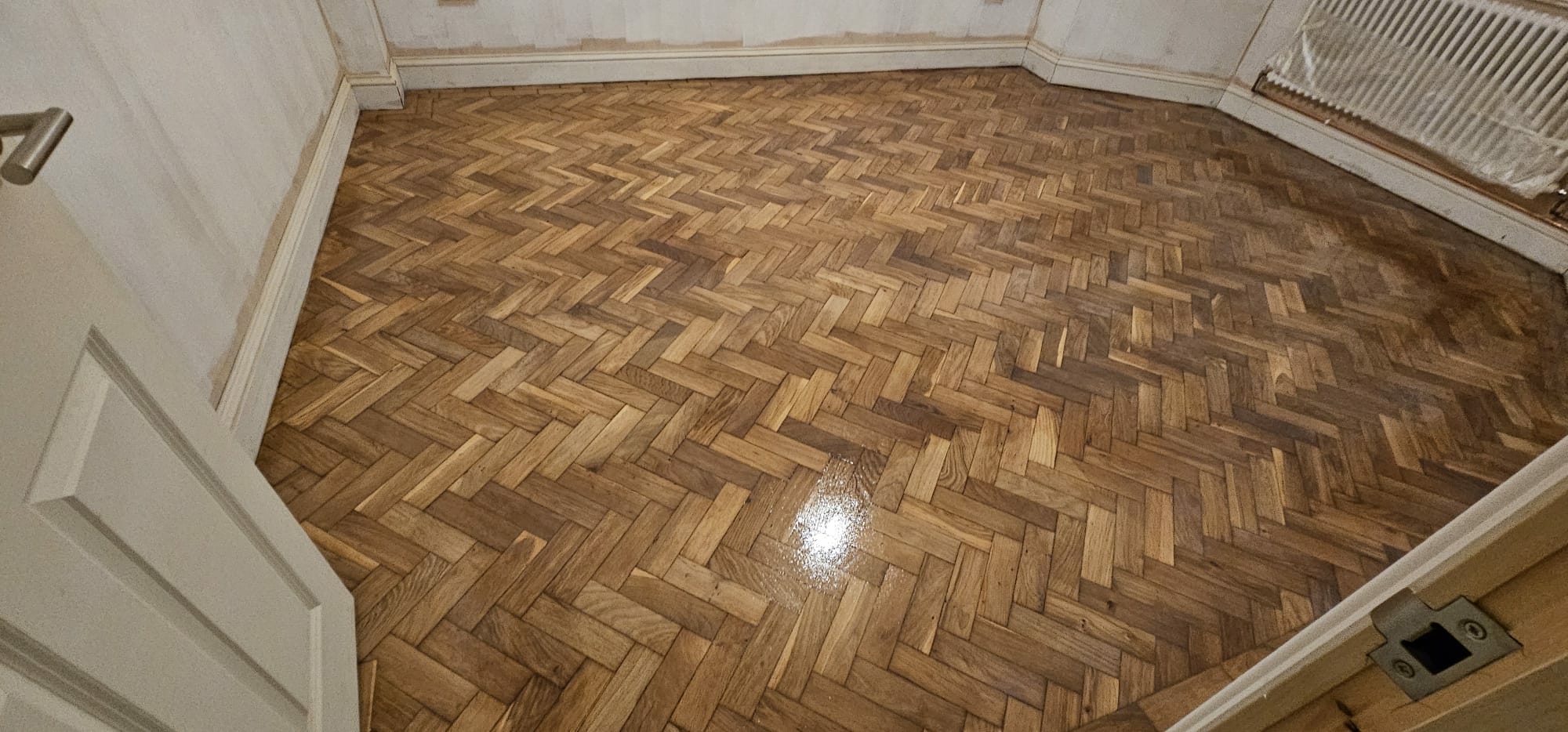
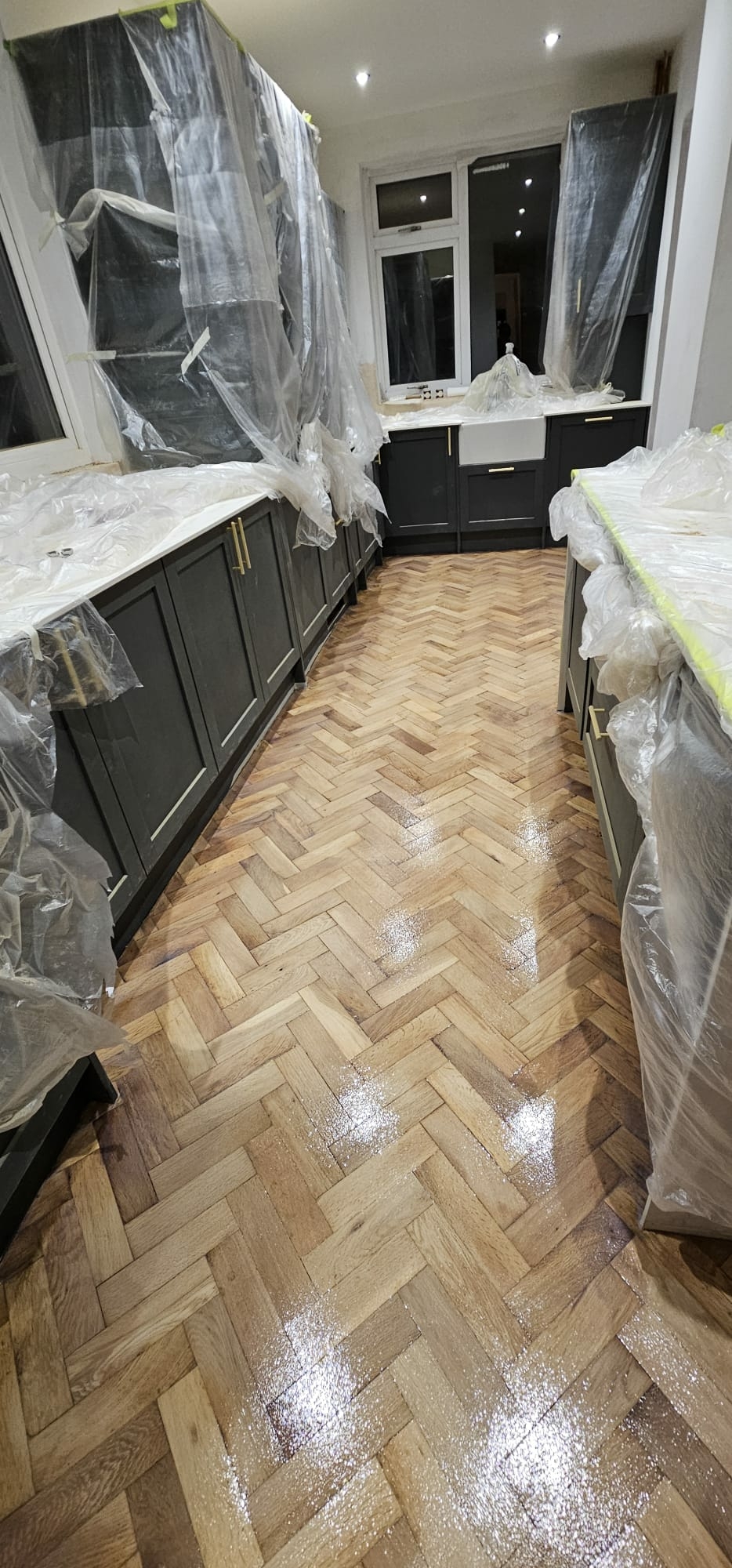
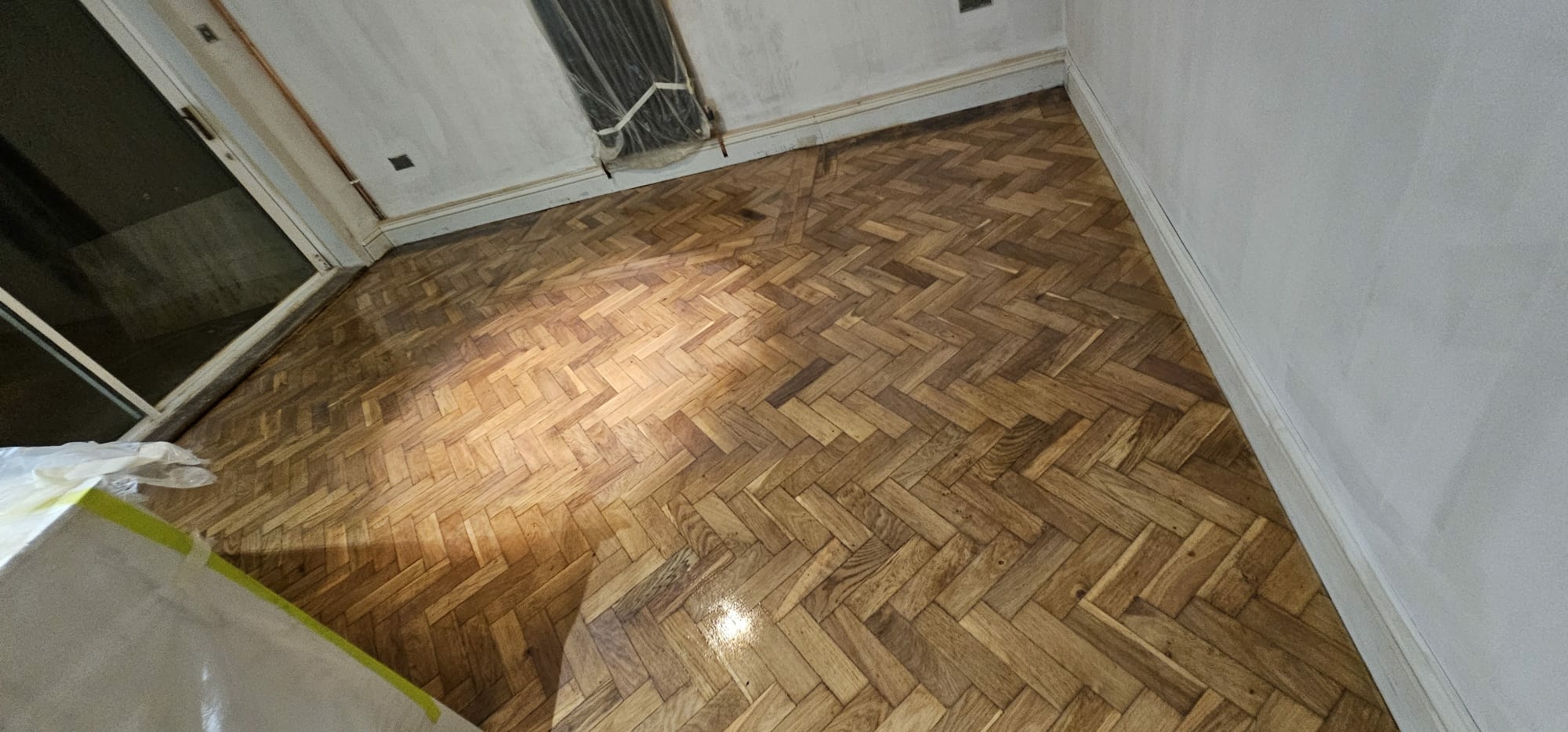
The restored parquet floor looks as it should — clean, even and full of the natural warmth that makes this type of floor worth preserving. The grain and colour variation across the blocks is clearly visible now that the old build-up of finish has been removed. Gaps are filled and flush, the lacquer coat is smooth and consistent, and the edges and transitions complete the room properly. All work was signed off by the client on the day. Typical costs for parquet sanding and restoration in East London range from £25 to £45 per square metre depending on block condition, gap filling requirements and finish selected.
Frequently Asked Questions
Is parquet flooring common in Chingford and the E4 area? Yes. A large proportion of properties in Chingford and across East London were built in the interwar and postwar periods, and many still have their original parquet floors beneath carpets or later coverings. These floors are almost always worth restoring — the timber is typically good quality and the blocks, once properly sanded and finished, outlast most modern flooring alternatives.
How do you fill gaps in parquet without it looking obvious? We use a flexible wood filler that is colour-matched to the species and tone of the timber. The filler is applied before sanding so it can be levelled flush with the surface during the sanding process. Under a coat of lacquer, well-matched gap filling is not noticeable at normal viewing distance.
How many times can parquet be sanded? Most original parquet blocks are thick enough to be sanded several times over their lifetime. Typical block thickness is 18 to 22mm, which allows for multiple full restorations. We check block thickness and condition during the initial survey so we can give an honest assessment before any work begins.
Do you carry out parquet restoration in Chingford and nearby areas? Yes. We work regularly across E4 and the surrounding postcodes including Highams Park, Walthamstow, Woodford and Loughton. Call us on 020 88309782 or book a free site visit to discuss your parquet floor.