Project Overview
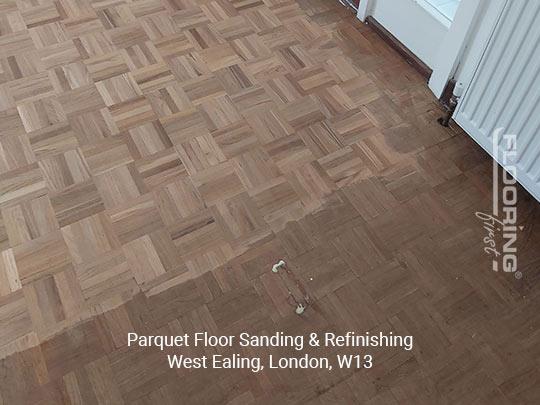
This parquet floor sanding and refinishing project was carried out at a family home in West Ealing, West London. The property had a beautiful original herringbone parquet in the hallway, front reception room, and on the staircase. The floors had not been professionally treated in many years and were in need of a full sand and refinish. The client was also keen to have the staircase brought up to the same standard as the floors to create a consistent look throughout the ground floor. Parquet sanding with a lacquer finish typically falls in the £70 to £100 per square metre range, which is well justified given the result.
The Challenge
The biggest technical challenge with this project was the volume and variety of surfaces involved. Sanding a herringbone parquet floor demands a very different technique from sanding a straight-run timber floor. The blocks are laid at 45-degree angles to each other, so you cannot sand straight along the room. Any drum sanding has to be done on the diagonal to avoid cross-grain scratching. On the staircase, working with an industrial sander is not possible, so each tread had to be sanded by hand or with a detail sander, requiring considerably more time and care. The treads also had nosing edges that needed to be rounded and smoothed without creating flat spots.
Our Approach
- Floor inspection: We checked every block across the main rooms for security, re-gluing and nailing down any that had come loose before sanding began.
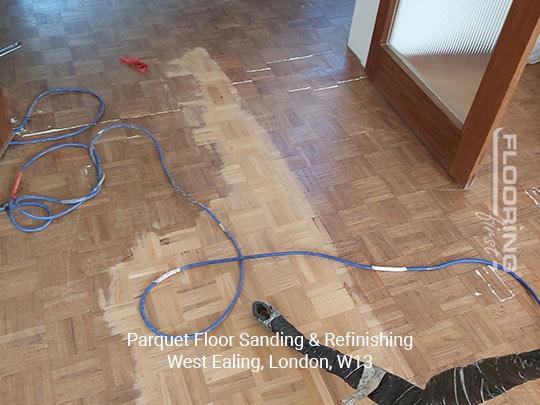
- Coarse diagonal sanding: The drum sander was run at 45 degrees to the herringbone grain in two opposing directions to strip the old finish and level the surface evenly without risking cross-grain damage.
- Intermediate sanding: A second pass with a medium-grit belt smoothed the marks left by the coarse cut and began preparing the surface for finishing.
- Fine sanding and edging: Fine-grit passes completed the main surface work. The edge sander was used along the walls and in doorway alcoves where the drum cannot reach.
- Staircase work: Each tread was sanded by hand using a combination of orbital and detail sanders, working with the grain to avoid scratching the surface. The nosings were carefully shaped to remove any sharp edges while maintaining their profile.
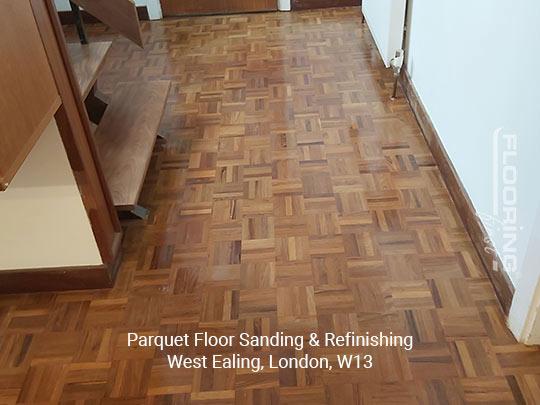
- Lacquering: Three coats of gloss lacquer were applied to both the floor and the staircase treads, with a fine buff between each coat. The consistent finish across both surfaces ties the whole area together visually.
The Result
The transformation across both the rooms and the staircase was significant. The flat, worn surface of the parquet was replaced by a bright, glossy finish that gives full definition to the herringbone pattern. The staircase now matches the floors exactly, which makes the whole entrance area feel considered and well-finished. The client described it as looking better than when the house was originally fitted out. With proper care and an occasional re-coat when the finish shows wear, this floor should last another 20 years before needing professional attention again.
Frequently Asked Questions
Can a parquet floor and staircase be sanded to match?
Yes, provided both are made from a compatible wood species and the finish used is the same. Getting the exact colour and sheen level to match across both surfaces requires care and consistency in the finishing process, but it is absolutely achievable and makes a real difference to the overall look of the space.
How long does it take to sand and refinish a parquet floor?
A typical room takes one to two days for sanding and preparation, plus the time needed for each lacquer coat to dry between applications. A standard three-coat lacquer process generally takes three to four days in total, including curing time between coats. Larger areas or those combined with staircase work take longer.
Is gloss lacquer the best finish for parquet?
Gloss lacquer is very popular for parquet because it emphasises the pattern clearly and is practical and easy to clean. Satin or matt lacquer is an option for those who prefer a softer appearance. Oil finishes work well too, though they require more regular re-treatment than lacquer. The choice depends on your lifestyle and personal preference.