Project Overview
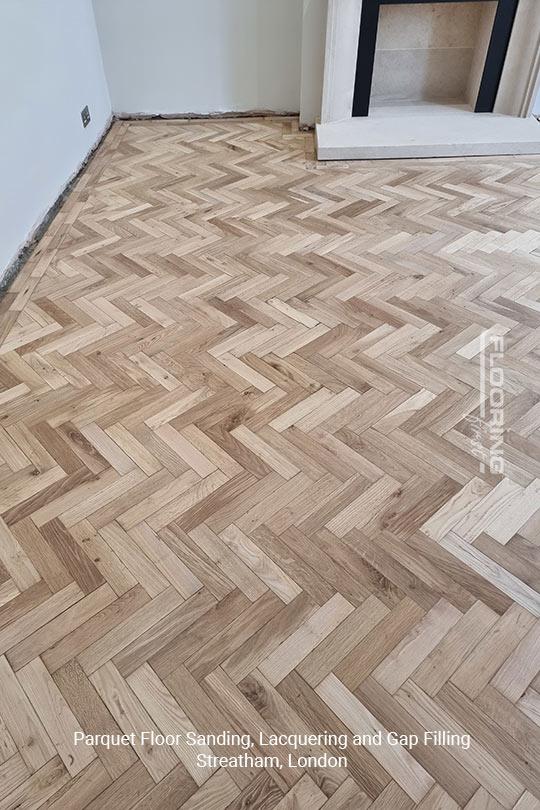
This Streatham project involved gap filling, full sanding and lacquering of a parquet floor that had become worn and dull after years of use. The floor itself was structurally sound — no loose or damaged blocks — but the finish had gone, the gaps between blocks had widened and the surface was visibly tired. The brief was to restore the floor to a good condition with a hard-wearing lacquer finish that would protect it for years without requiring ongoing specialist attention. Parquet sanding and lacquering in South London typically runs from £28 to £45 per square metre depending on the extent of gap filling required and the number of coats needed.
The Challenge
Sanding parquet correctly is more involved than sanding a straight-run plank floor. In a standard herringbone or basket-weave layout the blocks run in at least two directions, sometimes more. Running a belt sander along just one axis will sand cleanly with the grain on some blocks while cutting against the grain on others. Against-grain sanding leaves visible scratches that are extremely difficult to remove without taking the floor back down to bare wood again. The technique for parquet sanding requires using disc or planetary orbital machines that can work across multiple grain directions simultaneously, combined with careful passes along specific block runs for the final fine-grit stage. Getting this right demands experience and the right equipment.
Our Approach
Gap filling: We started by going over the full floor, checking block adhesion and assessing gaps. All blocks were solid and well-bonded, so no repair work was needed before filling. Fine gaps between blocks were filled with a resin and sawdust mix compatible with the species of timber. This mixture was pressed in firmly, levelled off flush and allowed to cure fully before any sanding began.
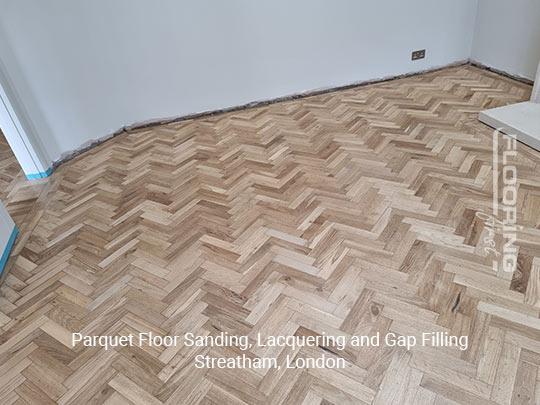
Sanding: We used a planetary orbital sander for the first passes to cut through the old finish and level the dried filler without risking against-grain damage. Once the bulk of the old finish was removed, careful belt sander passes along specific block run directions were used for the medium-grit stage. The floor was finished with a fine-grit pass using a random orbital for a smooth, clean surface throughout. Edge work and corners were done with detail equipment to match the quality of the main field.
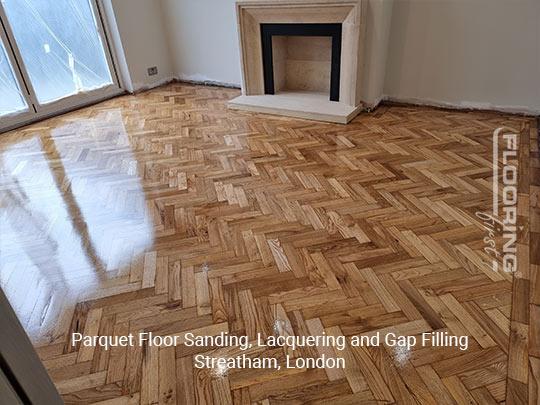
Lacquering: Two coats of hard-wearing water-based lacquer were applied with a light sanding between coats. The client chose a satin sheen, which gives the parquet pattern good visual clarity without the high-gloss look that can make older parquet feel overly formal. The lacquer we used is formulated for residential floors with a high hardness rating, so it holds up well under normal daily traffic.
The Result
The finished floor looks clean, consistent and considerably more alive than when we started. The gaps are filled, the surface is smooth, the pattern reads clearly under the satin lacquer and the whole floor now has proper protection against daily wear. This Streatham parquet project shows what a difference professional sanding and lacquering can make to a floor that has simply been left too long without attention.
FAQ
How do I know whether my parquet floor needs sanding or just a topcoat of lacquer?
If the existing lacquer is still generally intact and the floor just looks dull, a thorough clean and a maintenance topcoat may be sufficient. If the lacquer has worn through to bare wood in traffic areas, or the surface is scratched below the finish layer, a full sand is needed before any new lacquer will bond and perform correctly. We can advise after a brief inspection.
Is it possible to change the sheen level when refinishing parquet?
Yes. When the floor is sanded back to bare wood, the existing sheen level is removed entirely. You can then choose any sheen from matt through to full gloss for the new finish. We carry a full range and can show you samples before we begin.
How often should parquet be professionally sanded?
In a normal domestic property with regular cleaning, most parquet floors benefit from a full sand and refinish every ten to fifteen years. High-traffic areas such as hallways may need attention sooner. Keeping the lacquer maintained — cleaning regularly with a suitable product and applying a maintenance topcoat if it starts to look worn in spots — extends the time between full sandings considerably.