Project Overview
This Harrow project involved the full installation of a new parquet floor, including subfloor preparation, parquet block fitting, sanding of the newly laid surface and application of a lacquer finish, along with the installation of matching flooring accessories. The client had chosen parquet for the elegance of the pattern and wanted a finish that would last for years without constant upkeep. Jobs like this sit at the higher end of wood flooring work in terms of skill required, and the results reflect that when the installation is done properly. Parquet fitting including sanding and lacquering typically runs from £70 to £100 per square metre in London.
The Challenge
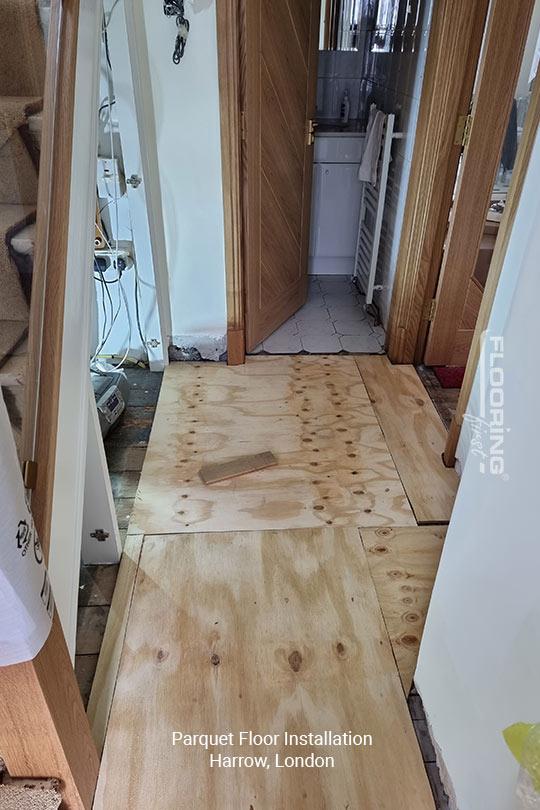
Parquet blocks are small, which makes getting the pattern right from the outset critical. Any error in the initial layout — a starting line that is slightly off square, blocks that are not fully seated — compounds as the pattern extends across the room. The subfloor also needed attention before fitting could begin. Moisture content was checked and confirmed satisfactory, but the surface needed levelling and cleaning before we were prepared to lay on top of it. Installing parquet onto a subfloor that is not properly prepared shortens the life of the floor and causes problems with movement and gaps.
Our Approach
Subfloor assessment and preparation: We measured moisture levels in the subfloor and checked for level across the whole area. Minor high spots were ground down and low spots filled before we considered the base ready. Cleanliness matters too — any grit or debris left under the blocks will affect their adhesion over time.
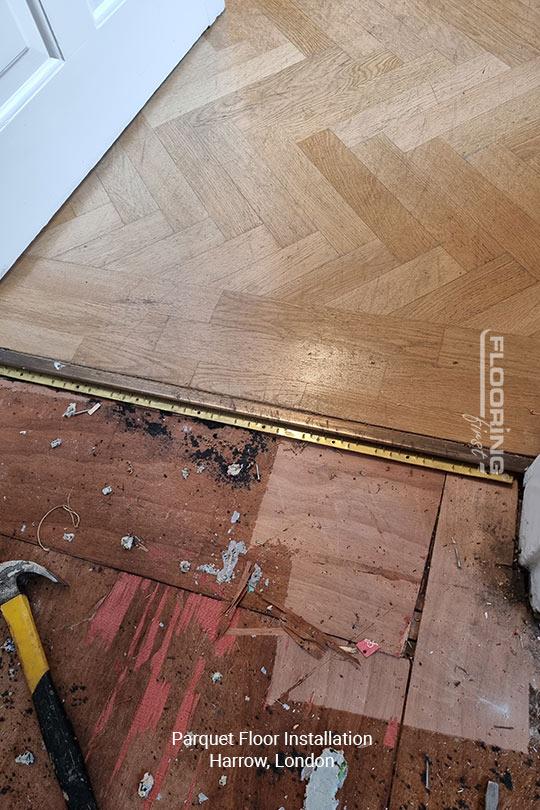
Laying the parquet: Working from a centre line set out accurately across the room, we began fitting blocks in the herringbone pattern, checking alignment constantly as the pattern built outward. Each block was bedded down with the correct adhesive and tapped firmly into place. Cut blocks at the edges were measured and cut individually for a neat fit against the skirting.
Sanding the new floor: Newly laid parquet always benefits from a light sanding before finishing. This removes any minor height variation between adjacent blocks and opens the grain for the lacquer to bond to. We used a combination of belt and random orbital sanders suited to the herringbone pattern, finishing with a fine grit for a clean, smooth surface.
Lacquering and accessories: Two coats of hard-wearing lacquer were applied, with light abrading between coats. Matching threshold strips and beading were fitted to complete the installation.
The Result
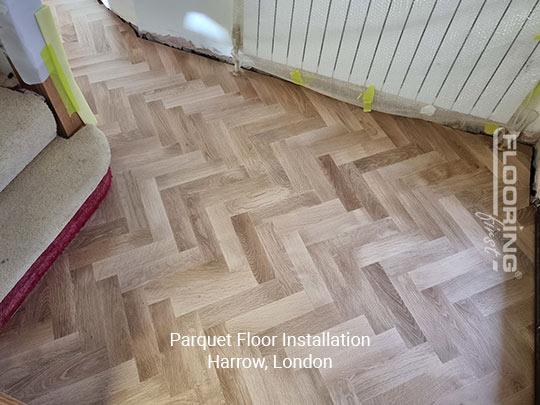
The finished floor is level, tight-jointed and well-finished, with a clean herringbone pattern throughout and a durable lacquer coat that should require no major attention for several years. The accessories give a clean border at the edges and the threshold strip between rooms completes the job properly. This Harrow installation is typical of the standard we aim for on every parquet project.
FAQ
What type of subfloor is needed for parquet?
Parquet can be laid over concrete or timber subfloors provided they meet the required standards for flatness, moisture content and cleanliness. Concrete subfloors must have an effective damp-proof membrane. Timber subfloors need to be firm and level, with no bounce or flex. We assess subfloor condition as part of every pre-installation visit.
How do I maintain a lacquered parquet floor?
Regular sweeping and occasional damp mopping with a wood-safe cleaner is enough for day-to-day maintenance. Avoid excess water and harsh detergents. If the lacquer becomes dull in high-traffic areas, a light buff and topcoat can restore it without the need for a full sand. Most lacquered parquet floors need a full sand and refinish every ten to fifteen years in normal use.
Can parquet be fitted in kitchens or bathrooms?
Parquet and solid wood generally are not recommended for rooms with high or variable moisture levels such as bathrooms. Kitchens can work provided ventilation is good and the floor is not subject to standing water. Engineered parquet is more tolerant of humidity than solid wood. We advise on the best choice for your specific room conditions when quoting.