Project Overview
This parquet floor fitting project was completed at a large family home in Blackheath, South East London. The client wanted a solid parquet floor fitted in the ground-floor hallway and through into the main reception room. The property was a detached Victorian house with character features throughout, and the new parquet floor was intended to complement the period feel of the space. A traditional herringbone pattern in solid oak was chosen. The project scope included full subfloor preparation, moisture protection, fitting, sanding, and a final lacquer finish. Parquet fitting with a complete finish in London falls in the £70 to £100 per square metre range.
The Challenge
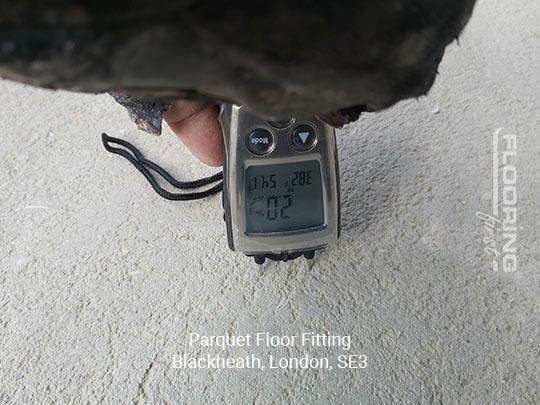
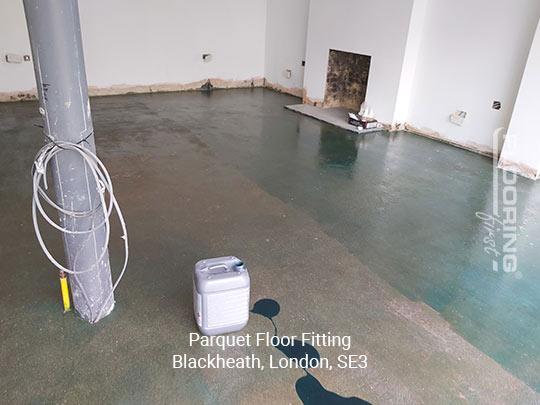
The ground floor of this property was at or close to ground level in parts, which meant moisture was a concern. A damp meter check of the subfloor confirmed readings above the safe threshold for solid wood installation without additional protection. Fitting a solid parquet floor directly onto a damp subfloor without a moisture barrier risks the blocks absorbing moisture, swelling, and lifting within a few years. This had to be dealt with properly before any timber went down. The hallway also had a slightly uneven concrete base where a previous installation had been removed, leaving patches of adhesive residue and some localised surface damage that needed remediation.
Our Approach
- Subfloor preparation: The concrete subfloor was thoroughly cleaned, with all adhesive residue scraped and ground back. The surface was then vacuumed and inspected for level.
- Levelling: Low spots and the areas damaged by the previous floor removal were filled with a rapid-set levelling compound and feathered out to achieve a flat base within the manufacturer's tolerance.
- Moisture barrier membrane: A DPM-grade polyethylene sheet membrane was laid over the prepared concrete, lapped up the walls by 50 millimetres, and taped at all joints. This creates a complete moisture break between the concrete and the wood above.
- Pattern layout: We planned the herringbone layout to centre correctly in both rooms and align through the doorway, dry-laying the first several rows before committing to adhesive.
- Block fitting: Parquet blocks were glued down using a flexible wood adhesive suitable for use over membrane. Each block was set level and checked as the pattern built out from the centreline.
- Sanding and finishing: After a full 48-hour cure, the floor was sanded diagonally through three grit stages and finished with three coats of hard lacquer, lightly abraded between coats.
The Result
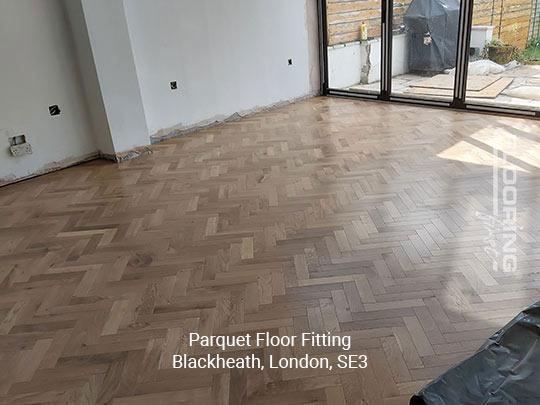
The floor came out clean and sharp, with the herringbone running correctly through both spaces and meeting neatly at the doorway. The lacquer finish complemented the natural character of the oak and gave the hallway a proper period feel that matched the house. The moisture barrier means the floor has a solid long-term foundation, and the client can expect this parquet to last for many decades without the kind of moisture-related problems that affect poorly installed floors. A well-fitted, lacquer-finished parquet floor maintains its appearance with nothing more than regular sweeping and an occasional damp mop with a suitable wood floor cleaner.
Frequently Asked Questions
Why is a moisture barrier important under parquet flooring?
Solid wood absorbs and releases moisture constantly in response to its environment. When the subfloor is damp, the blocks absorb moisture from below, expand, and eventually lift or cup. A membrane between the concrete and the wood prevents this moisture from reaching the blocks and protects the floor's structural integrity over the long term.
How do you ensure the herringbone pattern aligns correctly through a doorway?
Careful layout planning before any blocks are glued is essential. We establish a centreline that runs through the doorway and use this as the reference point for both rooms. The first few rows are dry-laid without adhesive to confirm the alignment before the permanent fitting begins.
Can parquet flooring be installed in a kitchen or bathroom?
We generally advise against solid parquet in rooms with high or unpredictable humidity, such as kitchens and bathrooms. Solid wood and constant moisture exposure are a poor combination. Engineered wood with a lacquer finish is a much better option for these areas if you want the wood floor look in wetter parts of the house.