Project Overview
This West Ealing project involved installing a laminate floor with appropriate underlayment and all necessary finishing accessories. One of the more important decisions we make before a laminate installation is the choice of underlay, which depends on the moisture conditions of the specific room. Laminate fitting generally costs between £35 and £55 per square metre, with the total varying based on room size, subfloor condition, and the product selected.
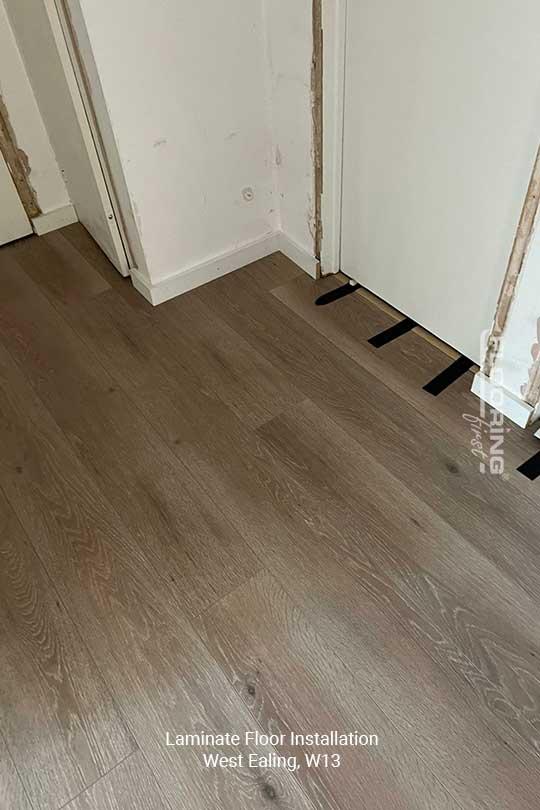
The Challenge
The first step on any laminate job is checking the subfloor. If it is clean and smooth, installation can start relatively quickly. If there are issues — unevenness, damp, old adhesive residue — these need addressing before any boards go down. For this West Ealing property, we checked the moisture level during our first visit. The moisture content of the room directly affects which underlayment is appropriate. Rooms with higher humidity need a thicker rubber underlayment — typically over 4mm — to absorb any residual moisture. Where humidity is above acceptable levels, the right approach is to deal with the source first before installing a floor. For this project, the conditions were suitable to proceed once the correct underlay was in place.
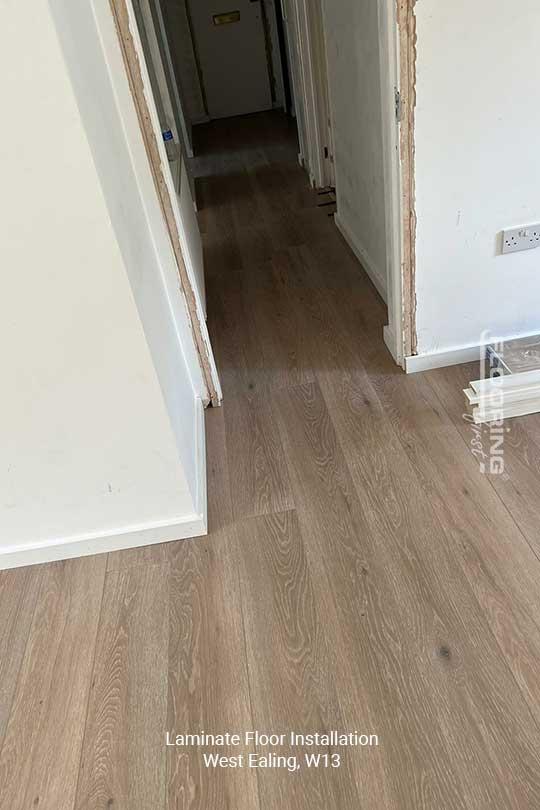
Our Approach
- Subfloor assessment: We checked the level, cleanliness, and moisture content of the subfloor before selecting the right underlayment for the room.
- Underlayment selection and fitting: Based on the moisture reading, we selected an appropriate underlay thickness. This step is often underestimated — the underlay affects how the finished floor feels and how long it performs without problems.
- Laminate board installation: Boards were fitted using a click system, working from a straight starting line and cutting to fit around door frames, architraves, and any fixed features in the room.
- Expansion gaps: Gaps were maintained around the perimeter and at fixed obstacles to allow the laminate to expand and contract with temperature and humidity changes.
- Accessories and finishing: The right flooring accessories — beading, threshold strips, and door trims — were fitted to complete the look. These details are what give a floor installation a finished, professional quality.
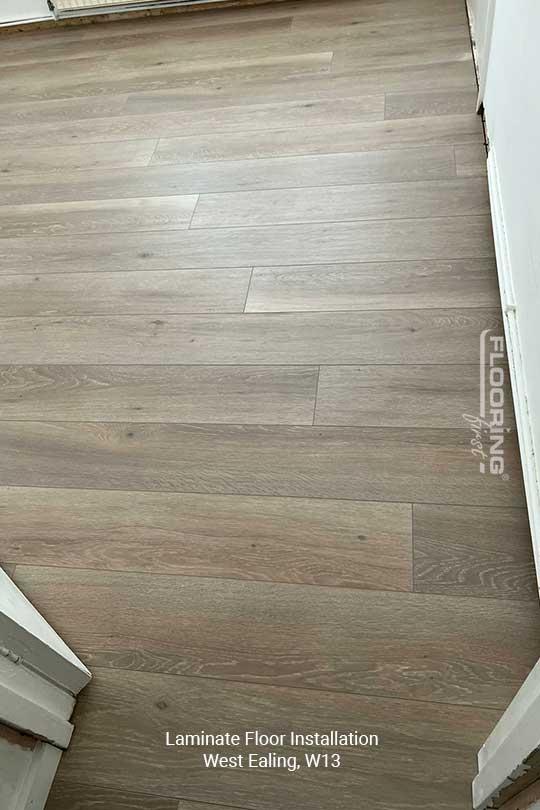
The Result
Installing laminate flooring is a relatively quick process once the subfloor is correctly prepared. Once the laminate boards were in place, the accessories were fitted to give the space a clean, considered finish. Laminate is an honest, cost-effective flooring option that performs well when it is installed properly. The West Ealing client now has a floor that looks the part and will handle everyday life without needing much attention beyond regular cleaning.
Frequently Asked Questions
Q: What underlayment thickness should I use for laminate?
A: The standard recommendation for most rooms is a 2mm to 3mm foam or combination underlay. For rooms with higher moisture levels — ground floor, over concrete — a thicker rubber underlay of 4mm or more is preferable as it provides better moisture resistance. We always check the room conditions before recommending an underlay.
Q: Does laminate flooring need to acclimatise before fitting?
A: Yes. Most laminate manufacturers recommend leaving the boards in the room for at least 48 hours before installation so they can adjust to the ambient temperature and humidity. Fitting without acclimatisation increases the risk of the boards expanding or contracting noticeably after installation.
Q: Can laminate be installed over underfloor heating?
A: Some laminate products are approved for use over underfloor heating, but not all. The surface temperature must be kept below 27 degrees Celsius and the heating should be turned down gradually before installation and brought back up slowly afterwards. We check the product specification and the heating setup when quoting for this type of job.