Project Overview
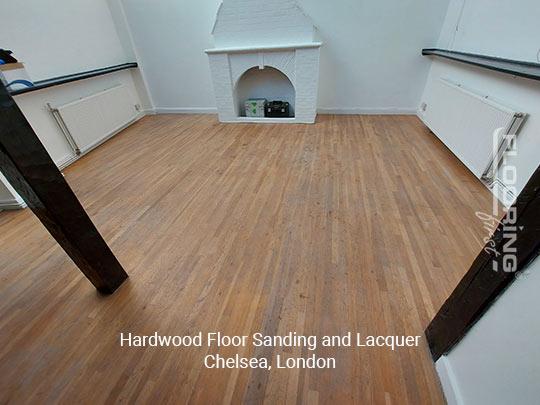
This hardwood floor in Chelsea covered the main living areas of a well-appointed residential property. The floor was original to the building, made from quality timber that simply needed proper attention after years of use. In addition to the main floor, the kitchen had solid wood worktops that had also deteriorated and needed refinishing. Both the floor and the worktops were treated in the same visit, using different products appropriate for each surface. Hardwood floor sanding in London is priced from around £25 to £45 per square metre for standard work, with additional elements like worktop refinishing quoted separately based on the scope involved.
The Challenge
The kitchen worktops presented a particular challenge because they required a different product to the floor. Floor lacquers are formulated for horizontal foot traffic; worktops need a food-safe, heat-resistant and water-resistant finish that can handle the specific demands of food preparation and kitchen use. The existing worktop finish had failed significantly, with water damage visible around the sink area and heat marks near the hob. The floor itself was in moderately poor condition with deep scratches in the highest-traffic areas and a finish that had completely worn through in several places, exposing bare wood that was starting to absorb dirt and staining.
Our Approach
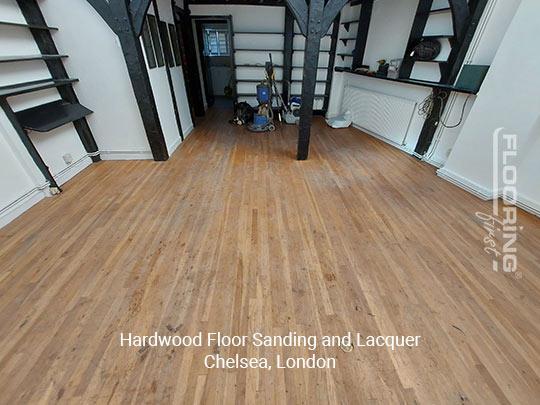
Floor inspection and planning. The full extent of the finish failure was mapped across the floor before sanding. The deeply worn areas near doorways required slightly more passes to ensure all traces of the old lacquer were removed down to bare wood.
Floor sanding sequence. The floor was sanded in three stages: initial medium-grit passes to remove the old finish and deep scratches, then progressively finer grits to refine the surface. Edging and corners were completed by hand.
Lacquer application to floor. Two coats of a quality clear lacquer were applied to the floor, with curing time between coats and a light buff before the final coat to ensure the best possible surface.
Worktop refinishing. The kitchen worktops were sanded back individually using hand and detail sanders, then finished with Osmo Oil Clear matt, which is food-safe, water-resistant and designed specifically for use on wood surfaces that come into contact with food and liquids.
The Result
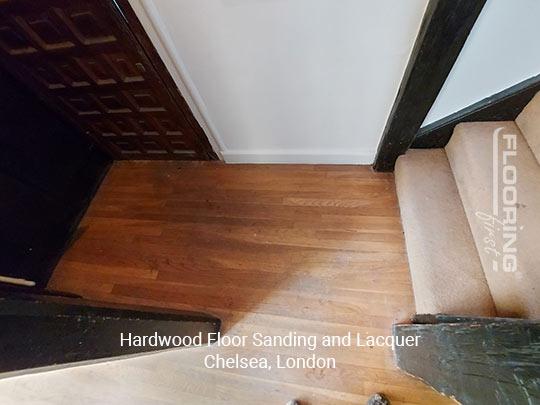
Both the floor and the worktops came up to a very high standard. The floor had a clean, even lacquer finish that brought out the depth and character of the hardwood, and every scratch and worn patch from the previous years of use had been completely removed. The worktops looked as good as they did when new, with the Osmo oil giving a natural, low-sheen finish that suited the kitchen perfectly. The whole property benefited from the work, and the owners now have a floor and worktops that are properly protected and easy to maintain.
Frequently Asked Questions
Can solid wood kitchen worktops be refinished in the same way as floors?
Yes, but they require a different product. Floor lacquers are not appropriate for worktops because they are not food-safe. Wood worktops are best refinished with a specialist food-safe oil such as Osmo Oil, which penetrates the grain and provides water and heat resistance without creating a surface film that can chip or peel.
How many times can a hardwood floor be sanded over its lifetime?
A solid hardwood floor of typical 20mm thickness can usually be sanded eight to ten times, removing approximately 1mm to 2mm of wood per full sanding cycle. This means a well-maintained hardwood floor can last well over a century with periodic professional care.
What is the best finish for a hardwood floor in a busy Chelsea property?
Lacquer is the most practical choice for properties where the floor receives heavy use and where a durable, easy-to-clean surface is a priority. For a more natural look and feel, an oil finish is an excellent alternative, though it requires more frequent maintenance.