Project Overview
This job in Honor Oak Park involved a comprehensive restoration of original floorboards in a period property. The work covered repairing and refitting damaged boards, filling gaps with pine slivers, sanding the entire surface, and applying a satin sealant. Floor sanding in London typically costs between £25 and £45 per square metre, with gap filling adding to the price depending on the extent of the work.
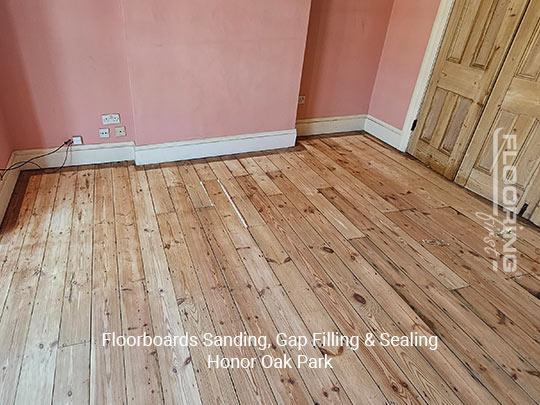
The Challenge
The floor in this old and charming house showed visible signs of wear and tear, with creaky floorboards, gaps between them, and a lacklustre appearance. The homeowners decided it was time for a comprehensive floor renovation to bring back the original beauty of the space. The main issues included loose and damaged floorboards, significant gaps between the boards, and an uneven surface that needed attention. Some boards were beyond repair and required replacement to give the floor a stable, even foundation before any finishing work could begin.
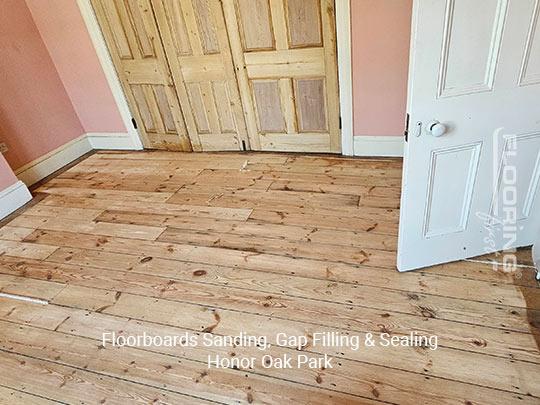
Our Approach
We worked through the project in a clear sequence:
- Floor inspection: Our team carried out a full inspection, identifying damaged boards, areas requiring refitting, and the boards that needed outright replacement.
- Board repairs and replacements: Loose boards were secured and those beyond saving were replaced with matched timber to maintain a consistent appearance.
- Gap filling with pine slivers: We used high-quality pine slivers cut to match the floor's existing colour. Fitting these into the gaps between boards eliminates the unsightly openings and stops dirt and debris collecting over time.
- Sanding: Professional-grade belt and edge sanders were used to remove scratches, stains, and the old worn finish across the full floor area, leaving a clean, open surface ready for sealing.
- Sealant application: The homeowners chose a durable satin sealant. We applied it with care to ensure even coverage and a consistent finish.
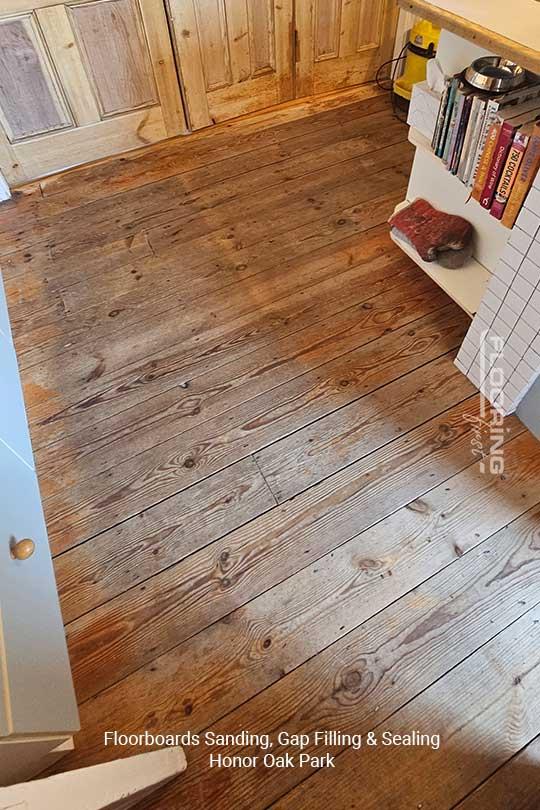
The Result
The transformation of the floor was significant. The sealant gave the boards a satin finish that brought out the natural tones of the wood without looking too shiny. It also provides a protective layer against daily wear, keeping the floor in good condition for years to come. The combination of repairs, gap filling, sanding, and sealing produced a floor that looks as though it has been properly maintained from the beginning. The homeowners in Honor Oak Park were very pleased with how the space came together.
Frequently Asked Questions
Q: What type of sealant is best for period floorboards?
A: For most period properties, a water-based satin lacquer or hardwax oil works well. Satin sheen looks natural and does not highlight imperfections the way a high-gloss finish can. We discuss options with clients before starting, as personal preference and how the room is used both affect the right choice.
Q: How long do pine sliver gap fills last?
A: Done correctly, pine sliver gap filling is a long-term solution. Unlike flexible fillers that can crack or shrink, pine slivers move with the floor. They are particularly suitable for older properties where boards have dried out and the gaps are consistent in width.
Q: How often does a sanded floor need to be refinished?
A: This depends on how the floor is used. In a busy family home, a re-coat every five to eight years is typical. A maintenance buff and re-oil or re-lacquer can often extend the life of the finish without needing a full sand.