Project Overview
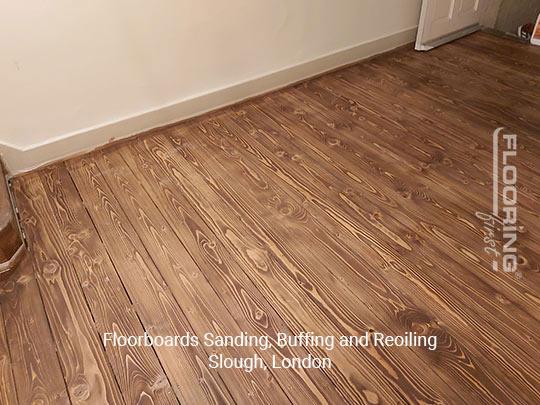
This Slough property had hardwood floorboards throughout the ground floor that had been previously finished with an oil product. The oil had worn down significantly in the main traffic routes, leaving the floor looking dry and patchy, with the wood lacking the protection and appearance it had when newly finished. The client wanted a full sand, buff, and fresh oil application to restore the floor.
The Challenge
Re-oiling an oil-finished floor that has worn unevenly is more complex than it sounds. Simply applying fresh oil over a partially worn surface would result in patchy absorption, with the areas where the old oil has fully worn off absorbing far more product than the areas where some residual oil remains. This produces an uneven finish rather than the consistent result the client wants. The correct approach is to sand back to bare wood evenly first, then apply the new oil from a uniform starting point. For buffing, the floor also needs to be properly prepared so the buff can work the oil into the surface evenly without disturbing the finish before it has set.
Our Approach
Sanding
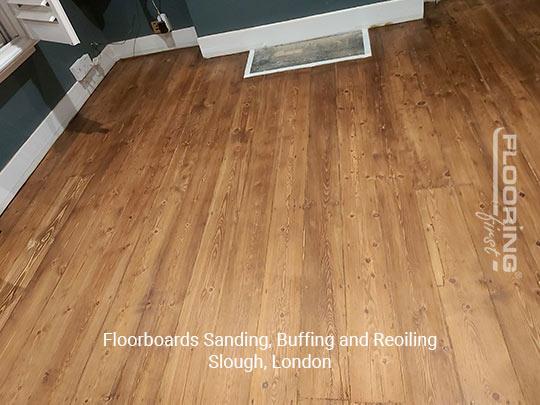
We began with a full sanding programme to strip the old oil finish back to bare wood consistently across the whole floor. This involved working through multiple grit stages, starting with a grit appropriate to the depth of the existing finish and finishing with a fine grit that left the surface clean, smooth, and ready for oiling.
Dust Removal
Before any oil was applied, the floor was vacuumed thoroughly and wiped down with a tack cloth to remove all residual sanding dust. Even small amounts of dust trapped in an oil finish will create a gritty texture in the cured surface and should not be cut short.
Oil Application and Buffing
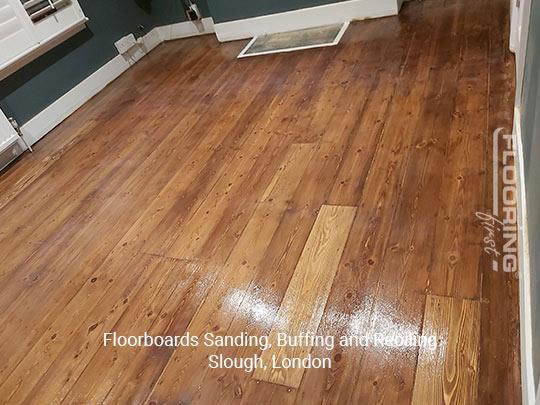
The first coat of oil was applied across the full floor and left to absorb into the wood for the recommended time before the excess was buffed off using a buffing machine fitted with a white pad. The buffing process drives the oil deeper into the wood fibres and removes any standing excess that would otherwise dry tacky on the surface. A second coat was applied and buffed in the same way to achieve the depth of protection and sheen the client wanted.
The Result
The finished floor had a warm, natural appearance with an even, consistent oil finish throughout. The wood grain was clearly visible, the surface felt smooth underfoot, and the oil provided good protection without the plastic appearance of a lacquer finish. The client was very satisfied with the result and appreciated the natural feel of the oil compared to the alternative finishes available. Sanding and oiling in the Slough area typically costs between £25 and £40 per square metre depending on floor condition and area size.
Frequently Asked Questions
How do you maintain an oiled floor after it has been professionally re-oiled?
Day-to-day cleaning with a slightly damp mop and a wood-safe cleaning product is all that is needed. Periodically, typically every one to two years, a maintenance oil coat can be applied without a full sand. This is a quick process the homeowner can often do themselves with the right product.
Is an oil finish or a lacquer finish better for hardwood floorboards?
Both are widely used and both have their strengths. Lacquer gives a harder, more protective surface that is easier to clean in high-traffic areas. Oil gives a more natural look and feel, is easier to touch up in a localised area, and tends to suit the character of older properties better. The best choice depends on the level of traffic, the look the client wants, and how much ongoing maintenance they are willing to do.
Can you oil over an existing lacquered floor?
No. Oil and lacquer are not compatible. If a floor has been lacquered, the lacquer must be fully removed by sanding before an oil finish can be applied. Applying oil over a lacquer finish will not penetrate the wood and will not produce a satisfactory result.