Before the Work
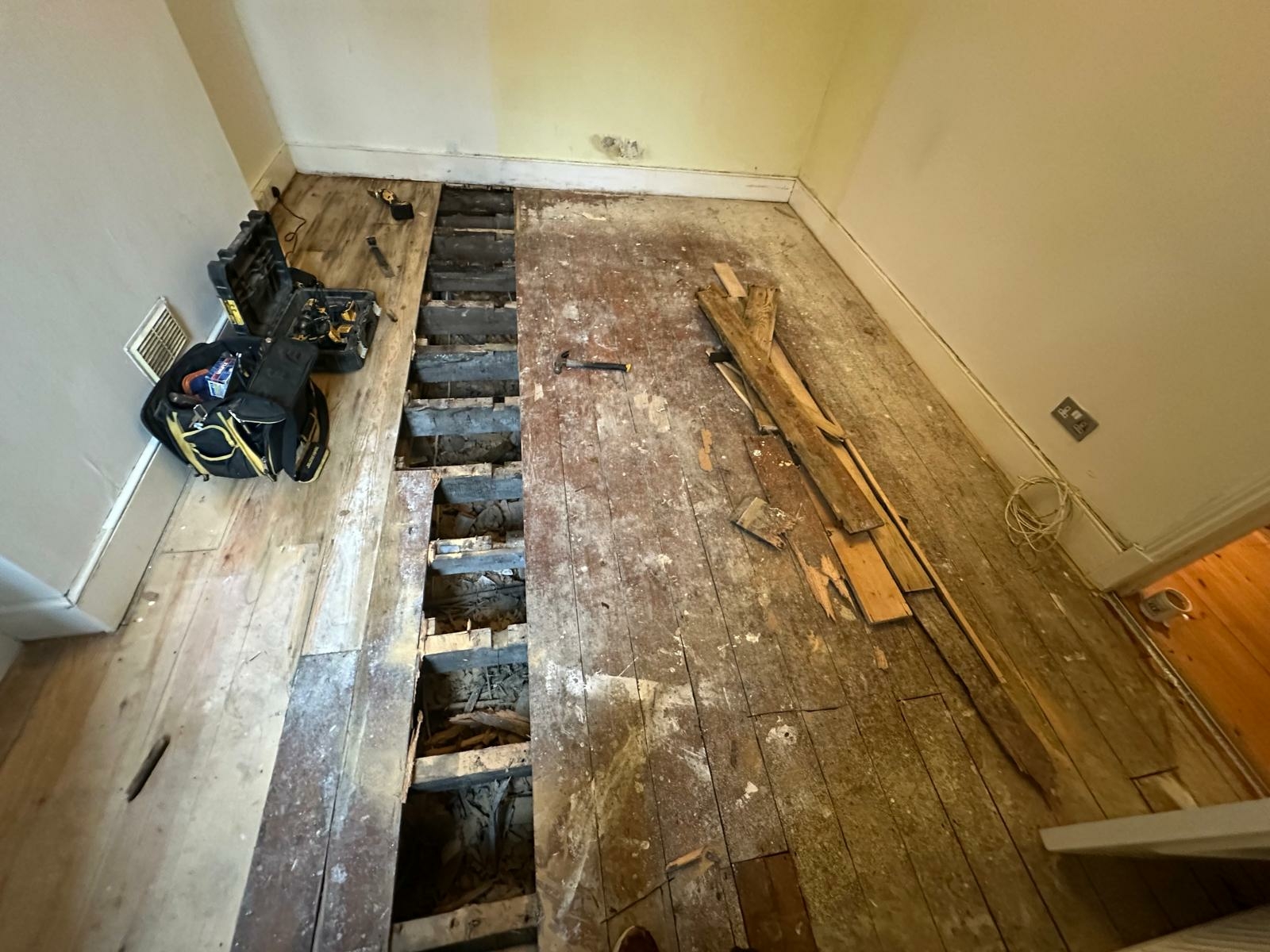
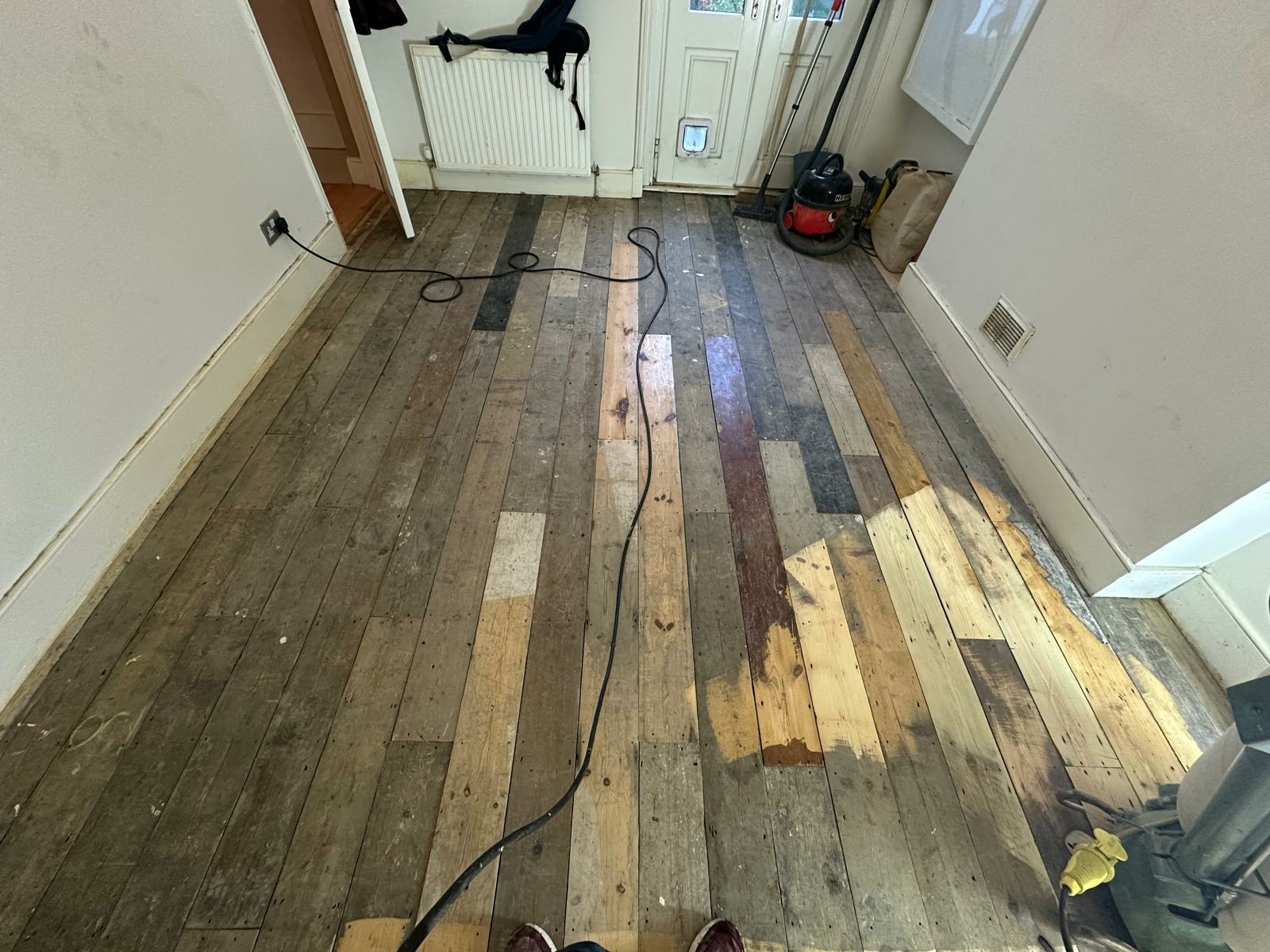
The floorboards at this SE19 property were in mixed condition. Some sections showed standard wear — surface scratches, gaps and a finish that had dulled over years of daily use. Other sections had boards that were too damaged to restore and needed to be lifted and replaced before any sanding could take place. Crystal Palace has a high concentration of Victorian and Edwardian terraces, and original floorboards in these properties vary considerably in condition depending on how they have been maintained and what has been laid over them in the intervening decades. A thorough assessment was carried out during the initial visit to map the full extent of the work before anything was agreed or priced.
Our Approach
The damaged floorboards were lifted first and disposed of cleanly. Reclaimed floorboards were sourced and installed onto the existing joists in their place — reclaimed timber is the right choice for this type of work because it is already aged and dimensionally stable, meaning it sits naturally alongside the original boards without standing out once sanded and finished. New timber in an old floor rarely blends as well.
With the replacement boards in place and secure, gaps across the wider floor were filled using a flexible wood filler mixed with the dust from the first sanding pass — this produces a colour match that is far closer to the surrounding timber than any off-the-shelf product. The floor was then sanded progressively through finer grits, buffed smooth, and finished with three coats of water-based lacquer with a light sand between each coat.
The Result
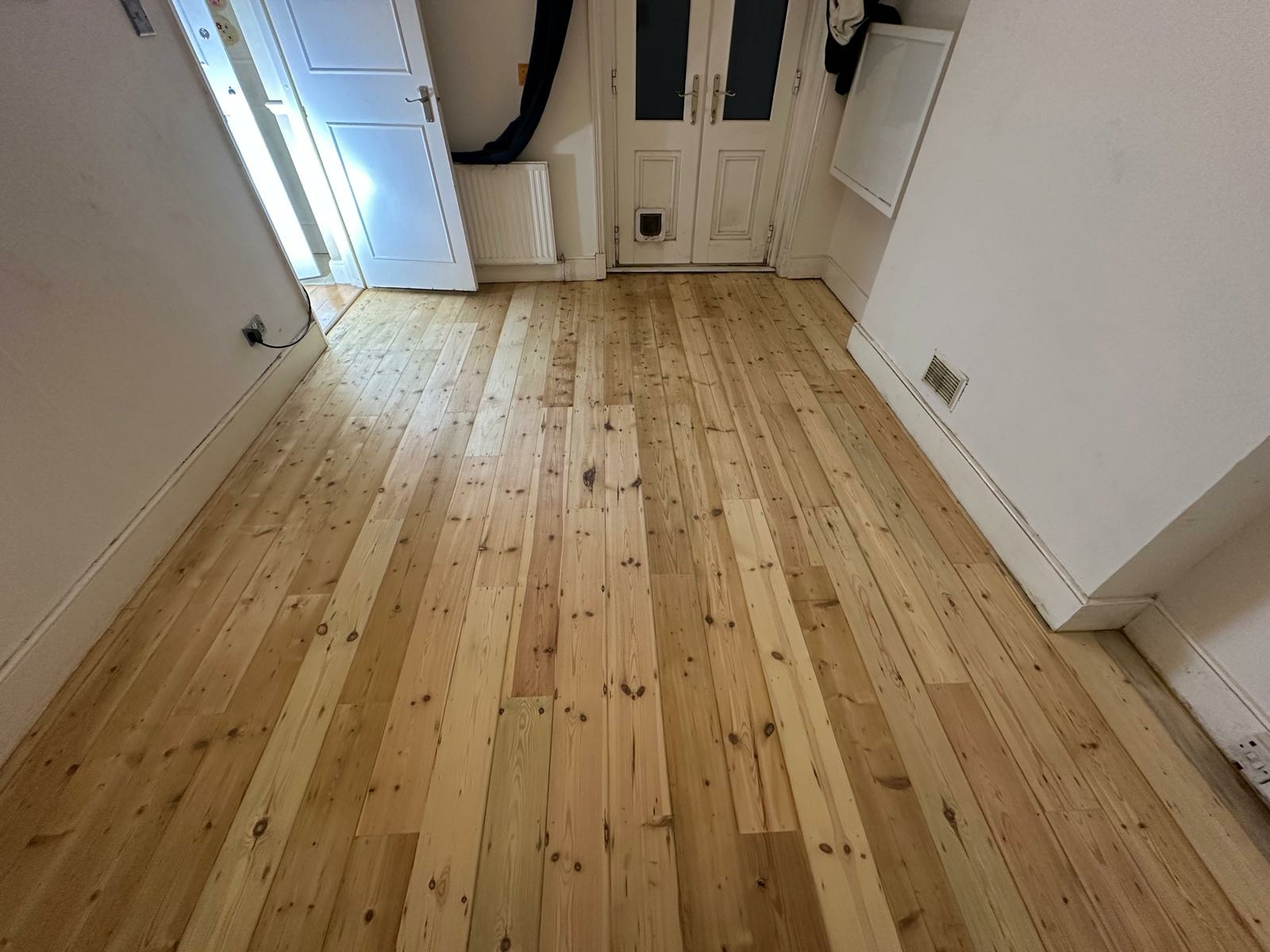
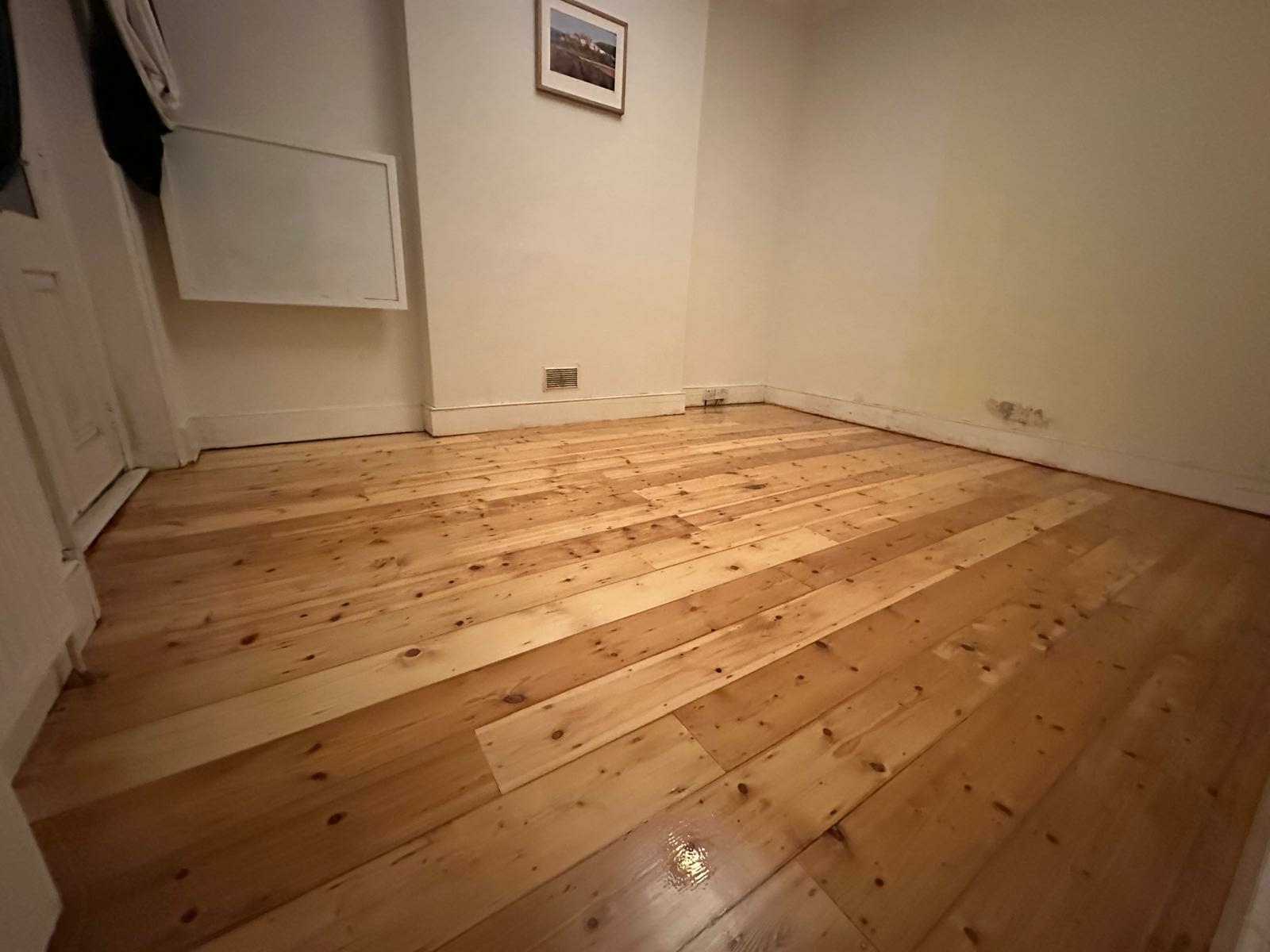
The finished floor reads as one consistent surface throughout. The reclaimed boards sit flush with the original timber, the grain and colour variation blend naturally across the whole floor, and the lacquered finish is smooth and even from wall to wall. Edges and visible transitions were completed cleanly so the room looks properly restored rather than patched. All work was signed off by the client on the day. Typical costs for floorboard restoration including board replacement in South East London range from £25 to £45 per square metre for sanding and finishing, with board replacement quoted separately depending on the extent of work required.
Frequently Asked Questions
Are reclaimed floorboards the right choice for Victorian properties in Crystal Palace? In most cases, yes. The majority of period properties in SE19 and across Crystal Palace were built between 1880 and 1920, and their original floorboards are typically pine or Douglas fir of a width and thickness that is difficult to match with new timber. Reclaimed boards from the same era are already aged, dried and stable, which means they blend far more naturally with the surrounding original floor once sanded and finished. New timber tends to shrink slightly as it acclimatises, opening gaps that then need filling again.
Can badly damaged floorboards always be replaced rather than the whole floor? Usually, yes — provided the joists beneath are in good condition and the surrounding boards are structurally sound. Selective board replacement combined with a full sand and finish is a cost-effective way to restore a floor that has isolated areas of damage without replacing everything. We assess each case individually and will always tell you honestly if full replacement is the more practical option.
How much does floor restoration with board replacement cost in Crystal Palace? Sanding and finishing in the SE19 area typically runs from £25 to £45 per square metre. Board replacement — whether with reclaimed or new timber — is quoted as a separate cost based on the number of boards and the sourcing required. We provide a full written breakdown after a free site visit so there are no surprises on the day.
Do you cover Crystal Palace and the surrounding SE19 area? Yes. We work regularly across SE19 and the nearby postcodes including Gipsy Hill, Norwood, Penge and Sydenham. Call us on 020 88309782 or book a free site visit to discuss your floor.