Project Overview
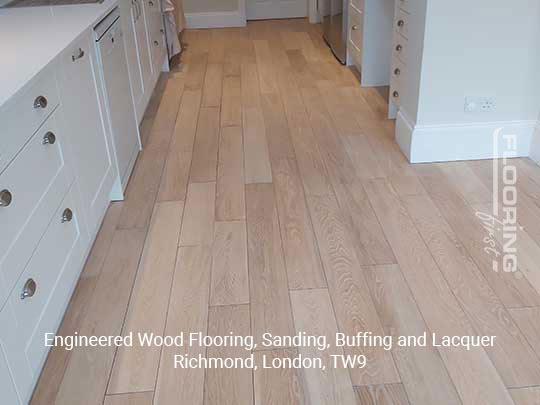
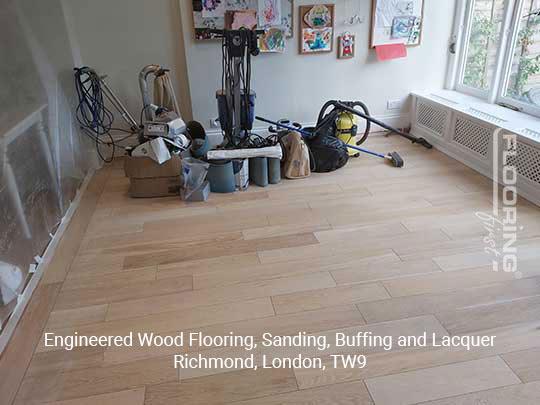
This project involved sanding, buffing and lacquering an engineered wood floor across several rooms of a residential property in Richmond. The owners wanted a full surface refresh ahead of spring, bringing back the original warmth of the wood without replacement. The floor had lost its sheen through years of normal use and heavy foot traffic. Our team handled the furniture removal, the full sanding sequence, buffing, and two coats of lacquer, then reinstated the furniture on completion.
The Challenge
Engineered wood requires careful attention during sanding. Sand too aggressively and you risk cutting through the wear layer, which on engineered boards is typically between 3mm and 6mm thick. The floor in this Richmond home had a few stubborn scratches and a patchy area near the window where the old lacquer had worn away completely, leaving bare wood that had started to dry out and discolour. Matching the finish across the whole floor required precise preparation and consistent buffing before any lacquer was applied.
Our Approach
We followed a structured sequence to protect the wear layer and deliver an even finish.
- Furniture removal: We cleared the rooms before starting so there was no risk of damage and no areas we had to work around.
- Initial sanding: We used a drum sander with a medium-grit paper to strip the old lacquer and level any surface irregularities, working along the grain throughout.
- Edge sanding: A dedicated edge sander addressed the perimeter of each room and any corners the drum machine could not reach.
- Buffing: Once the surface was fully stripped, we buffed with a fine-grit disc to open up the grain evenly and prepare a smooth base for the lacquer.
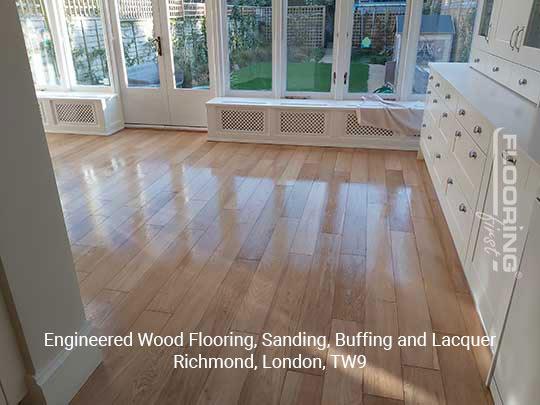
- Lacquering: Two coats of water-based lacquer were applied, with a light key-sand between coats. This builds a hard-wearing, clear finish that reflects light well and protects the wood for years of daily use.
- Reinstatement: Furniture was moved back in and the rooms were left clean and ready to use.
The Result
The finished floor looked like a new installation. The discoloured patch near the window had been fully corrected and the lacquer brought up a consistent, glossy surface across the whole area. The clients were pleased with both the quality of the work and the tidiness of our team throughout. For a floor in this condition, sanding and relacquering is a far better option than replacement -- the cost typically runs between £25 and £45 per square metre depending on floor condition and the number of coats required, which is a fraction of what new engineered boards would cost.
Frequently Asked Questions
How many times can an engineered wood floor be sanded?
It depends on the thickness of the wear layer. Most engineered boards with a 3mm layer can be lightly sanded once or twice. Boards with a 6mm wear layer can usually take three or four full sanding cycles over their lifetime.
How long does the lacquer take to dry before we can walk on the floor?
Water-based lacquer is touch-dry within a couple of hours. We recommend light foot traffic after four hours and returning furniture after 24 hours. Full cure takes around seven days, during which it is best to avoid placing rugs over the surface.
Do you carry out work in Richmond regularly?
Yes. Richmond is one of our regular working areas. We cover the whole of south-west London and can usually schedule a survey within a few days of your enquiry.