Project Overview
This project in Buckhurst Hill involved the installation of engineered wood flooring with a quality underlay, using correct preparation and installation procedures throughout. Engineered flooring is one of the most popular choices for residential properties — it offers the look and feel of solid wood with better stability across humidity changes. Fitting typically costs between £35 and £60 per square metre, depending on the floor size and the complexity of the job.
The Challenge
Engineered flooring installation is a process that should be carried out by a professional to achieve the best long-term results. Quality materials and correct installation procedures are both essential. One product used on this project was the Duralay Timbermate Excel Silver Wood Floor and Laminate Underlay, which has good acoustic and thermal properties and is suited to both residential and commercial settings. Selecting the right underlay is part of specifying the job correctly, not an afterthought.
Our Approach
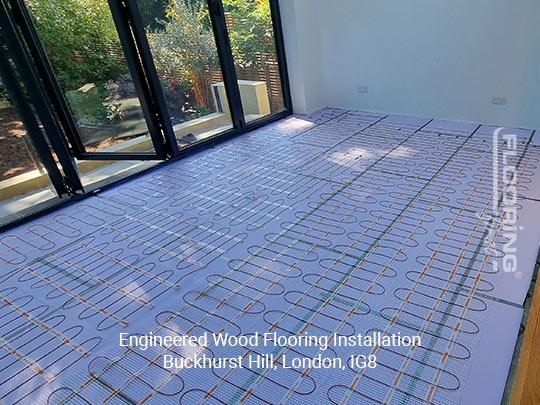
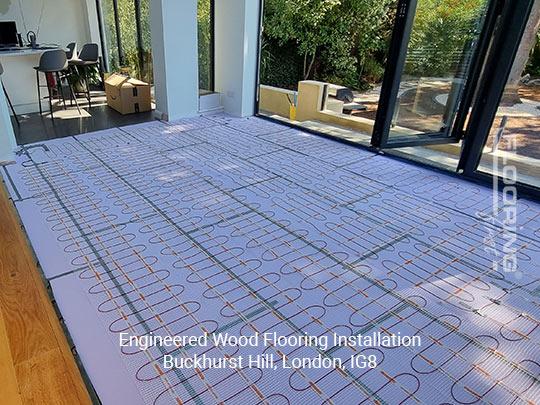
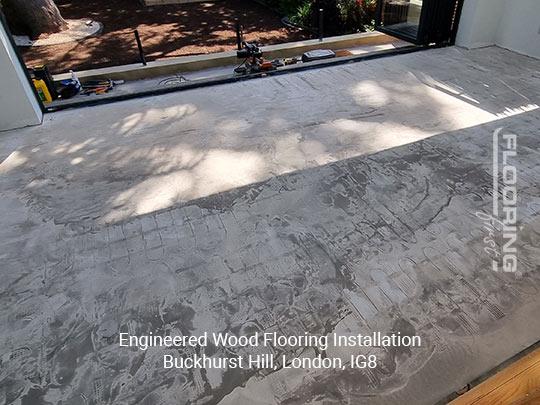
- Subfloor preparation: We started by preparing the subfloor thoroughly — cleaning the surface, checking for level, and removing any debris or old fixings. The subfloor was checked for moisture content before any underlay or flooring was brought in. A dry, clean, level base is the foundation that everything else relies on.
- Underlay installation: The Duralay Timbermate Excel Silver underlay was fitted across the prepared subfloor. This product provides a barrier against moisture rising from below and adds thermal and acoustic benefits. It also takes out minor surface imperfections in the subfloor that could otherwise transmit through to the finished floor.
- Engineered flooring installation: Boards were laid following the manufacturer's instructions, with the correct expansion gaps maintained at walls and fixed obstacles. The installation sequence and starting point were planned before work began to ensure the layout balanced well within the room.
- Acclimation period: The flooring was allowed to acclimate to the room for 24 hours before installation commenced. This allows the boards to adjust to the ambient temperature and humidity, reducing movement after fitting.
- Trims and finishing: Beading, thresholds, and door trims were fitted to complete the job.
The Result
When installing engineered flooring, preparation of the subfloor is the single most important factor. Once the subfloor was clean, level, and within the correct moisture range, the underlay was installed to provide protection and cushioning. Following the manufacturer's instructions at each stage and allowing the floor to settle properly before furniture was moved in meant the Buckhurst Hill client ended up with a floor that will perform well for many years. Engineered wood is a sound long-term choice for most residential properties, and this installation was carried out to the standard that makes it last.
Frequently Asked Questions
Q: What is the difference between engineered wood and solid wood flooring?
A: Solid wood is cut from a single piece of timber throughout its full thickness. Engineered wood has a real wood wear layer on the surface bonded to multiple layers of ply or HDF below. This construction makes engineered wood more stable across changes in temperature and humidity, which is why it is often the preferred choice for properties with underfloor heating or concrete subfloors.
Q: Can engineered wood be fitted over underfloor heating?
A: Yes, most engineered wood products are compatible with underfloor heating. The key requirements are that the surface temperature does not exceed 27 degrees Celsius and that the heating system is run at low temperatures for a period before installation to condition the subfloor. We check compatibility with each specific product before fitting.
Q: How long should engineered wood acclimatise before fitting?
A: Manufacturers typically recommend 24 to 48 hours in the room where the floor will be installed. The boards should be left in their packaging or stacked loosely to allow air circulation. Installing without acclimatisation can lead to boards moving or gapping after fitting, particularly if the room temperature or humidity differs significantly from the storage conditions.