Project Overview
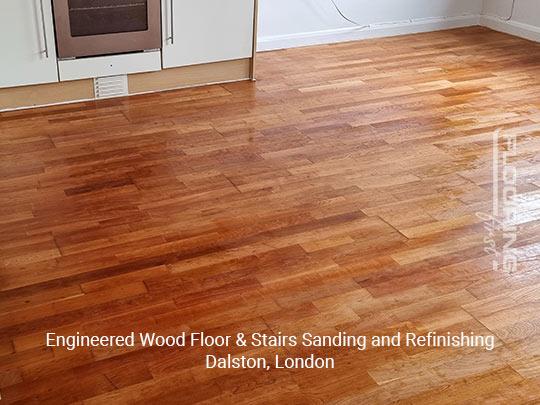
This Dalston property had engineered wood flooring throughout the main rooms and a wooden staircase connecting the floors. Both had reached a state where the finish was worn, scratches were visible across most of the surface, and the overall appearance let down an otherwise well-presented home. The owners wanted everything done in a single job to get a consistent result and avoid the disruption of two separate visits. Combining floor and stair sanding is the most practical approach and ensures the finish matches across the whole property.
The Challenge
Engineered wood floors have a real hardwood top layer over a plywood core, which means the number of times they can be sanded is limited by the thickness of that layer. This floor had been sanded once previously, so care was needed to ensure we did not go through the wear layer during this second sand. The staircase presented additional challenges: the treads were heavily worn in the centre, particularly on the landing and the three steps immediately below it. Sanding these areas down to match the worn but less-used edges required careful grading to avoid creating a concave shape across the tread surface.
Our Approach
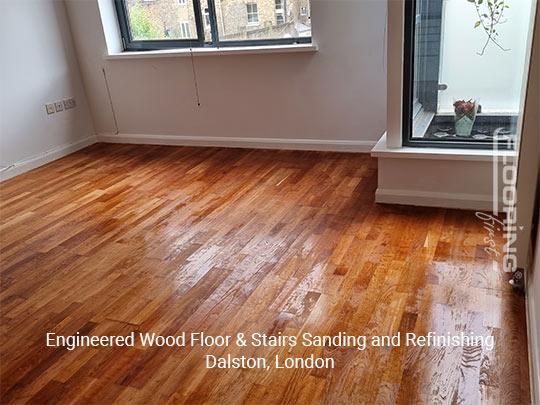
Assessment and grit selection. We measured the remaining wear layer on the engineered floor and confirmed that a medium-grit approach was appropriate. Going in with coarser grit would have been unnecessarily aggressive given the condition of the floor.
Floor sanding. The floor was sanded across multiple passes with progressively finer grits to remove the old finish and surface marks without taking more material than necessary. Edges and corners were hand-finished to match.
Stair sanding. Each tread was sanded individually using appropriate equipment for the tread width. The worn centres of the busiest treads were brought down gradually using medium grit to blend with the less-worn areas, creating an even surface across each tread without any obvious dip.
Lacquer application. The floor and stairs were both finished with two coats of lacquer, applied in the correct sequence to avoid walking over freshly finished surfaces during application. Lacquer was the right choice for both because of its hard-wearing properties in high-traffic conditions.
The Result
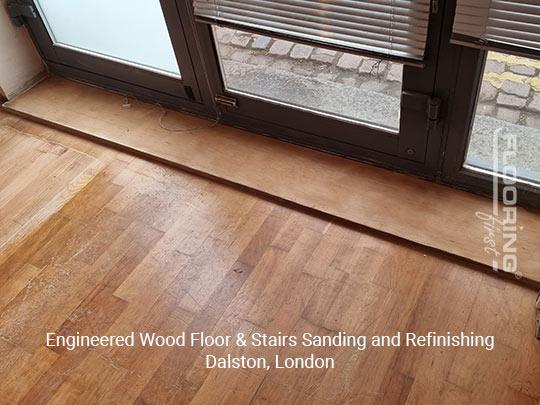
The finished floor and staircase were consistent in appearance and well-protected. The lacquer gave both surfaces the same clear, clean finish, and the scratches and worn areas that had been so visible before were completely gone. The owners commented that the staircase in particular looked better than they had expected, given how heavy the wear had been. The property as a whole looked noticeably smarter once the floor and stairs were in good condition.
Frequently Asked Questions
How many times can an engineered wood floor be sanded?
This depends entirely on the thickness of the top hardwood layer. A 6mm wear layer can typically support three or four full sanding cycles. A 3mm layer may only allow one or two. Each time the floor is sanded, a professional should assess how much material remains before proceeding.
How are heavily worn stair treads repaired during sanding?
Worn treads are sanded progressively to reduce the high spots around the edges down to the level of the worn centre. The key is to work gradually and check frequently to avoid creating a dip in the tread surface. In extreme cases, a filler or levelling compound may be used before sanding begins.
Is it possible to use the stairs during a floor sanding job?
During the sanding and lacquering process, access is usually restricted for periods to allow the finish to cure. The sequence of work is planned so that the stairs remain accessible for at least one direction of travel until the lacquer is dry enough for foot traffic.