Project Overview
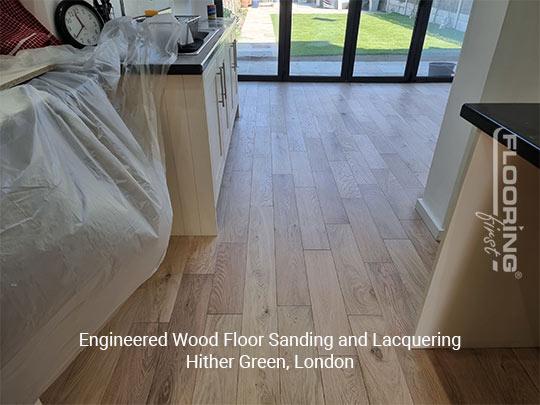
This engineered wood floor in Hither Green had accumulated years of surface wear and was beginning to show scratches, dull patches and scuff marks that were spoiling the appearance of an otherwise good-quality floor. Engineered wood floors can be sanded and refinished just like solid wood, though the number of times this can be done is limited by the thickness of the hardwood top layer. In this case, the floor had plenty of wear layer remaining, making a full sanding and lacquering the correct solution. The result returned the floor to a condition that looked and felt brand new.
The Challenge
Engineered floors require more caution during sanding than solid boards because there is less material to work with above the ply core. Applying too aggressive a grit or making too many passes removes too much of the hardwood lamella and can expose the plywood beneath. The initial grit selection has to be carefully judged: coarse enough to remove the old finish and surface imperfections efficiently, but not so heavy that it cuts through the wear layer before the job is done. The sanding equipment used needs to be correctly set up for the thickness of the top layer and checked regularly during the job to confirm progress.
Our Approach
Pre-sanding assessment. We checked the wear layer depth at several points across the floor before starting. This confirmed there was sufficient material to proceed with a full sand.
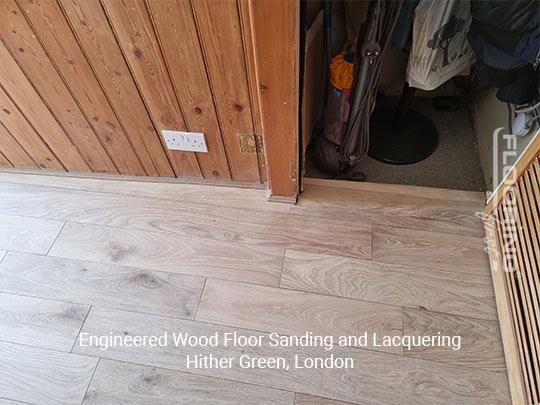
Controlled sanding sequence. The floor was sanded using a sequence of grits starting at medium rather than coarse, given the engineered construction. This approach takes slightly longer but is the right method for protecting the wear layer. Multiple passes at increasing fineness brought the surface to a smooth, even finish throughout.
Edge sanding and detailing. The perimeter was worked with an edge sander and the corners finished by hand to ensure the whole floor was consistent.
Lacquer application. Two coats of lacquer were applied with adequate curing time between coats. Lacquer was the chosen finish because of the high level of traffic in the main living areas of this property. The hard film it creates is the most effective protection for an engineered floor in daily use.
The Result
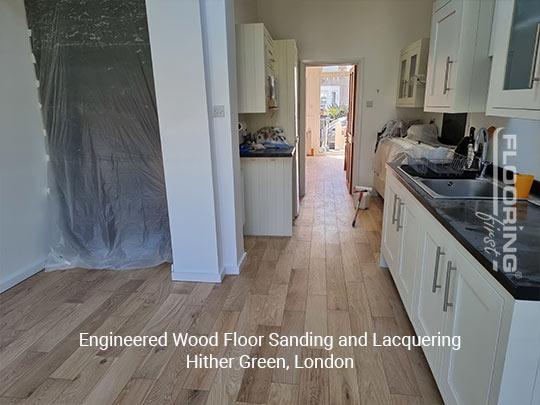
The finished floor was smooth, bright and well-protected. All the scratches and scuff marks had been removed, the colour of the wood came back to life under the lacquer, and the surface felt solid and even underfoot. The owners now have a floor that looks as good as it did when it was first installed. With proper care and periodic maintenance, engineered floors can be kept in this condition for many years before needing another sanding cycle.
Frequently Asked Questions
How do I know whether my engineered floor can be sanded?
The key factor is the thickness of the hardwood wear layer on top. Most engineered floors have a layer of between 3mm and 6mm. If the layer is at least 3mm, a light sand is usually safe. A professional can measure the thickness before starting and advise on what is possible.
Is lacquer the best finish for an engineered wood floor?
Lacquer is a very practical choice for high-traffic areas because it creates a hard, durable surface film. Oil finishes are also suitable and give a more natural look, but they need re-applying more often. The right choice depends on use and personal preference.
How long before I can use the floor after lacquering?
Most lacquers are touch-dry within a few hours and can take light foot traffic after around 24 hours. Full hardness is usually reached after five to seven days. During this period, avoid dragging furniture across the surface.