Project Overview
This engineered wood floor installation project in Holborn covered the main living spaces of a residential property that was being updated as part of a broader renovation. The clients had chosen a quality engineered wood floor that offered the warmth and character of real wood with the added practical advantage of better moisture resistance compared to solid hardwood. Engineered flooring installation in London typically costs between £35 and £60 per square metre for fitting, with the total project cost depending on the floor chosen and any subfloor preparation required. This project involved a careful subfloor assessment and a floating installation method that suited the existing conditions well.
The Challenge
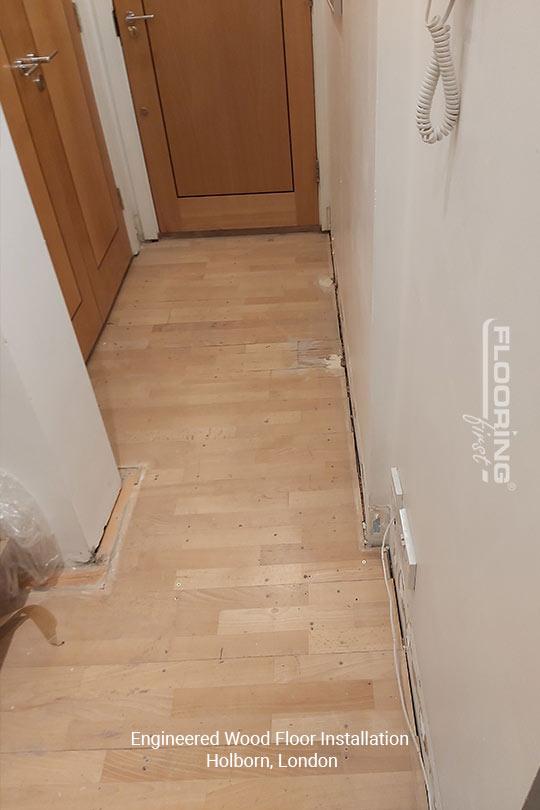
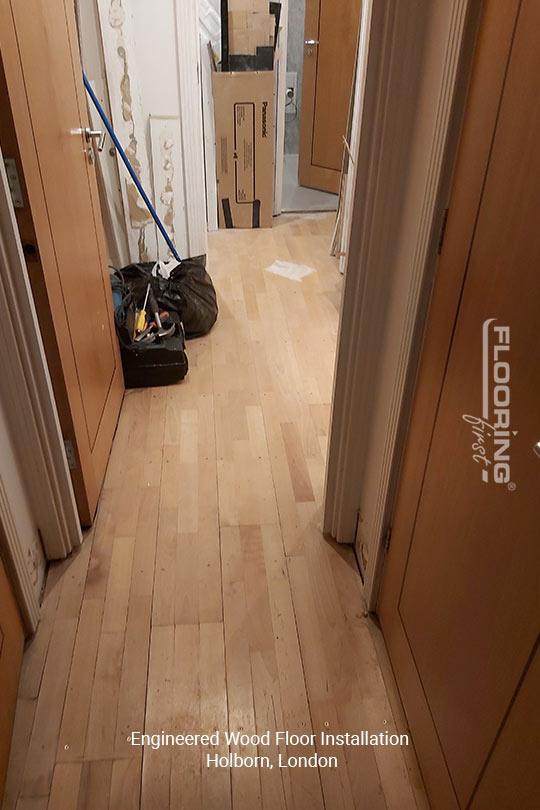
The existing subfloor in this property was an old wooden floor, which raised a number of questions at the outset. Old wooden subfloors can be excellent bases for engineered flooring, providing good insulation and a firm base, but they have to be carefully checked for levelness, moisture, and structural integrity. Any boards that are loose, squeaky, or raised need to be secured before the new floor goes on top, because movement in the subfloor will eventually telegraph through the new floor and cause problems at the click joints. The room also had several doorways that required the engineered planks to be cut and fitted around without breaking the pattern or leaving gaps at the threshold.
Our Approach
Subfloor preparation. We walked the old wooden subfloor systematically to identify loose or squeaking boards and secured them. Any raised nails or screws were punched flush or removed. The floor was checked for level using a straight edge and any high spots were addressed.
Moisture check. A moisture reading was taken from the subfloor to confirm it was within the acceptable range for engineered wood. Readings above the threshold would require either a vapour barrier or a delay in installation until the subfloor dried out.
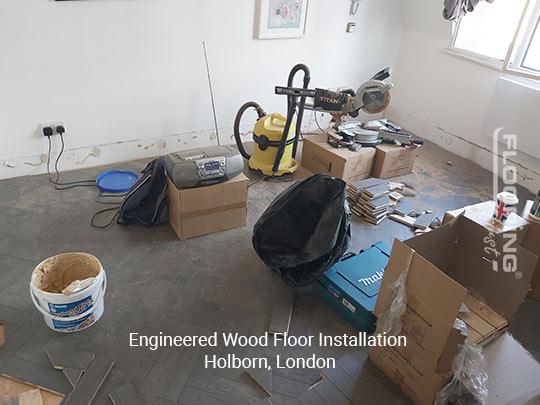
Floating installation. The engineered boards were installed using the floating method, clicking together over the prepared subfloor without any adhesive or nails. This method is quick, non-invasive and allows the floor to expand and contract naturally with seasonal changes in humidity.
Accessories and finishing. Matching beading and threshold strips were fitted around the perimeter and at doorways to finish the installation cleanly and protect the expansion gap around the edges of the floor.
The Result
The finished floor was a significant improvement on the old subfloor and completed the look of the newly renovated rooms. The engineered boards clicked together tightly with no visible gaps, the beading and thresholds gave a clean, professional finish at all the edges and doorways, and the floor felt solid and stable underfoot. The clients were very pleased with the result and with how well the chosen floor complemented the rest of the decoration. Engineered wood floors installed to this standard will perform well for decades with normal care.
Frequently Asked Questions
What is the difference between floating and glued-down engineered floor installation?
A floating floor clicks together and rests on the subfloor without being fixed to it, allowing natural movement. Glued-down floors are bonded directly to the subfloor using flooring adhesive, which gives a firmer feel underfoot and is often preferred for larger areas or where underfloor heating is installed. The right method depends on the subfloor type and the client's requirements.
Can engineered wood be installed over underfloor heating?
Yes, engineered wood is suitable for use with underfloor heating because the ply core construction is more dimensionally stable than solid wood under the effects of heat. The floor must be conditioned to room temperature before installation and the heating system must be gradually brought up to operating temperature after fitting.
How long does an engineered wood floor last?
A good-quality engineered wood floor with a 4mm or thicker wear layer, properly installed and cared for, will last many decades. It can be sanded and refinished multiple times over its life, which extends its useful life considerably beyond that of most other types of flooring.