Project Overview
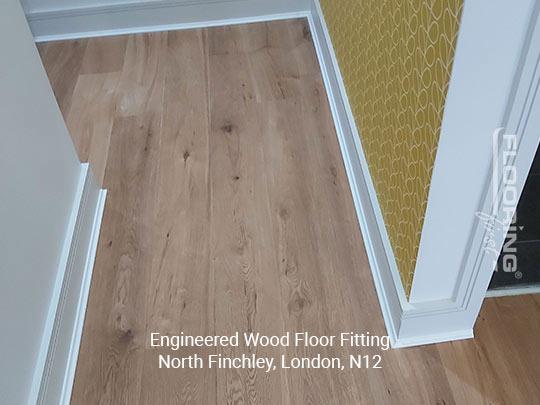
This engineered wood floor fitting project took place at a detached house in North Finchley, North London. The client was upgrading from a worn fitted carpet in their living room and dining room and wanted a real wood floor that would be durable, easy to maintain, and suitable for a home with young children and a dog. Engineered wood was the right choice on all counts. It has a genuine hardwood surface layer, is more stable than solid wood, and can handle the humidity and temperature variation that comes with a busy family home. For a professional supply and fit, engineered wood floor installation in London generally runs between £35 and £60 per square metre.
The Challenge
The two rooms shared a doorway, and getting the boards to run continuously through both spaces without a threshold strip at the door was something the client specifically wanted. This required careful planning of the board layout from the start, as the run direction had to work visually in both rooms simultaneously. The subfloor was a combination of chipboard sheets over joists, and one section near the bay window had developed some bounce that needed to be addressed before fitting. A bouncy subfloor puts stress on click joints and can cause boards to pop apart over time if not sorted at the outset.
Our Approach
- Carpet removal: We lifted and removed the existing carpets, gripper rods, and underlay from both rooms, disposing of all waste off-site.
- Subfloor inspection and repair: The chipboard was checked for movement, squeaks, and high spots. Two boards near the bay window were screwed back down firmly to eliminate the bounce, and a couple of raised edges were planed flat.
- Acclimatisation: The engineered boards were left flat in the rooms for 48 hours before fitting to allow them to adjust to the temperature and humidity of the space. Skipping this step is a common cause of gapping or cupping after installation.
- Underlay: A high-quality foam underlay with a built-in damp-proof membrane was laid in both rooms, overlapping at seams and taped securely.
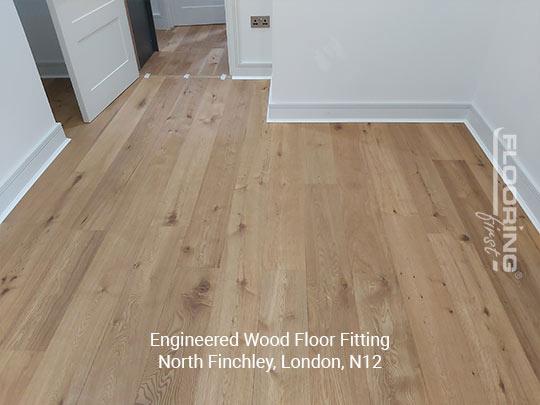
- Fitting: The boards were installed using a floating click system, laid in a staggered pattern for structural strength. The run direction was planned to pass through the doorway without interruption, giving the open-plan feel the client was after.
- Finishing: Expansion gaps were covered with matching skirting boards, and any door frames that needed undercutting for clearance were dealt with cleanly so the boards tucked underneath rather than butting up against them.
The Result
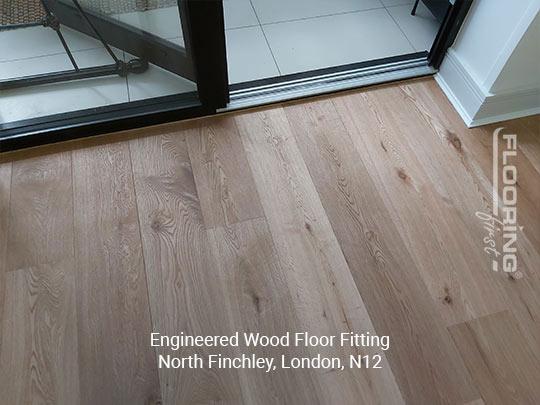
The finished floor looked excellent. The boards ran cleanly through both rooms without any interruption at the doorway, which made the space feel larger and more connected. The engineered oak chosen had a brushed natural finish that worked well with the existing furniture and decor. The client was pleased with how practical it already felt, noting that marks from the dog could be wiped off instantly, which was not the case with the old carpet. Engineered wood installed over a well-prepared subfloor and maintained correctly should last 25 to 30 years before any remedial work is needed.
Frequently Asked Questions
Does engineered wood flooring need to acclimatise before fitting?
Yes. Engineered boards should be left flat in the room where they will be fitted for at least 48 hours before installation. This allows the wood to adjust to the ambient temperature and humidity and reduces the risk of post-installation gapping or warping caused by boards that go in at a different moisture content from the room environment.
Can engineered wood be fitted over underfloor heating?
Most engineered wood products are compatible with underfloor heating, making them a much better choice than solid wood in these situations. The key is to ensure the surface temperature does not exceed 27 degrees Celsius and that the system is ramped up and down gradually rather than switched on at full power in a cold room. Always check the specific product's guidelines before installation.
What is the difference between floating and glued engineered wood fitting?
Floating fitting means the boards click together and rest on the underlay without being fixed to the subfloor. It is quick, allows some movement, and can be taken up if needed. Gluing the boards down is more permanent and reduces any residual movement or sound, but is harder to reverse. For most domestic projects over a chipboard or concrete subfloor, floating fitting is perfectly adequate.